Chronicles of Naridalis, on one page

Back to the chronicle “Chronicles of Naridalis”

All the adventures of this chronicle, the oldest first. 36 in all

1. (Live RP) "A New Home and Roads Ahead"

Author’s Note: This piece was shaped with a little help from AI. It provided assistance on things like the structuring, some names, shortening some verbose language/ideas as I'd written, and gave me the odd turn of phrase here and there. The heart and shape of the retelling are my own (though informed by live play with others naturally), but I realise it is important to be transparent about my use of AI support in producing it ultimately.
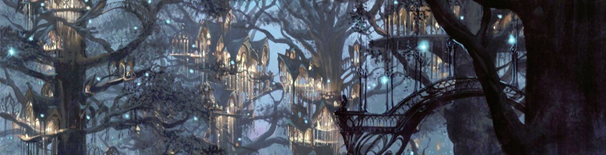

Setting: Post-War: Bree Homesteads → The Prancing Pony → Bree Mess Hall → Bree Scholar's Hall

Featuring: Alairif, Guriwen, Naridalis, Raspi, Deorla, Blacibella, Overkill, Rachon, Medalang, Thyalith, Salandril, Holoin, Aureliane, Eldralir & Wittkun

The Old Kin House and the New Beginning

At a quiet milestone near the gates of Bree’s southern homesteads, the Company of the East Road had convened. In response to a summons from their leader, Deorla, it was likely the first occasion that many members of the kinship had gathered so. Typically, many in the Company would spend long periods away from this area, traveling extensively across various lands to maintain peace and fulfill various contracts along the East Road. Most attendees had also recently enlisted, making this assembly an opportunity to form new bonds while also addressing specific administrative matters that were on Deorla’s agenda.

Naridalis counted herself among these newest recruits, and seeing so many gathered by the milestone’s firelight, speaking of hearth and home, was a rare and warm sight for her. Used to being alone in the wilderness, she was more at ease beneath the stars than surrounded by stone. However, she understood that there was strength to be found in shared purpose, especially with news of a kin house.

The Company had long maintained a house within these homesteads, though admittedly, the old structure had seen better days. ‘Age comes to us all,’ Naridalis thought to herself, though not quite in the same way it did for people of her lineage (elves). She wondered, for a moment, where she had picked up such a saying.

The old kin house had been highly valued as a meeting place for those conducting the Company's business. Its proximity to Bree and the surrounding areas made it incredibly convenient. It held memories of past adventures and achievements but was no longer adequate for the growing kinship’s needs. The Company’s leadership had been searching for a solution for some time. Fortunately, hope was rekindled with the acquisition of a spacious new house nearby. The old house had even been sold for a tidy profit! Deorla recounted this to the gathered group.

The New Kin House: A Place for the Future

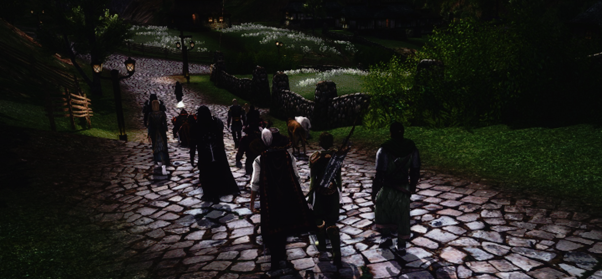
The group departed the milestone, with Deorla and the Company’s officers leading the way into the homesteads. They discussed the work that would be required to make the transition from the old to the new kin house, with a visit to the new property itself.

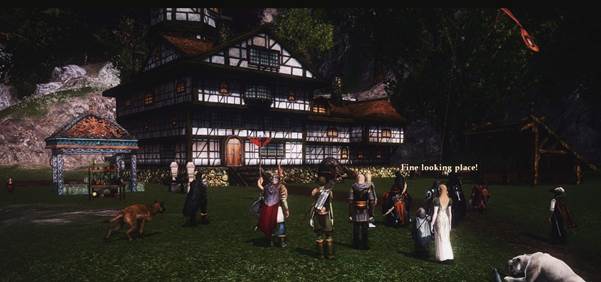
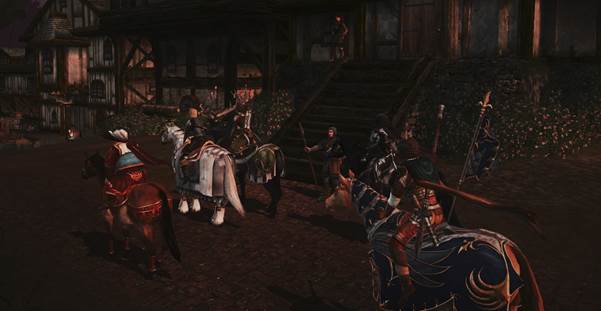
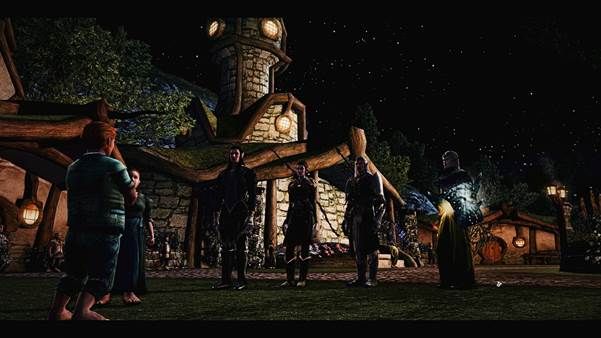
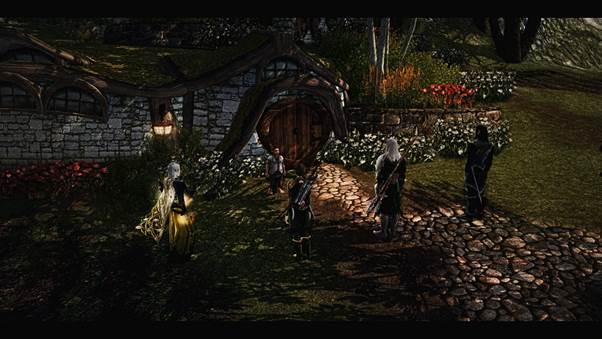
The new kin house stood proudly near the entrance to the neighbourhood, in a fine location for "receiving messages swiftly and gathering easily," as Deorla had put it. Though still in need of furnishings and personal touches, the house had "good bones" - a solid structure with plenty of room to grow, both inward and outward. In fact, the profit from the sale of the old house had made it possible to acquire a few surrounding smaller homes for use by the Company as well. It was noted that the beginnings of a crafting hall, perhaps the most utilized feature, were already taking shape - a testament to the swift work undertaken by the Company’s officers already.

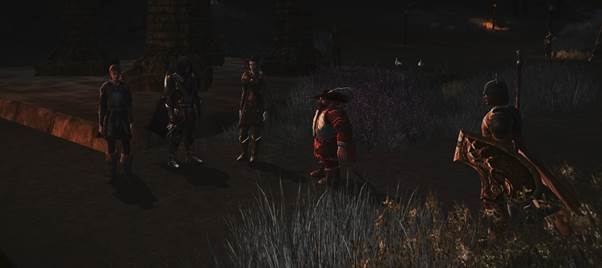
A group of people in front of a building

AI-generated content may be incorrect.

It was Alairif who first remarked that the new house was a "fine-looking place," while others, like Blacilbella, were more concerned with practicalities: her ‘pie station’ and the ‘absence of dogs.’ Overkill offered trophies from past adventures to adorn the hall, and many voiced their desire to shape the house into a welcoming shared space for all. Though Naridalis found such dwellings novel, even she could see the house’s potential as a hub for the kin’s many adventures to come.

Tasks Ahead: Moving and Negotiations

As the group gathered, Deorla outlined the tasks ahead. The move to the new kin house would occur immediately, and the most pressing task was to transport belongings from the old house to the new one. There was also a need for some members to establish new crafting spaces.

Deorla also had an important task for those willing to travel. She explained that there was a group of woodworker guilds in the North Downs, known for providing some of the finest wood and craftsmanship in all of Eriador. Deorla requested that some of the Company journey north to negotiate with these guilds for both wood and skilled labour to improve the new kin house.

Guriwen, a bard of no small renown, was chosen by Deorla to lead the expedition north and seek terms with the woodworker guilds. Though known for her songs, Guriwen seemed hesitant in the role of negotiator. Despite this uncertainty, others were resolute. Rachon exclaimed, “Words are not my weapon, but I can offer some protection along the way.” Alairif added, “We can handle any issues that may arise.” Raspi humorously remarked, “Do not worry if you fail, Guriwen; we’ll just go straight into the knee-busting ‘overture’ and jaw-crushing ‘coda.’” This comment earned a quick chiding from Medalang, though Raspi was clearly grinning when saying it.

Naridalis, too, offered words of encouragement. “Guriwen, your gift with words is clear to all of us. But if this task weighs on you, then we will stand by you. Negotiation is but another kind of battle, and we are all here to support each other in it.”

The collective support given seemed to provide Guriwen with sufficient confidence to accept the role and embark on the venture. The fellowship made preparations to depart, with some already saddling their steeds in eagerness. A message had to almost be shouted after them to rendezvous at the Prancing Pony in Bree to discuss next steps for the trip ahead.

Gathering at the Prancing Pony

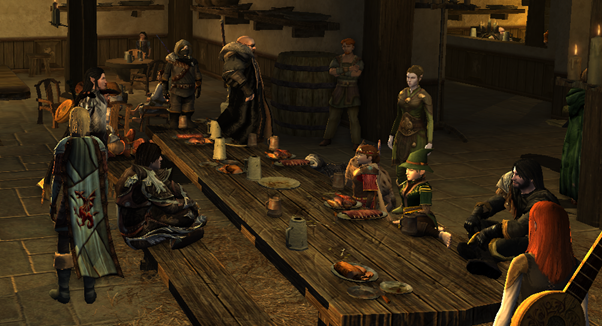
As the evening wore on, the kin gathered at the Prancing Pony in Bree-town, sharing stories, forming bonds, and planning the next day’s ride. The Pony was busy, with a traveling group speaking a far-off language occupying much of the hall, to Butterbur’s delight. The music was lively and the food good. As the drink flowed, discussions about the task at hand dwindled, and soon the fellowship was lost in conversation and laughter.

Perhaps most importantly, it was Blacilbella who mentioned that her sister, Dolly, could be found in the North Downs. Something which could prove helpful indeed if the fellowship encountered difficulties on the road and needed local assistance.

A group of people sitting at a table

AI-generated content may be incorrect.

Naridalis watched Guriwen’s quiet unease that evening with conflicting thoughts of her own. Leading a fellowship north into uncertain wilds was a different kind of journey for the bard; that much was evident. Yet, Naridalis knew that courage often stirred in the doing, not the knowing.

Though the comfort of stone walls meant little to her, Naridalis understood the need for a kin house - a refuge in ever darkening days, and as the Company was growing, it required more organisation and more resources to fulfill its purpose along the East Road. The timber they sought would strengthen not just the walls of this new kin house but serve to provide the entire kinship with a renewed purpose. And that, she thought, was worth the potential dangerous that might be found ahead of them.

Reflections at night in Bree-town

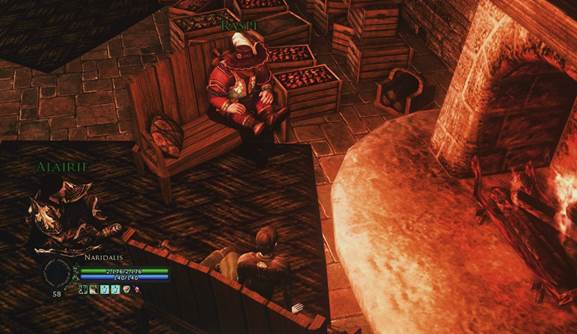
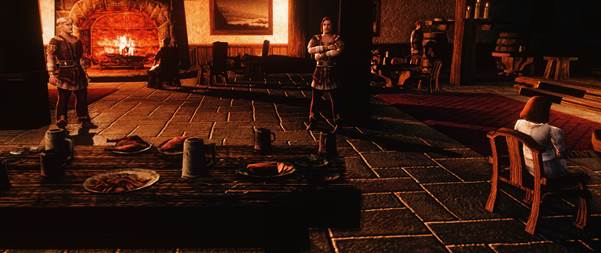
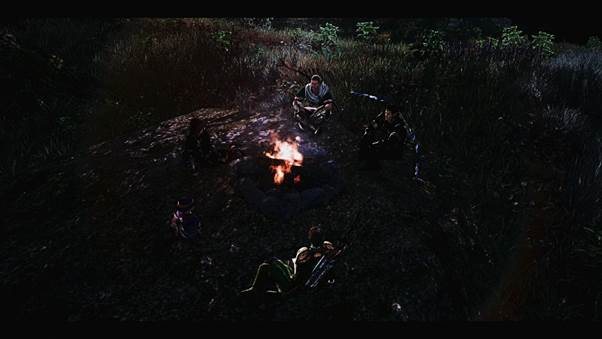
After the main gathering, a smaller, more contemplative group broke off after the main group retired for the evening for sleep. Alairif, Naridalis, and Raspi quietly departed the noise and bustle, seeking the relative calm of Bree-town’s mess hall. There, by the modest glow of firelight and the scent of long-stewed broth, their conversation turned more thoughtful. Naridalis liberated some ale and wine from nearby unattended barrels (with some coin left in recompense, naturally).

Alairif, steady and grounded, seemed intent on gently steering the group toward readiness. “Tomorrow, we head for Trestlebridge,” he said with calm resolve, affirming the Company’s direction northward. Naridalis, ever watchful, nodded in agreement. “A sensible path,” she offered. “And one well-worn by my boots in years past. Still, the wilds beyond are not idle. Orcs and fouler things roam the North Downs, especially if we are to venture past the mountains and procure the lumber ourselves. This fellowship may yet be tested, and we will need to rely on Guriwen finding her strength before the task is done - whether she will need help in doing so or not”.

Raspi, leaning back on his bench, added a note of humility. “Truth be told, I’ve always considered myself more of a companion than a kin-fellow. I keep the ‘company’ of this company, if you follow my meaning, but I don’t fully carry its banner in all things.” His honesty was met with quiet understanding - a moment that subtly deepened the bond between the three.

As the hour grew later, Salandril arrived, visibly worn from travel and battle. He recounted recent skirmishes with brigands in the Lone-lands, downing ale to wash away more than just the day’s hardships. Holoin joined soon after, cracking a smile as he sat down. “The lot at the Pony could drown out a warg pack,” he quipped, causing Raspi to chuckle. “And none of them carry a tune as well.”

The conversation ebbed and flowed between levity and reflection. Naridalis watched quietly, the flicker of firelight dancing in her eyes, as each voice added to the growing fabric of the fellowship.


A video game screen showing a person sitting on a bench

AI-generated content may be incorrect.

Later into the night, more individuals joined the group. Eldralir briefly appeared before departing eastward to Moria for undisclosed tasks. A stranger named Thyalith joined the group, along with another Aureliane, a friend of Alairif and Guriwen. Wittkun, a fellow kin-mate had also appeared shortly after Raspi took his leave.

Eventually, those who had not yet retired (those with the good sense to do so) drifted toward the Scholar’s Hall, drawn to the peace of parchment and candlelight - and perhaps the promise of some stashed ale.

Discussions shifted from the task at hand to broader reflections on their purpose and the impact of their efforts. Salandril reflected on the fatigue of his merchant journeys, Alairif deliberated on leadership and commitment to defend those in need, and Naridalis spoke of the dangers ahead, emphasising the need for preparedness for the road ahead; particularly given the dangers in the North Downs (such as Orcs).

Aureliane participated intermittently in the conversations, primarily engaging with Alairif and occasionally with Thyalith, but seemed especially affected when Naridalis mentioned Orcs. There were murmurs about healing and being "brought back," though their meaning remained unclear.

As the night wore on, Salandril, weary from travel and drink, collapsed in a drunken stupor, and was benevolently covered by Wittkun’s cloak. The time had long come to retire for the night, and the group dispersed… with Salandril curled up beside a stack of scholarly works…

The Road Ahead

Though no formal declarations were made, a unified sense of resolve had settled among the group. A collection of individuals, brought together in kinship, they were not just travelers on a task; they were a quiet defence against emerging threats. Despite the modest nature of their mission north in the broader context of world affairs, the Company's efforts to restore their home and fortify their strength to maintain peace along the East Road were reaffirmed – and would hopefully stand up to the challenges ahead.

For Naridalis, the evening encapsulated something more profound than the immediate goal of reestablishing the kin house and seeking out necessary materials. She saw that this kinship might just endure not only through shared objectives but through shared experiences, such as the one they had just had that evening. The days and road ahead would test this evening’s foundation, but she was happy to be a part of the shared business of it all.

Continues with (Live RP) "Where the Road Darkens”

2. A Companion of the Wild

Naridalis’ Diary

The crisp bite of autumn fills the air, the forest leaves slowly turning to shades of gold and amber. It is a season of change, of transition, a­ ­time for the land to prepare for the long sleep of winter. The air is thick with the scent of damp earth and fallen leaves, and it is within this quiet, shifting landscape that I met him.

Sadar, I have named him. A white-hawk, his feathers gleaming like moonlight against the pale sky, his wings slicing through the cool autumn air with an effortless grace. I first saw him on a quiet afternoon, as I wandered through the woods of Ered Luin, searching for traces of the game that roams these ancient lands.

At first, I thought little of him. A hawk, circling high above, no more noteworthy than any other of his kind. But as I ventured deeper into the trees, I began to feel a strange sensation, a presence, subtle yet unshakable, like the forest itself had taken a keen interest in my movements. The hawk had followed me, his silent flight never straying far, his sharp eyes never leaving my form.

It was then that I realized, he was no ordinary bird. His gaze held something more than the usual predatory instinct. There was something knowing in those eyes, something that whispered to me, drawing me in.

I paused, my feet still upon the forest floor, and turned my gaze upward. The hawk perched upon a high branch, watching me with a quiet intensity. His presence was almost regal, his wings folding neatly against his body as though he were a creature of both the wilds and the high heavens. There was an unspoken understanding between us, a connection formed not from words, but from the very essence of the land around us.

And then, as though responding to my unvoiced thoughts, he descended, landing gracefully upon my outstretched arm. His talons were sharp, but there was no discomfort in his grasp; only the delicate weight of a creature who knew exactly where to place himself. I could feel the rhythm of his heartbeat, steady and strong, and in that moment, I knew that we were bound together in some quiet, unspoken way.

I named him Sadar, a name that feels fitting for a creature who has so swiftly earned my trust. In Sindarin, it means ‘trusty follower’ or ‘loyal companion,’ and I cannot think of a more fitting title for him. He has already become more than a companion in the few days we have shared; he is a partner in this world of wandering and quiet pursuits. His sharp eyes see things I might overlook, and his steady presence brings comfort as I traverse the wilderness. In his wings, I see the freedom I so often seek, and in his companionship, I find a quiet peace.

He is not merely a pet, but a reminder of the bond between all creatures, and of the wild spirit that runs through the veins of Middle-earth. As I continue on my journey, I know that Sadar will be by my side, ever watchful, ever loyal. Together, we will face whatever lies ahead, as the autumn winds carry us forward into the unknown.

—N.

3. (Live RP) "Where the Road Darkens"

Author’s Note: This piece was shaped with a little help from AI. It provided assistance on things like the structuring, some names, shortening some verbose language/ideas as I'd written, and gave me the odd turn of phrase here and there. The heart and shape of the retelling are my own (though informed in live play by others naturally), but I realise it is important to be transparent about my use of AI support in producing it ultimately.


Following on from "A New Home and Roads Ahead"

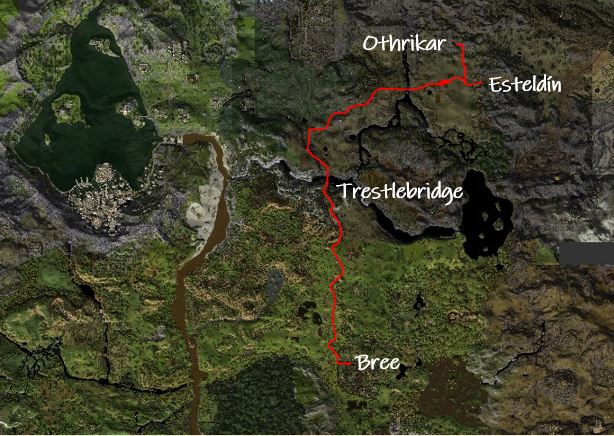
Setting: Post-War: The Prancing Pony → Trestlebridge → Esteldín → Othrikar

Featuring: Alairif, Guriwen, Naridalis, Raspi, Ness, Sotired, Tornimrad

A person standing in a room

AI-generated content may be incorrect.

The Road Goes Ever On…

It began as most tales do in Bree: under lamplight and with a low murmur of voices in the common room of the Prancing Pony. It was early still, and rain tapped gently at the windows, with the scent of pipe smoke and ale still lingering from the night before. Members of the Company of the East Road had gathered, their moods buoyant from yesterday’s celebrations. Naridalis had not rested much that night, owing to some late conversations and ramblings about the town, but she was joined again by Raspi and Alairif, and by Guriwen when they neared the same table.

The four of them had arisen early from slumber, given the full day ahead of them (at least); but there was yet to be any sight of any of the others of the Company; and perhaps there wouldn’t be. The previous night of drinking and cajoling had taken a rather high toll indeed!

“Hope your heads do not spin too much after yesterday!” said Raspi, giggling voraciously. The four greeted one another. Guriwen looked troubled. Naridalis couldn’t quite tell why. She had seen her grapple with the uncertainty of leadership yesterday, but this had seemingly come and gone. Had it returned overnight? Perhaps it was Raspi’s comment, or perhaps, as Naridalis now thought… it was the distinct lack in numbers that were now present. Perhaps Guriwen was relying on a strength in numbers after all, greater numbers.

“We seem to have lost most of our fellowship after last night.” Alairif said. “I believe it is just us who are ready to depart, and we simply cannot afford any further delays”. Guriwen nodded and calmly, she unrolled a parchment across the table, still sticky with spilled mead. It was a map. She began to trace out a route with her finger.

"Esteldín…" she said with quiet clarity, her fingertip landing on the mark. "I have discovered the Woodworkers Guild can be found there and they hold timber of the highest quality—and more importantly, they're known for dealing fairly."

Naridalis had suspected as much; her path had crossed through Esteldín before­... it was a quiet but substantial Ranger outpost nestled in the hills of the North Downs; something of a base of operations for the Dúnedain as she had later discovered­. She had always held the people there as resolute and stalwart, and certainly had had no poor dealings with them to date.

A map of a mountain range

AI-generated content may be incorrect.

Eager to be underway Naridalis said “I imagine our kinsfolk will follow us whenever they can. I shall leave a note with Butterbur here of our intent to head north to Trestlebridge today at any rate; for any to follow. We can breadcrumb our whereabouts thereafter as needed I should hope.” With agreement in hand, the fellowship of four departed, making ready their steeds and the provisions thought necessary for the journey northward.

‘It will be good to ride north again’ thought Naridalis as she stepped out into the cool morning. Much of her prior concern over threats that may yet remain in those lands seemed to be just distant memories now; thanks to the consolation and support voiced by Alairif last night.

Bonds and Banter

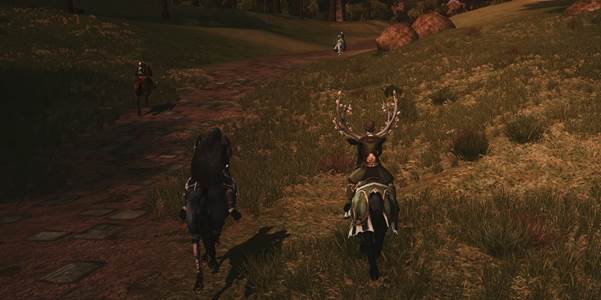
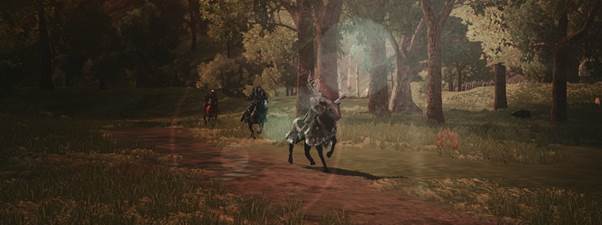
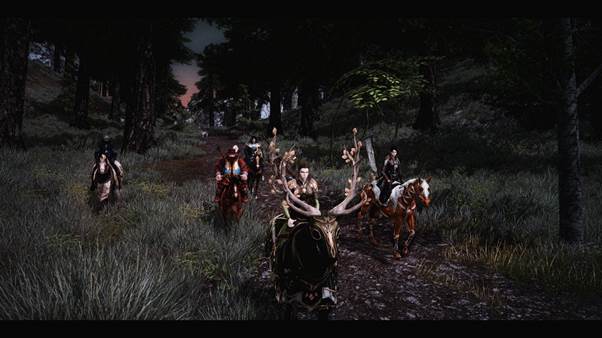
They rode through the morning beneath skies clear and blue, the scents of spring heavy in the wind. Their steeds clattered over the stone bridge of Bree and onto the Greenway. It was a road well-travelled by those who had served with the Company. She rode alongside the others on Sylva, her elk from the spring wood, rare in these lands. She wore her hunter’s calm like a second skin, her senses attuned to the world around them.

A video game of horses running on a hill

AI-generated content may be incorrect. 

“Nice trees here.” Guriwen said from the lead position in the procession. “I don't suppose we could chop these down, save us a trip?” exclaimed Alairif. “Bah, I didn't sign up for log hauling” chimed Raspi jokingly.

“The trees of this land are a lot older than many people would think.” Naridalis felt she had to say this them all, especially as they made their way passed such ancient groves. “Their silence holds the memory of the land.” she said almost imperceptibly in Sindarin. Perhaps realising this, she supplemented more loudly with a practical point, “It is why I expect the Woodworkers Guild possess the expertise that they do­—they are able to tell the difference between good quality and bad at a glance, but also how to work the material best before even felling it… but will they part with that knowledge easily I wonder..”.

Alairif seemed intrigued, “It is good that you came with us today. I must confess I know nothing about trees.” ‘In truth’, Naridalis thought, ‘neither do we’ (meaning her people… even to this day despite their long association).

A group of people riding horses in a forest

AI-generated content may be incorrect.

At that moment, the fellowship was joined by a fifth rider on the road. As faith would have it, it was a fellow kinsman of the Company named Sotired who had been passing along the way. Sotired would accompany the fellowship north, though unfamiliar with its mission; the bonds of kinship alone were sufficient cause to lend aid should it be needed.

Leaving Word and Pressing On

The small hamlet of Trestlebridge came into view by sundown... half-rebuilt thanks to efforts of many in the Company in fact. Though she had herself lent aid to this effort in times past, Naridalis did think it most peculiar that the Company had taken up such a role at all in assisting them. It wasn’t exactly on the East Road… but perhaps a lucrative contract or two was reason enough. The Company after all was minded to conduct business alongside its more altruistic endeavours. Something Naridalis could abide, though her own motivations fell more to the latter.

A group of people on horses

AI-generated content may be incorrect.

There had been laughter on the road, and lightness in the air, but peace is a fragile thing. Guriwen, hesitant but resolute, led the group forward and they soon reached the main square.

Seeing the opportunity to leave word, Naridalis broke ranks to speak with the local Captain, leaving word of their purpose and destination for any of the Company who may follow in their footsteps. Captain Trotter was more than agreeable to accommodate this request; a sign of the Company’s enduring reputation it would seem. The word would be given that the fellowship rode north and east, towards Esteldín.

The fellowship took rest and resupplied. Though the ride was long, they had made good time already and decided to press on through the night.

Warnings in the Wind

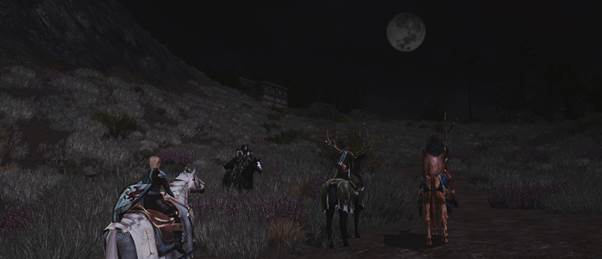
As night fell, the fellowship rode further northward, chilled not just by the cold but also by the ominous Fields of Fornost, where fell creatures yet dwelt. The road had wound north and east through land wild and half-forgotten. They were tiring now, but these lands would offer no safe shelter until at least coming upon Esteldín to the east. They would need to press on.

Alairif rode often beside Guriwen, and though their words were few, the silence between showed an understanding shared… Alairif would often give Naridalis cause to wonder whether the poor man was head over heels in love with this woman. He would look to Guriwen now and then as if seeking assurance, acknowledgement and affection in her eyes, and as near as Naridalis could tell, Guriwen would offer a form of these things in return, if not them entirely… Naridalis felt no envy, rather a subtle sorrow in her chest made itself known… for it had been quite some time indeed since she herself had last set eyes on those whom she would describe as her beloved.

A group of people on horses

AI-generated content may be incorrect.

The road continued to twist gently through the low hills and wooded folds of the North Downs, and the night wore on forever. Fortune would favour the fellowship’s speed, helped too by a Hunter’s keen ability to find the quickest paths.

They rode in an easy line—half patrol, half procession. Naridalis kept to the outer edge, ever-watchful, bow across her back, Sylva’s hooves light upon the grassy path. As morning light dawned, all could tell that the green of spring had somewhat reached these lands; though still a far cry from the lush greens seen further south.

By early morning they crossed into Ranger-marked lands, where the trees receded, and old stone markers rose among the mossy tracks to give both welcome and warning. The hills climbed, and the air grew stiller. They would pass old farmlands, not tended to in some time before crossing the river into the Kingsfell proper. “I have asked Ness, who is a member of the Woodworkers kin to meet us up there”, announced Guriwen.

A Cold Welcome

Esteldín revealed itself only at the last, its walls nestled within the hills like a secret kept. The sight brought memories flooding back to Naridalis... of allies once met, of battles long past, and of a certain measure of sanctuary…

… but this was no sanctuary now. For as they approached the outer gate, they were greeted not by camaraderie, but by Rangers who said nothing and merely opened the way. The air was heavy. The streets hushed.

Guriwen was the first to say, “Do you feel like there are many eyes on us?”, as she glanced about. Eyes would dart away, so as not to catch her view, but would then return upon them when she looked elsewhere. “Even Daervunn back there…”, said Guirwen, referring to the notable Ranger of the north by the entrance. Guriwen was clearly uneasy with this cold reception.

Alairif wasn’t too sure either. Though Naridalis couldn’t quite tell at first. It had been a long ride; they were all feeling the effects of it… Guriwen whispered to herself...’Just, your imagination is all...’

It was at this moment that Sotired announced, “Thank you for the safe escort to Esteldín, I now have to look after my brother-in-law who lives here and is unfortunately very ill. maybe we'll meet again on the next adventure and do not disappoint Deorla!”. With that, he took his leave, and almost before anyone could even bid farewell, he could be seen quickly trying to blend in with a passing group of locals before disappearing entirely… this only added to the strange feeling…

A group of people standing in a field

AI-generated content may be incorrect.

The remaining fellowship made their way to the heart of the settlement, to the wide steps of the Woodworkers’ Guild Hall. Craftspeople passed them with curious glances, some whispering to each other. The Guild Hall was home to many professions, but the Woodworkers were perhaps the most renowned. Deorla had rightly selected them as the best partners to help build up the new Kin Home back in Bree.

Naridalis noted Guriwen was smoothening out her dress and double-checking some rolled-up parchments that likely featured proposals for trade which she had carefully carried with her. Alairif placed a steadying hand on her shoulder and Naridalis, watched, saying nothing. She hoped that Guriwen would take strength from the fact that they were all here to support her in this endeavour, whether negotiation or transaction or both was required, despite their reduced number.

As the group tied up their steeds and stowed their travel attire, Naridalis couldn’t help but notice the guards lingering a little too long nearby, before darting out of view. She held her breath… Something was amiss. She couldn’t quite put her finger on it, but the stillness was no longer serene... it was tense, as if all of Esteldín was also holding its breath as well.

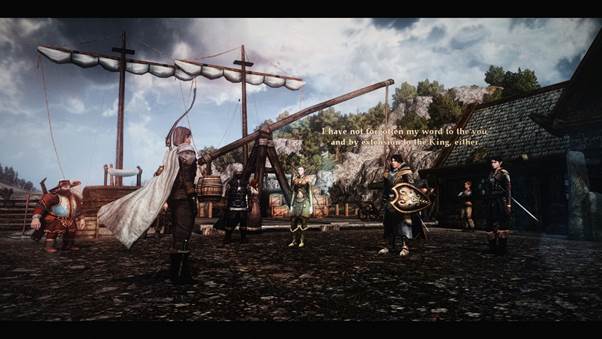
“I think we should do what we can to mask our weapons, especially if we are here to talk terms.”, whispered Naridalis, as she unpacked and donned her cloak; doing a good job to mask her carrying her bow… and daggers. “You brought weapons??”, cried Raspi. “You might be right. They might get the wrong idea if we walk in armed to our teeth.”, Alairif said supportively. “I have my lute, it's heavy enough in a pinch”, Raspi twinkled. “Never underestimate a dwarf with a blunt object!”, Alairif joked. Despite the reception, the fellowship was holding on to its mood.

There was nothing more to do but step towards the Guild entrance together; so, they did. They waited. And then the doors opened.

Confusion and Accusation

The hall was warmer than expected, but no less severe. Stone walls polished to a sheen; a large area set for crafting of the finest textiles and carvings and jewellery and more; but there was no welcome for them. Only stillness; whispers, glances, shadows. Guild workers moved quietly through the chamber; eyes averted, hushed voices.

Naridalis took it all in at a glance... the tension, the caution, the faint shift of weight in the various guards’ stances. This was not a hall ready for trade. It was something else…

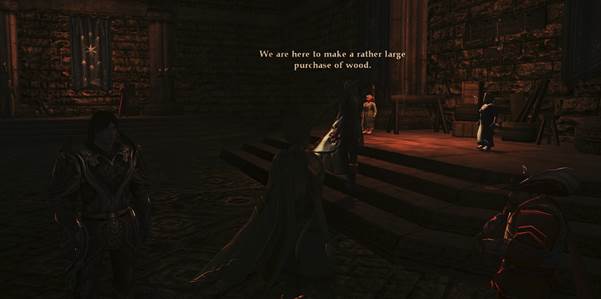
A video game screen with a person standing on a staircase

AI-generated content may be incorrect.

Near the back of the hall, on a raised dais, the Guildmaster stood with their associates.

Guriwen stepped forward with all the grace she could muster. Her voice was steady, if a touch rehearsed. “Greeting, good Guildmaster. We are here to make a rather large purchase of wood—for the kinhouse of the Company of the East Road.” Raspi, ever the bard, hoping to lighten the mood, began to play a gentle melody from a songbook likely well known…

Viola Brockhouse, a stern hobbit with sharp eyes and a face not given easily to warmth, gave them all a look that made the temperature drop a degree immediately. One of strings on Raspi’s lute snapped! The melody waivered…  

Naridalis could instantly see it: the Guildmaster had recognised their name alright… Alairif caught it too and leaned in slightly, whispering: “Did you see her face when the Company was mentioned?” But the words had landed. And they were poison.

Naridalis, increasingly influenced by her time amongst Bree-folk, stepped forward and in a very uncharacteristic attempt at humour and said “...and we’ll throw in the Dwarf for free.” She smiled at Viola to show it was jest, but her heart was racing. Something was very wrong. The room’s temperature fell further.

Guriwen, sensing the shift, quickly added, “I assure you, it is on the up and up, dear lady.” However, the Guildmaster did not look convinced. Her face tightened. Her eyes swept over the group like a blade.

“I will not sell our lumbar to a kin full of criminals!” she flatly remarked. Neither expanding further nor meeting their gaze.

With that, Guriwen visibly staggered backwards. As if the words had pierced her very heart.

Alairif stiffened. “A kin full of...? What is this?”

“Criminals! Bah, there was never a conviction at all!” Raspi quickly chimed in, seemingly having entirely missed Naridalis’ failed attempt at levity just before...

Viola’s silence held weight. There would be no deal.

Revelations

“What are you on about, Raspi? And where is Ness?” demanded Alairif. Guriwen stepped away, saying she’d go in search of Ness... perhaps someone who might yet speak sense on their behalf to the Guildmaster; she excused herself as politely as she could, though clearly reeling from the abruptness of it all.

“Well, I am just saying that, you know, there might be rumors but nothing solid”. Raspi seemed to be struggling to find the right words, and yet he continued… filling the gap in conversation. His voice echoed in the hall… He was avoiding eye contact while talking.

“Lies spread by our enemies, I am sure!” sprang Alairif. Raspi responding with “…And rumors…. bah, if I'd believe all the rumors, I'd be raising a few of someone else's children, pardon my language!” bearing a grin across his face.

The Guildmaster seemed to be totally unperturbed and more visibly affronted.

“Such attitudes are most unexpected for a guild as renowned as the Woodworkers of Esteldín,” Naridalis said softly, indignation now quietly threading her words. The Guildmaster’s remarks seemed entirely wrong to her, at odds with reality… entirely disrespectful of the good work the Company was known for… what they were individually known for…

But the Guildmaster seemed not to acknowledge these remarks in the slightest and stepped to the back of the hall, starting a quiet discussion with her people.

The fellowship saw the opportunity to regroup near the centre of the space. Surprise had turned to frustration between them at these claims.

“You will find no criminals in our ranks!” Alairif shouted weakly at nobody in particular, and nobody seemed to acknowledge him in return. Raspi and Naridalis were silent, though Naridalis could tell that Raspi was starting to grow increasingly stressed in demeanour. Dwarves after all are known to be easily insulted.

Alairif began pacing slightly. Time was passing. This was beyond strange. Where was Ness? Where was Guriwen? Surely they must have our kinship confused with another…

Naridalis tried to piece it together. She turned to Alairif just as a woman neared the three of them, from somewhere. Ness had arrived, breathless and distracted. Though Naridalis had never met her, it was clear Alairif at least had and recognized her face.

“There you are” Ness indicated to Alairif. “It is Guriwen, I’m sorry Daervunn has a bunch of Rangers there...” she muttered, rubbing her temples.

“Ness! What took you so long? This hobbit has gone mad!” Alairif pointed towards the Guildmaster, but turned to Ness and asked “what about Guriwen?? Is she Safe?”. Before hearing the answer, he tried to run off, but Ness stopped him. Nodding her head she said, “Aye for now, she and Daervunn are old friends...”.

“What happened here? Guriwen said something about needing to buy lumber…?” Ness asked.

“When we told the Guildmaster our purpose, she refused to sell us any! She claimed she would not sell wood to a kinship full of criminals.” replied Alairif.  

Raspi hastily turned to light his pipe. Fumbling his hands dropped his pipe-weed, so he unpacked another one from his pocket. Ness looked to Raspi suspiciously. “What do you know, Dwarf?”

Raspi feigned a cough and hesitated, responding in a fast string of words thereafter… “Well, I know there are some rumours that “we” do shady business, but they are unfounded. That is all…. If you would hear half of what is said of those rangers at Prancing Pony, you'd stay away from them and don't even look their way….. If anything I have learned in the town of Bree is that sometimes people would push the burden of proof on others, but if they are claim that we are the criminals, they have to prove it….. It is not us that have to prove our innocence!!” he exclaimed excitedly, having to catch his breath. He took out another pipe and started smoking both at the same time! Naridalis raised an eyebrow.

Ness quickly relayed how Guriwen was friends with these Rangers, and that Guri, and she, would both assure us that they are ‘not criminals whatsoever’, picking up on what Raspi was intimating.

Alairif seemed to agree with Raspi, at least in-part, adding how “Bree-folk are not fond of Rangers, but I have come to trust in their judgement. That is what makes these accusations so worrisome. We will need to ask them directly”, giving the hint to Ness to step up and address the Guildmaster directly on their behalf. Where was Guriwen… was she safe…

With that Alairif decided to try and open the set of doors that the fellowship had used to enter the room. He wished to know Guriwen was indeed safe. While Ness approached the Guildmaster with a polite curtsey, asking what trouble the Kin was claimed to have caused.

The Guildmaster turned to speak to Ness just as the sounds of Alairif loudly banging on the doors echoed throughout the hall. They were seemingly closed, in fact they did not even budge.

“They have been barred from the other side!” he said aloud, “We are trapped!”

Turning from Alairif back to the Guildmaster, Naridalis said aloud “We came with trade in mind, not trouble. If it is trust that is lacking, tell us how it might be earned.” But the Guildmaster did not look up. She remained in close discussions with Ness.

Alairif shouted, “You'd better answer, and fast!”. He marched forward towards the group, clearly intending to threaten the Guildmaster himself. Feeling the tension was boiling over, and fearing for the safety of the fellowship, Naridalis subtly began to reach behind her cloak to her hidden bow. Though a skilled bowmaster, and practiced over centuries, she did doubt whether she could adequately retaliate quickly enough to protect all of her allies here assembled should the whole room erupt. There were many guards hugging the walls and corners; much more than would be normal in any such setting. That said, she knew she would have more than enough time to put an arrow past the ear of the Guildmaster, as a warning shot, should any such warning be necessary.

“Whaaaat!?!” Ness was heard say. “Our leader… and…?”

Turning to Raspi, Ness forcefully queried him about what he may know of the aforementioned rumours, and in more detail. Not accepting his deflection of being ‘just a bard’ she pressed him further. Talk of ‘posters’ that Alairif had seen emerged, and of reports bandied about by the Bree constabulary, alongside other parties, not least of which the Rangers themselves or so it would seem… a web of claims and allegations and vague misdeeds at the best of it.

“Those "wanted’ posters are lies!” cried Alairif. Recalling something of old…

“Well, I don't know maybe they have heard about smugglers on the East Road, but that is not us, we are the Company of the East Road, we protect traders and... you know... stuff like that. Adventures in strictly legal field” said Raspi; over-emphasising certain words… before his eyes lit up with an idea! “I will write to lord Dwalin, there will be a scandal, I tell you, scandal!” He seemed confident in the impact of this last assertion, but again the Guildmaster did not seem to care.

“There can't be some truth to those rumours…. can there be?” said Alairif, but he said this rather quietly... he was talking to himself.

“Why would Daervunn lie?” Ness asked Raspi directly.

Seeing an opportunity to de-escalate, Naridalis chose this moment to break in, saying how she knows some of these Rangers, “…and I believe they would not lie without reason. But it seems there has been some error in their judgment. If there are charges against us, against the Company, they should be made openly, not whispered in the shadows. If they are mistaken, let us speak plainly and resolve this in truth, as any honourable folk should”.

Alairif was the one to respond, “But what if they have already been made openly...?....”.

In the heat of the moment with the others’ talking, Naridalis had taken her eyes off Alairif. Since that time, since his first raising of the posters that he’d seen… it seemed he had changed. He now looked different. His face, his eyes, even his temperament, had all changed.

As if some new cruel understanding had begun to take root. He looked down as he asked, “Have you read the posters? Perhaps they were not lies after all?” Ness looked at him… and it seemed for a short time, a knowing look.

Just then, the doors open a crack. A crack only big enough to slip through, and Ness took it.

Alairif snaped to and was alert once more. “Only Nessta?.... Why?.... You will regret this!” There are hushed voices at the door which only Alairif can hear.

He bangs on the doors as they shut. He falls to his knees. “But what if they are right?”

Naridalis moves to kneel by his side. Raspi follows suit, stowing his pipes in the process.

“Then we address it Alairif. But I have not heard sufficient cause as yet to see any truth to it” said Naridalis. At this, Alairif recounts what he knows of the posters, of how years ago, Deorla was purported to have killed a Ranger patrol; how he had believed it was nothing but lies to disrupt the work of the Company and of its leader Deorla.

The discussion grows, and Alairif reveals more about Deorla’s alleged past actions. Naridalis is unsure what to think. Raspi chimes in, “Well what of it, if they can't have Deorla, they will have us instead, is that it? Nonsense! Dwalin will hear of this! You can't treat a good dwarf like that!”.

It was right then that the full weight of this situation came crashing down upon them all.

Ultimatum

The doors opened again—not to release them, but to admit a figure not yet seen: a tall, grim figure bearing the sigil of the North. A female voice was clear and cold.

“And here you are… I am Tornimrad, the tracker for the Northern Ranger. I have been assigned by King Elessar himself to seek justice for these crimes, long unanswered, and I intend to get it.”

Alairif paled. “King Elessar...!”

Tornimrad nodded and said, “Yes… We can have HER... It is high time SHE answered for HER crimes.”

“What crimes do you speak of?” asked Naridalis sternly. “You mention 'high time,' yet you offer no specifics. We have heard rumours and whispers only, but I have yet to hear the true charges. If there is truth in your words, then bring them to light, and let us hear them. Until then, these vague claims hold no weight with us.”

The Ranger calmly replied, “Murder of a Ranger patrol. Various assassinations. Carried out by your leader—Deorla—and one Mowine. The gold that bought your kinhouse? Stained with blood. I could go on…”

Raspi's expression soured as he hears the name Mowine and it seems like he lost most of his fire with which he was claiming his and others' innocence. Where had he put those pipes….

Alairif asked, “But... What proof do you have of this? How do you know it was them?”

Tornimrad replied, “Guriwen has been forthcoming... Mowine herself bragged about it is how the kin has become rich…. These explain it. They are signed by the King.” Tornimrad then handed Alairif a stack of weathered Wanted notices.

“Guriwen has begged for your lives, and I believe her that you’re all just going along with it all....” Tornimrad added.

Alairif took the stack of posters and gasped, “These are the same posters...” and immediately goes quiet…

“Murder... and assassinations?” Naridalis repeats slowly, almost as though testing the weight of the words in her mouth.

Raspi seeing an opportunity chimes in, “Well then. The accusations were heard, and notes are taken. We appreciate your honesty and would not overstay your welcome…. As you are not claiming ill done by any of us in particular…. we shall take our leave and be on our ways”, moving to see if he might pass around the Ranger. But there is no room to slip by. Tornimrad bars the door.

Alairif seems entirely dejected. The fight has left him. The posters fall to the ground from his hands.

“If our fates are to be determined by the king’s own hand, then so be it” said Naridalis. “But I warn you, Ranger, there is more to the Company of the East Road than these accusations. Many in the Company, myself among them, have joined with noble intent and conduct ourselves with noble actions. We ask that you allow us our leave this place to investigate further out in the open, where no shadow can cloud a just verdict on such claims of misdeed by Deorla.”

“Well now I'd rather see a trial first before I say HER crimes or whatnot” offered Raspi.

“You may go” Tornimrad said, “but tell your kin leader something for us… We know who SHE is…. We expect you as her kin to do the right thing. Have her face the punishment of her actions.”

Alairif looked up at this, and asked “You want to hold her in trial, do you not? And you need us for that.” The Ranger nodded.

Naridalis stepped forward then, slowly. She was taller than Tornimrad, but they showed no sign of intimidation. Her bow was still masked behind her, but her anger at this situation was now unshrouded. “You ask me to choose, Ranger,” she said quietly at first, but increasing in sound, “but I will not act on half-truths or the sway of fear. I trust in the King’s seal, and if these accusations are true, they will be known and they will be held accountable. But I will not betray my kin leader without first understanding the full depth of these claims.” Naridalis then knelt to pick up the fallen posters, her first sight of them since their mentioning. Tornimrad was chuckling.

Then there was silence. Long and uneasy.

“I will help you bring her to justice. But if you expect us to rise in arms against our own kin, you are deeply mistaken.” offered Alairif flatly, but with sufficient conviction on both aspects… to which Tornimrad nodded and replied, “That is not my problem”.

“You may go,” Tornimrad finally said, her voice dismissive. “Lady Guriwen has been sent back to Bree, she was...upset.” And with that, the Ranger turned and exited the room. The doors opened and there was stillness in the air.

The Road Back

And so, the fellowship, broken as it was in more ways than one now, left Esteldín... no wiser, no wealthier, and no longer welcome there.

They walked not as emissaries, but as exiles. Eyes followed them. None spoke. Mothers turned their children’s gaze away from the sight of them.

“Let us leave this place,” Naridalis said at last. “We may not have answers yet, but we will not stand idle either. The truth must come to light—and if the King’s justice must be met, it will be met in such light, not shadow. I expect this will be the Company’s greatest test to date. The King’s justice may come, but I trust no one to deliver it but us.”

“That we will, Naridalis.” replied Alairif, he was recollecting his former composure now to some degree… and then seeming to recover some more of his characteristic wit, he jokingly added, “I don't suppose we're getting that wood, are we?”.

Despite the situation, and despite herself, Naridalis cracked a smile and said, “The wood... no, it seems out of our reach for now. The Guild has set its own course, and the Rangers' words add dead weight to our present indictment. But the Company’s need for the wood still stands. We will need to find another way... perhaps through our own efforts, or a different path. There is no harm in trying again when the dust settles; if the dust settles.”

As the party readied their steeds, Alairif was contemplative in saying “I trust the King to make the right call, when presented with the truth.”

Raspi seeking to be constructive chimed in, “I suggest we go to Wildwood, there are woodcutters there, and not ranger kind. We can get good pine wood there and ship and by Brandywine and the by the East Road”.

“Yes”, said Naridalis, “The Wildwood would be a good choice indeed…. I have some contacts there, and it may provide us with both the wood and the time we need to reconsider our next steps. But we must be patient and deliberate. We cannot afford to rush into action. Let's return to Trestlebridge, gather our thoughts, see if any more of our Kin have been able to meet us there… and move forward wisely. No one should act alone on this larger trouble.”

“We can get beds and warm meals at Othrikar if you don't mind the road” Raspi suggested to them both. “And my kinsmen would be most hospitable!... But we will have to pay… I would rather not travel by Fornost Fields at night”.

The prospect of a shelter nearer at hand was irresistible to the three. Othrikar lay northward a ways yes, but much closer than Trestlebridge by leagues. Its stone walls and halls and no-nonsense dwarves would give a much welcome respite indeed.

The road stretched on ahead. The fellowship rode, silent but together.

Naridalis watched her companions closely... Guriwen had retreated to Bree, understandably so and likely shaken from it all. Alairif had grown more distant, changed, withdrawn but trying to rekindle something in himself. Raspi too seemed quieter, but there seemed to be something under that practiced veneer of his... something which troubled him or his perspective of the days ahead… The fellowship that had felt so warm and light only days before now bore a shadow.

And she could not shake that feeling.

The bond Naridalis had begun to share with Alairif and Raspi, indeed with the whole Company… now bore a weight.... a shared burden, of not just companionship, but truth, lies, justice, injustice, murder and perhaps worse… and the bitter cost of what it all might mean…

What lay ahead, in Othrikar or beyond, none could say.

Naridalis’ memory of lighter days... the laughter on the road, the warmth of the Prancing Pony’s hearth, the hopeful talk around the new Kin house in the Bree homesteads... all would be called upon, perhaps more than she yet knew, in the days ahead.

And as they rode on beneath the lengthening sky, the fires of Othrikar now shining in the distance, she held those memories close. Very close.

Continues with “A letter in the Night”

4. "A Letter in the Night"

Following on from "Where the Road Darkens" 

Setting: Post-War: Othrikar

Featuring: Naridalis, Lonoric, Alairif, Raspi, Deorla

A envelope with a wax seal

AI-generated content may be incorrect.

Naridalis' Diary
Othrikar, North Downs, Late at Night

The fire crackles in the hearth, but I find little warmth in its glow. The stone halls of Othrikar are a refuge of sorts, yet no wall of rock can keep out the thoughts that trouble my heart.

I cannot sleep. Not for the snores of my companions or those of our host Dwarves, but for the weight of what has been said about the Company… about our leader… about me (by my association with them). The accusations linger in the air like mist in a tangled wood... impossible to grasp but choking all the same.

Deorla... the fury that these Rangers possess for you cuts me deeply. I have not known you or indeed many in this Company all too long, and yet, I feel kinship with you… Alas! The Rangers of Esteldín have presented us with wanted posters signed by the King himself! Who am I to argue with such things?

And yet why does it feel that the truth lies hidden, just beyond my reach.

To rest my mind, while my companions Alairif and Raspi take some well-earned rest, I turned to my satchel... seeking anything that might offer comfort or distraction. And there, creased and forgotten, I found a letter.

It had arrived in Bree days past, before we set out north. In our haste to reach the Woodworkers and secure lumbar for the Company’s new kin house, I had tucked it away for later reading.

It is from Lonoric.

Sweet, curious Lonoric; the hobbit minstrel with ink-stained fingers and a heart too large for the Shire. He writes to me from the Mathom House, where it seems he has stumbled upon a crate of records…. Papers, ledgers, scraps of old tale… all bearing the name of our Company. He writes with the thrill of discovery, noting strange inconsistencies and half-told truths in what he’s found….

The timing cannot be chance.

The wind shifts, and I feel the hand of fate in this. Perhaps even the will of the Valar. Lonoric may hold the key to understanding what happened before... to uncovering the full shape of the story we now find ourselves trapped within.

I will write to him.

He must delve deeper into those records, and send word of what he finds... quietly, and with haste. He is to look for any mention of such activities as alleged by the Rangers, or other such records.

We cannot move forward while we are blinded by half-truths. If Lonoric can piece together even part of the tale, it may guide our next steps. I trust him more than most. For what is a minstrel, if not a keeper of memory?

Let the candle burn low tonight. The shadows whisper, but perhaps, at last, light begins to stir in the dark.

—N.

Continues with (Live RP) "Beneath the Bark”

5. (Live RP) "Behind the Bark"

Author’s Note: This piece was shaped with a little help from AI. It provided assistance on things like the structuring, some names, shortening some verbose language/ideas as I'd written, and gave me the odd turn of phrase here and there. The heart and shape of the story are my own (though adapted in live session by others naturally), but I realise it is important to be transparent about my use of AI support in producing it ultimately.


| The following presents a summary of an RP session which took place as part of a series by the Company of the East Road, which can be read in their Chronicle here. |

Short Outline of Major Story Beats:

  1. Gathering the Fellowship – Naridalis, Alairif, Raspi, Tarnon and Ulysior regroup in renewed fellowship to complete the kin’s mission to acquire high quality lumbar to complete the Kin House; this time via Trestlebridge and the Wildwood itself.
  2. Visit to the Brotherhood of the Axe – They appeal to Aran Greenwith (NPC), leader of the Brotherhood for lumber to complete their kin house.
  3. Retaking Cotfast – Aran requires help clearing Cotfast before any deal can proceed.
  4. A Disappointment – Cotfast is reclaimed, but Aran cannot honour their request due to recent setbacks ultimately.
  5. The League of the Axe – The fellowship then approaches the League for aid, meeting its leader, Enid Nettlesting (NPC). More flexible and willing to grant the request, there are soon complications...
  6. The Return of Tornimrad – A stern Ranger reappears, pressuring the group over unfinished business with Deorla.
  7. A Grisly Discovery – A work crew from the League is found slain, and the lumber stolen.
  8. An Unlikely Option – The fellowship discusses turning to a shady contact as a final resort, someone Naridalis has heard of, but has had no dealings with. Naridalis pushes the group to at least make contact and then decide their course.
  9. A Grey Contract – The group are presented with a contract for the lumbar, allegedly sourced legitimately, and ‘verified’ as such by Captain Trotter (NPC) of Trestlebridge. However, the path here has been laced with half-truths, confrontation and lies, and the fellowship is naturally split in their views on whether or not this is a contract for goods that can be accepted.

Characters Involved:

  1. Naridalis – Elf hunter and lead speaker for the fellowship, given contacts in the Wildwood; emotionally steady but burdened increasingly by the moral dilemmas presenting.
  2. Raspi – A pragmatic and cheeky Dwarf, wary of the politics & frustrations of the task.
  3. Alairif – Honour-bound and articulate, juggling loyalty to his word, to justice and his past.
  4. Tarnon – Quietly capable, offering stealth and combat support.
  5. Ulysior – Perceptive and mystical, often picking up on things others miss. Ally & friend to Alairif and Guirwen et al.
  6. Aran Greenwith (NPC) – Leader of the Brotherhood of the Axe | voiced by Naridalis.
  7. Enid Nettlesting (NPC) – Head of the League of the Axe | voiced by Naridalis.
  8. Tornimrad (controlled by Guriwen) – A confrontational Ranger with royal authority, pressing the fellowship to deliver Deorla.
  9. Mattas (controlled by Naridalis) – A potentially shady figure in the Wildwood.
  10. Linnet Redholm (NPC) – A contact who may be able to reach Mattas | voiced by Naridalis.
  11. Captain Trotter (NPC) – The burdened leader of the Trestlebridge guard | voiced by Naridalis.

A group of people riding on a horse

AI-generated content may be incorrect.

Summary of the Plot:

A fellowship of the Company of the East Road (and allies) had come to Trestlebridge with a clear enough goal: to secure quality lumber for the kin house.

Despite, other larger factors presented to them back in Esteldín, by the Rangers, and the consequences which would undoubtedly flow from that faithful meeting, their trip to Trestlebridge by comparison was intended to be a relatively simple errand... resource gathering. It would however spiral quickly into something much more complex.

Given her prior knowledge of the Wildwood, and having established firm reputation with its inhabitants, Naridalis led the fellowship onward, hoping her old ties with the Brotherhood of the Axe might secure them what they needed.

Things started promisingly; Aran Greenwith greeted them warmly at first, and recognised both her and Raspi from past dealings, but not the others. His mood shifted fast however. He told them Cotfast had fallen again and he couldn’t consider trade until it was reclaimed. Despite some misgivings, the fellowship agreed.

They scouted Cotfast, found brigands holding it, and launched a surprise assault. It wasn’t a long fight. The place was cleared, and they returned to Aran expecting good faith. Instead, they were met with more disappointment, he refused to honour the deal. Apparently a shipment had gone missing, operations were strained, and the fellowship were left with empty hands once more.

This led them to the League of the Axe and to Enid Nettlesting, another old contact of Naridalis. Enid seemed more open to talk, and was even ready to help... except her lumber crew were late coming back to Trader’s Wharf. So again, the Company pressed deeper into the Wildwood to find them. What they found instead were brigands posing as “guards,” and the corpses of the League’s workers. It was grim. The wood had clearly been stolen, and the crew slaughtered.

A group of people in clothing

AI-generated content may be incorrect.

Tensions were already high when Tornimrad reappeared; Ranger, agent of the King, and the one who’d originally levelled accusations against Deorla in Esteldín. Her presence sparked more doubt and pressure on the fellowship. Alairif especially seemed caught between his loyalty to the Company and his duty to justice, though he reminded the Ranger that he had given his word. Raspi, usually cheeky, was downright bitter. Ulysior grew quieter, more watchful. Naridalis stayed focused on the task, though even she seemed shaken by the Ranger’s reappearance, and the clear sign that they were being ‘watched’.

A screenshot of a video game

AI-generated content may be incorrect.

With official sources exhausted, Naridalis led the fellowship to a final lead... a man named Mattas, someone she'd only heard of through hushed whispers. Through Linnet Redholm, they arranged a meeting.

A group of people outside a house

AI-generated content may be incorrect.

Mattas was as slippery as expected: he had wood, yes, but claimed it was legally obtained.... only after being threatened to speak true and end his charade… but he demanded double the coin and total discretion. He admitted, almost proudly, that the Brotherhood and League labourers had sold him surplus stock under the table, suggesting the deal was legitimate, even if not entirely noble. He made the case that the labourers had filled their quotas to both the factions, and they preferred to sell their extra to Mattas, as he had promised better prices than what either faction would pay them.

Captain Trotter of Trestlebridge, a soldier and leader of the defence of Trestlebridge, was dragged into things by Mattas. The Captain revealed that indeed Mattas had lumber but urged him to sell it to the Brotherhood instead. He vouched for the workers’ and begrudgingly allowed the deal to go through, clearly frustrated but unwilling to stop it. His presence seemed to validate Mattas’ story, at least in part.

Still, the fellowship was divided.

  1. Alairif remains resolute in his refusal. He views the transaction as morally compromised and opposes rewarding deceit or questionable enterprise. He refuses to have anything to do with it, walking away.
  2. Ulysior, too, distanced herself, making her feelings plain that she did not trust these men. They stand firm, declaring the situation “all wrong.” They question the entire premise and choose not to be involved.
  3. Raspi, having initially entertained the offer, appears torn or weary, leaning out of the debate with muted frustration. He becomes wary and doesn’t say much either way; his usual sarcasm had cooled.
  4. Tarnon had stayed back at the Wharf, perhaps to assist the league further…. ((AFK))
  5. and Naridalis… while cautious, believes Mattas may be telling the truth… after many lies… but doesn’t see why the Captain would lie. Trotter’s endorsement weighs heavily in her reasoning.

A contract for sale is offered, and Naridalis it seems is the one now left with the possibility of the entire mission collapsing or to accept on behalf of the Company and suffer any consequences.

Outcomes & Conclusion:

The events end on a tense note. The deal is not confirmed, but the option remains on the table.

The debate is no longer just about wood, but about trust, moral compromise, and responsibility. Whether to honour the Company’s needs at the risk of its integrity, or to uphold principles even at the cost of its stability, is the heart of the dilemma.

As the events come to a close, no definitive decision has been made. The fellowship is deeply divided and fractures...

Despite noble intentions, the fellowship was forced to confront the grey areas between duty and honour. The loss of life, the failure of trusted allies, and the looming shadow of Deorla’s past all weigh heavily on them.

Whether the decision to reach out to Mattas will damn or deliver them remains to be seen. But one thing is certain: the path ahead is no longer straight; it hasn’t been for some time.

Continues with “The Weight of Grey”

6. "The Weight of Grey"

A wax seal on a document

AI-generated content may be incorrect.

Naridalis’ Diary

Trestlebridge Inn, by the Wildwood, Third Age.

This day has left its mark upon me. Not by blade or shadow, but by doubt.

I have walked through bloodied ruins, through ash and betrayal, and now I stand at a crossroads, not of road or trail, but of conviction. We found the workers slain, their cargo vanished, their lives spent in silence. And then came Mattas, with his smooth tongue and shadowed wares, offering a path forward, if we would but hold our noses and walk it.

Alairif stood against it. Stood against him. His voice was steady, his honour unyielding. I admire him greatly for it. But I wonder... can such absolutes hold in a world that is no longer clean? His is a noble heart, but nobility can be brittle. I fear he sees only the white and the black of things, while the world moves ever more in grey.

And yet… what of me? Am I too willing to compromise? Too eager to do what must be done, rather than what should be? 

It is easy to say “for the Company,” and harder to weigh what is lost in the doing. But I have seen the Company struggle to hold itself together. I have seen good folk try to build something true. 

If I can help them, must I not?

I think often now of the Golden Wood. The hush beneath the mallorn leaves. The simplicity. The stillness. I yearn for that peace. But the world beyond has grown loud, and dangerous still, even after the Enemy’s fall. Darkness wears new faces now.

This is the Age of Men. And I... am not one of them. But I cannot hide in the wilds forever. If the Elves are to remain in this world, we must choose not just to witness, but to act. To guide, perhaps. Or to stand beside them, when they falter.

I only hope I am not faltering, too.

—N.

Continues with “A Daughter's Bargain”

7. "A Daughter's Bargain"

To Lord Ceneshar of Lothlórien,

Court of Celeborn the Wise,

Caras Galadhon

Father,

It has been long since I last wrote you. Too long, perhaps, for words alone to bear the weight of what now presses upon me. I do not know if this raven can weather the leagues between us, or if the winds will favour her wings.... but she carries more than parchment. She carries a daughter’s grief.

You once said I turned my back on Lothlórien. That I fled from the safety and splendour of our people to chase the wild like a leaf in the river’s current. Perhaps you were right. I was young. I am young still, though I now feel older than my years.

The world beyond the Golden Wood is not as I imagined it. It is beautiful, yes... but cruel in turn, and full of quiet breaking. I went out in service of my kin here in the west... Men and Elves and those in between. We sought only lumber. A simple task, a humble cause: to raise a hall where travellers might rest, where our Company might gather in peace, and from where its operations to protect goods and people moving along the great East Road might be coordinated.

But peace is not so easily hewn.

Our efforts have brought us to grief. Friends have been lost. The work of others... innocent folk, undone by blood and betrayal. The very wood we sought now lies tainted, its source unknown or suspect. A man named Mattas offers us what we need, yet doubt stains every word he speaks. One of my companions, Alairif, steadfast and just, would walk away. I envy his certainty.

But I—? I am left to decide. To sign a contract that might doom us… or to abandon the task, and with it the Company’s hope... and break my commitment to them. My fellowship falters. The world I thought I knew lies fractured. What began as a journey for timber has become a trial of spirit.

And so, with great sorrow, I turn to you. To home.

Father, I ask.... no, I beg - for aid.

If there is any grace left in the court of Celeborn… if any voice remains that would speak for me, let it be yours.

I seek a special dispensation: the delivery of seasoned oak; lesser than mallorn, I know, and I would never dare ask such a thing, but timber still noble and strong, fit to serve the needs of Men.

I make this request knowing what it means. Knowing what you will demand in return. That I come home. That I give up the wilds. That I trade freedom for duty. And if that is your price… I will pay it.

Not for wood. But for hope.

For the Company.

For a chance to set things right.

Your daughter,

—Naridalis

A red wax seal with a dragon design

AI-generated content may be incorrect.

Continues with “A Father's Price”

8. "A Father's Price"

A wax seal on a document

AI-generated content may be incorrect.

Naridalis’ Diary

Trestlebridge Inn, by the Wildwood, Third Age.

The raven returned today. I heard its wings before I saw it, cutting through the dawn like a blade. It should not have made the journey so swiftly. My father must have willed it, whispered to the wind as only he can. The seal was his - silver wax, the leaf sigil of Caras Galadhon pressed deep. I broke it with trembling hands.

His letter was as I feared.

/“You have wandered far, Naridalis. Farther, perhaps, than sense permits. It is one thing to walk beneath strange stars, and another to bind yourself to errant causes. You joined this Company of Men—what have they offered you, save the burden of their mortal failings?”/

He speaks of my life in the west like it is some trivial pursuit. A child’s fancy. He names my choices folly, my loyalty misplaced. He does not ask about any of those I call my friends, though I know he remembers their names from older letters. They are strangers to him, and he wishes them to remain so.

/“You have worn the name of Lothlórien like a cloak left on the roadside. If you would have it back, know the cost. We will send the oak, as requested; sufficient for your little hall. But in return, you will return. Your exile ends. Your wandering ends.”/

I ought to be glad.

And I am. Truly. The Company will have what it needs. Fine timber, by the standards of Men. Straight, true, seasoned with care. Not mallorn, of course... he made certain to say that, as if I would ever be so brazen.

But as I read his words again, I feel a slow breaking inside me. Perhaps I was wrong. To think I could remain forever apart, untouched by the call of my people. To think I could dance between worlds and belong to both.

I have bartered my freedom for the sake of my friends. And I would do it again. But I wonder now... was this always the end of the path I chose? That no matter what roads I walked, they would always lead back to him. To duty. To a golden cage, however lovely its leaves may be.

The forest sings outside, but I do not feel its song this morn.

—N.

Continues with “What Remains Unspoken (Kin RP - Entry 08)”

9. "What Remains Unspoken"

A wax seal on a piece of paper

AI-generated content may be incorrect.

To Alairif Nordhcoll

Wherever this may find you—

Or, if not, to be delivered to his home in Bree-land.

Alairif,

You left in the night. I do not fault you for it.

I suspect you go to seek truth, as ever you do, and I respect that deeply. You have always been guided by a steady light, and though it does not always reach others, it never wavers. That alone is a gift to those who walk beside you... even if they do not always say so.

I write only to tell you: the lumber is on its way.

It is not from Trestlebridge. Nor the Wildwood. I found another path... but the cost was mine to bear. I made the choice, for the Company. For the kin we spoke so much of protecting.

You were right, in many ways. I thought I could walk in the grey… but this was my first true test of it, and I faltered.

The promise is kept... but at a price that will follow me for some time. Perhaps always.

Tell the others, if you cross their path before I do. And should you never return this way, know I wish you good fortune in the road ahead. May it be lit with truth, and honour walk beside you.

I am not sure we will meet again.

—Naridalis

A red wax seal with a dragon design

AI-generated content may be incorrect.


Continues with “For the Leader Who Was”

10. "For the Leader Who Was"

A wax seal on a piece of paper

AI-generated content may be incorrect.

To Deorla,

Leader of the Company of the East Road

/Delivered by trusted hand, or left at the Company Kin House, Bree Homesteads/

Deorla,

This letter may reach you before I do. Or perhaps I will already have passed through Bree by the time it arrives, unseen, unspeaking. I leave it not only to inform you, but because it must be said.... these words, however unwanted, must be given voice.

You tasked a group of us with a simple thing: get wood. Quality wood for the new kin hall, for the repairs, for the hearth we might build together in kinship. And so I went with the group, in fellowship... willingly. Not for glory, but out of commitment to the Company, and to you, its leader.

We travelled north. To Esteldín first, where the wind bore not promise, but shadow. There, the Rangers, those cloaked in the King’s justice, spoke a name I did not expect to hear. Yours. They spoke it not in respect, but in accusation. Of blood. Of betrayal. Of murder.

I did not believe it. Not truly. Not then.

But when they spoke, they spoke plainly. And they charged us with bringing you forth. And though many were unsettled, none refused.

Some did so for justice. Some, perhaps, for doubt.

I went instead to the Wildwood - I urged my fellowship onward to fulfil the mission that you gave, to salvage at least one promise while the rest began to crack and crumble.

What followed was a descent.

Cotfast had fallen. The Brotherhood turned us away, despite our help. The League offered hope, but their workers were found slain, the timber gone. Orcs, brigands, corpses and silence. We followed every lead into dust.

And then… came the deal.

Mattas, a whisper-smuggler with a serpent’s tongue, offered what we needed. But there were too many shadows behind him, and we could not all bear them.

Alairif, true to himself, walked away. Ulysior, a friend of Guriwen, left too. Raspi held his tongue, but his eyes told their own story.

The fellowship fractured.

And so I chose a path I did not want. I wrote to my father in Lothlórien. I asked him for aid... not in coin or counsel, but in timber.

And he answered. The oak will arrive. The kin hall will be completed. The promise, at last, fulfilled.

But I have paid a price.

My father has summoned me home. It is not a gentle invitation. I return eastward, on the long road. Through Bree, perhaps. Through Weathertop, through every place I have walked freely these past years. Only now I go with shackles not seen.

And so I write to say this:

I am angry with you.

Not only because of what was said in Esteldín. Not only because I do not know what is truth, and what is lie. But because whatever it is, it has cost us all dearly.

This Company you helped build, this fragile thing that some of us dared to believe in, is cracking because of it. I have shed blood for it. I have begged favours I can never return. I have left friends behind and am now walking into exile, all to keep your promise alive.

If the stories are lies... why have you let them linger?

If they are true.... why did you let me believe in you?

I want to believe still, Deorla. I do. I want to believe that the woman I heard of, the one who saved travellers on the road, who fought against bandits and worse, that she is you. That she is not just a shadow play hiding something darker.

But if she is not… if the person who sits in the Company kin house now is not the same one I followed… then I hope I do not see her. Not in Bree. Not on the road. Not ever again.

I go east, to the woods I once fled. For how long, I do not know. Perhaps I will remain there for an age. Perhaps not.

But if you are the woman I once believed in... then may our paths cross again.

If not… then I shall not suffer this heartache too long.

—Naridalis, Daughter of Ceneshar, of Lothlórien

A red wax seal with a dragon design

AI-generated content may be incorrect.


((OOC: See the following recap to see where things went next, including contributions from others in the story: https://laurelinarchives.org/node/65372))

11. (RP Recap) - A Summary of The Story So Far...

The full tale of the Company of the East Road spans many years and many adventures. Over time, some of these tales have been recorded to places such as the Laurelin Archives, whilst others, perhaps more, have been lost to the ages.

The purpose of THIS page is to attempt to index such stories that are of prime relevance to the major plot of the Kinship itself in 2025+. The goal is as a reference library, to make it easier for everyone, new and old, within the Kin or without, to follow along if they wish.

A wax seal on a piece of paper

AI-generated content may be incorrect.

2025 – Chapter 1: The Shadow Beneath the Road

The new year begins with a new RP storyline, that will see:

  1. A new beginning in Bree brings hope, as the Company of the East Road establishes a new home and welcomes fresh faces. But beneath the promise of growth lies the first murmurings of trouble.
  2. Ghosts of the past return to claim their due, as whispers of one member’s dark history spreads, threatening to unravel the Company’s hard-won reputation. Rangers and allies begin to question their trust, and a split forms between those seeking redemption and those demanding accountability.
  3. A reckoning of conscience and kinship will occur, as moral compromise clashes with honour. Harsh realities are faced, truths demanded, and oaths tested. The choices made will reshape the Company’s future, while one member’s final decision tears the road ahead in two.

A New Home and Roads Ahead https://laurelinarchives.org/node/65267

The Company of the East Road relocates to a new Kin House. A fresh recruit called Naridalis, reflects on her journey and considers her responsibilities within the group. As the Company settles in, the kin's leader Deorla, issues orders to gather lumber for final renovations, with the mission to be led by the notable bard and kin stalwart Guriwen.

Where the Road Darkens https://laurelinarchives.org/node/65294

The expedition that was dispatched to acquire lumber faces rejection by the Woodworkers’ Guild of Esteldín, citing criminal associations - specifically, allegations tied to Deorla’s past. The Rangers have shared disturbing accusations, branding the Company as untrustworthy. The revelation fractures morale; Alairif, a newer member of the kin also, vows to seek justice, even within the Company if needed.

A Letter in the Night https://laurelinarchives.org/node/65300

Troubled by Deorla’s past, Naridalis finds solace in a letter from Lonoric, a hobbit minstrel who uncovers disturbing records regarding the Company's shadier dealings in the Shire’s Mathom House. Naridalis resolves to ask him to investigate further, hoping truth, not rumour, will guide the Company’s path. Perhaps there is some truth to these allegations afterall…

Deorla Thoughts https://laurelinarchives.org/node/65301

Deorla contemplates her past in front of the Company’s new home. Despite once serving Sauron (!) as a military commander, she feels a fragile peace among her kin, but fears how they will see her should the truth emerge...

Company Revived https://laurelinarchives.org/node/65309

Tarnon observes a revival of spirit in the Company after Deorla’s return. While the group regains strength, rumours about Deorla persist. Tarnon remains hopeful, but the shadow of the past looms.

Reply to the Letter https://laurelinarchives.org/node/65312

Deorla answers a private letter from Guriwen (not linked here on request) concerning the Ranger's accusations.... defending her wartime actions and affirming her loyalty to the Company. She expresses willingness to open up about her past and seeks updates on the mission to get the lumbar.

Letter to Deorla: We Need Answers https://laurelinarchives.org/node/65325 

Likely speaking for many, Alairif demands truth from Deorla regarding the accusation and evidence of a murder of a Ranger in a pointed letter. He offers support if she confesses but insists that trust within the kin has been damaged and must be rebuilt. The letter is both a plea, and a warning...

Recovery and Revelations https://laurelinarchives.org/node/65326

Recovering from being wounded and in a reflective mindset, Tivlyn questions what she’s begun to hear about Deorla’s past. Saved by her once, Tivlyn now feels conflicted between gratitude and unease, determined to find out who Deorla truly is.

Behind the Bark https://laurelinarchives.org/node/65354

The Company’s lumber mission leads them into the Wildwood, where they encounter a challenging reception with both the factions there. The discovery of murdered workers and a dubious origin for lumber via a man named Mattas poses a grave moral dilemma for those seeking to complete the mission; made worse when a stranger appears.

The Weight of Grey https://laurelinarchives.org/node/65356

Naridalis reflects on the ethical quandaries they now face. Alairif rejects Mattas' offer outright, but Raspi and others are less... black and white. Naridalis begins to question whether moral compromise is necessary for the good of the kin. Asking herself whether the matter is less black and white, and instead, more grey…

A Daughter's Bargain https://laurelinarchives.org/node/65357

In desperation to resolve the impasse, Naridalis writes to her father in Lothlórien, offering to return home in exchange for aid. Something she knows he wishes. She sacrifices her independence to obtain the lumbar for the Company, knowing the cost may be more than she can bear; but side-stepping the ethical issues posed by their journey to the Wildwood.

A Father's Price https://laurelinarchives.org/node/65358

Her father responds swiftly, agreeing to provide the wood, but only if she returns to Lothlórien as she had feared. Naridalis reflects on the looming separation from her chosen kin in the West, but is relieved the matter is solved.. or is it?

What Remains Unspoken https://laurelinarchives.org/node/65359

Naridalis pens a letter to Alairif, who has left the expedition abruptly in the night; with a few others. She explains her choices and their cost, and acknowledges the uncertain future ahead for them all. Alairif would now walk a different path, away from the Company, with Guriwen – founding a new kinship named ‘The Flame of the West’... to do what must be done if others won't.... to bring Deorla to justice. [You can read more about that and their ongoing story here: https://laurelinarchives.org/node/65403]

For the Leader Who Was https://laurelinarchives.org/node/65360 

Unable to let go of her issues with these alleged crimes, Naridalis writes to Deorla, expressing a mixture of disappointment, sorrow and conflicted hope. She reflects on the weight of her promises to the kin and the toll taken by the scandal and moral ambiguity now corroding the Company. She notes she is departing for Lothlórien in return for securing the lumbar; poisoned task that it was, and urges Deorla to look within herself for what she knows is the right thing to do...

Herald of the Unseen War https://laurelinarchives.org/node/65362

Deorla reflects on the letter from Naridalis, and of other letters received (Alairif, Guriwen and others), and grapples with the shattered trust now rising within the Company. Caught between what she had hoped was a redemption and her dark past, she uses a coin toss to determine her next step: to continue pretendingor embraceher true self. Deorla decides to revert to her darker side. She dons her old armour, adorned with the marks of Sauron, and prepares to embrace her former role as 'Hand of the Shadowflame'. Resigned to leave behind the Company and this façade, she abandons any remaining pretence of redemption and leaves.

Deorla Departure Letter https://laurelinarchives.org/node/65366

Deorla announces her departure from the Company of the East Road [IC RP only], publicly by noticeboard; severing all ties with venom. She names various people with contempt, thanks some for awakening her true self, and leaves behind a legacy in ruin. [ note, Deorla’s tale continues further, as a branch to the main kin RP here: https://laurelinarchives.org/node/65381 ]. Though Sauron has fallen, does Deorla seek to rekindle the embers of his dominion, moving from shadow to shadow across Eriador and beyond? Only time will tell. The only thing certain for the moment is that the future of the Company itself stands on a knife edge...


The story will continue in ⁠2025 - Chapter 2: Mending the Path


Additionally, stories posted more broadly by members of the Company can be found in its main chronicle, which you can find right here.


12. "A Daughter's Return" - Part I

OOC: Author's Notes
Status: Complete - Part I contains 5 entries (5/5). See the next part for the continuation.

These stories form a multi-part chronicle, which can be found here. They follow from a series of tales involving the Company of the East Road. These are not required reading, but if you're curious, you can read a digest/summary of them here. 

Stories in this Part are as follows (click to jump directly to them, or scroll down):

  1. "The Road Narrows"
  2. "Among The Mists"
  3. "A Brief Refuge"
  4. "The Weight of Grey"
  5. "Shadows In The Trees"

Additionally: This piece was shaped with a little help from AI. It provided assistance on things like the structuring, some names, shortening some verbose language/ideas as I'd written, and gave me the odd turn of phrase here and there. The heart and shape of the story are my own, but I realise it is important to be transparent about my use of AI support in producing it ultimately.


A close up of written text on parchment

Nairdalis' Diary: Entry One – "The Road Narrows"

(Leaving Bree; moving through Staddle)

The gates of Bree fell behind me without ceremony. I had no wish to mark my passing with farewells or lingering glances.

The morning was fresh, the streets already alive with the chatter of merchants and the laughter of children. There was a rather loud-mouthed Dwarf by the Combe Gate trying to sell 'Jars of Umbari Sand' to the gullible. He looked my way, perhaps to try his luck, but I did not return the glance.  Such sounds of Bree were once a balm to me, now they just stirred a quiet ache which I can no longer bear.

There is life here—simple, earnest, fleeting. I once thought I could walk among it forever, as if time itself could be set aside.

My road wound through Staddle, the fields still rich with late spring’s yield. 

I watched a farmer mend a fence, pausing only to wave to a passing child. Such moments pass unseen by most, yet they are the beating heart of this land. I am grateful to have known it, even for a while.

But I did not tarry.

The good folk of Staddle are kind, but their kindness would have rooted me in soil not my own. My path now leads elsewhere, and it is not kindness that will bear me to it, but resolve.

Rather than take the safer road southward from Staddle, I turned my steps eastward, into the marshes.

It is not hardship I seek, nor punishment. Only quiet.

Only space enough to let my heart come to terms with the shape of things to come.


A close up of written text on parchment

Nairdalis' Diary: Entry Two – "Among the Mists"

(Crossing the Midgewater Marshes)

The Midgewater lies before me like a veil of grey and green, endless and restless.
The air is thick with the hum of insects, the ground treacherous and soft. Pools of brackish water mirror a sky that seems always half asleep.

Few travel here willingly, and that suits me well enough.

I move carefully, skirting the deeper pools, trusting in the lightness of my step and the memory of older paths. Here, among the mists, I find the solitude I sought. No curious gaze, no questioning voice. Only the low call of marsh-birds, and the distant sigh of the wind through reeds.

In the distance I can see a fowler tend to his blind—surely one of the few men skilled enough to come out so far and know how to make it back to firm earth alive; the one they call Boots perhaps...

The marsh demands patience and attention.
There is little space for memory here, and perhaps that too is a kindness.

And yet, when the mists thin, and the stars gleam faintly overhead, my thoughts drift back. To Bree. To the Company. To the oaths we took and the laughter we shared. And to the silent partings that followed.

I do not regret the road I walked with them.
But I mourn what it cost, all the same.

I press onward, not because the marsh is kind, nor because the road demands it—but because it is the only path left to me now. Memory of my Father pervades my waking mind, and the bargain that was struck; the price I will pay.


A close up of written text on parchment

Nairdalis' Diary: Entry Three – "A Brief Refuge"

(Reaching the Forsaken Inn)

After days among the shifting waters and whispering grasses, I found the hard road again.

The Forsaken Inn sits like a battered ship run aground, its timbers sagging, its inner firelight, visible through a damaged roof, flickering low.

The faces within are wary, worn by long roads and harder years. I asked for a room and paid in coin without remark.

No one questions a lone traveller in these parts.
Fewer still would question an Elf, cloaked and silent.

I kept to myself.

The common room hummed with low conversation, the clatter of mugs, the creak of the old beams. I watched the fire burn low, and thought of other fires—fires around which oaths were sworn, and fellowships forged.

The Company feels far away now, like a song half-remembered. Yet it is a part of me still.

I may be leaving the West, but can I turn away from it fully; what it represented. What I thought it represented...

I reflect for a long time on this thought. The night has almost past. I only resolve to the feeling that I can not carry these thoughts of the Company with me as I once did...

Tomorrow I step fully into the Lone-lands, where stone and time grind away all softer things.

I do not fear it.

I have learned, if nothing else, to walk forward when the road bends away from the life I wished for.


A close up of written text on parchment

Nairdalis' Diary: Entry Four – "The Weight of Grey"

Lone-lands, Amon Sûl (Weathertop)

The winds howl at my back as I ascend Weathertop, my footsteps silent on the crumbling stones beneath me. I find myself alone in the stillness, save for the distant call of a bird whose song is carried away by the ever-pressing winds. It seems fitting, in a way, this hill, once a beacon of strength and vigilance, now reduced to a broken monument, its watchtower stripped of its former grandeur.

I remember tales of the kings who stood here, men who once knew the weight of responsibility, the burdens of leadership. What remains of their legacy is but stone and dust. Even their names have been swept away by time, like so many others. The mortals, so brief in their years, build and break, rise and fall. It is their nature to live in the grey between black and white. Perhaps that is the gift of their lives: the ability to navigate the murky space where light and shadow meet, to find meaning where nothing is certain, where nothing lasts.

I used to think that it was my place to guide them, to show them a brighter way, to offer a sliver of the light I knew. But in truth, I see now that I did not understand them at all.

Mortals do not live in the purity of light; they live in the grey, in the ever-shifting balance between hope and despair, joy and sorrow. I have failed to understand that. I wanted to live freely among them, but I was unwilling to bear the weight of their world. They suffer, yes, but they also live in a way that the immortal soul of an Elf cannot. That was the price I was not willing to pay, and so I turned away.

And now, I return to Lothlórien. To my father Ceneshar. I had hoped for freedom, but I had only bought a moment’s respite. His cold, calculating love, if love it can be called, is a prison in itself. He wants only to use me, as he uses all things.

I have been foolish, running from that which I cannot escape. But even in my sorrow, I know that I am not without my duty. I am bound by the weight of my blood, of my lineage. I must return, even as I feel the weight of failure in my chest. I asked for help and it was given.

The stars above me seem distant, cold, like memories I can never reach. They are constant, but they are not mine. They belong to another age, another world. And I… I am not sure where I belong anymore.


A close up of written text on parchmentNairdalis' Diary: Entry Five – "Shadows in the Trees"

I have come to the Trollshaws, and the land feels like a shadow of itself. The trees are tall and dark, their branches woven together like a canopy of grief. The air is thick with dampness, the earth soft beneath my feet. The road is narrow, winding through the ancient woods, where the remnants of forgotten battles still linger in the stones and soil.

I cannot shake the feeling that I am being watched. It is a familiar sensation, one I have felt before when the shadows of the past are too near. I am not alone in these woods... there are others who have walked this path before me, but their presence is fleeting, like the mist that clings to the trees in the early mornings. Perhaps it is just the weight of these lands, where time moves differently, where the echoes of history do not fade so easily.

The mortals I met in the Lone-lands spoke of the past with reverence, but they live in a world that does not allow them to linger on what is gone. They are always looking forward, always moving toward the future, for they know that they cannot stop the march of time. They are creatures of the moment, driven by their short, burning lives. And yet, even in their fleeting existence, there is something bright…. something I cannot name… something that I have forgotten in my endless reflections.

I feel the weight of their lives, the way they burn so fiercely, even when they have nothing to hold on to. I have seen it in the faces of those I met in Bree, in the glances of traders and villagers, in the laughter of children. They know that they will die. They do not fight it—they embrace it. They live in the grey, where death is ever present, and yet they continue. 

How can I, who have walked for many of their lifetimes, and seen so much, be so unwilling to understand that?

I cannot help but wonder if I have been too quick to turn away from them?

Did I fail because I was not strong enough to embrace the grey, to live alongside them in the ever-present knowledge of mortality? Or was I right to leave them behind? I no longer know.


See the next part for the continuation.

13. "A Daughter's Return" - Part II

OOC: Author's Notes
Status: Complete - Part II contains all 5 entries (5/5).

These stories form a multi-part chronicle, which can be found here. They follow from a series of tales involving the Company of the East Road. These are not required reading, but if you're curious, you can read a digest/summary of them here. 

Stories in this Part are as follows (click to jump directly to them, or scroll down):

  1. "The Grey Path Forward"
  2. "The Watcher Of The Hollin Ridge"
  3. "The Forging of Absolutes"
  4. "The Last Firelight Before The Door"
  5. "One Word"

Additionally: This piece was shaped with a little help from AI. It provided assistance on things like the structuring, some names, shortening some verbose language/ideas as I'd written, and gave me the odd turn of phrase here and there. The heart and shape of the story are my own, but I realise it is important to be transparent about my use of AI support in producing it ultimately.


A close up of written text on parchment

Nairdalis' Diary: Entry Six – "The Grey Path Forward"

The land is quiet here. The hills stretch long and low, cloaked in heather and wind, the silence broken only by the whisper of grass or the rare cry of a hawk turning on the breeze. I have passed into the Angle now, where old stone lies half-buried in the dust and the rivers draw together like threads in a loom. There is beauty in it, though a dry, weary kind. This is a land that has known sorrow for longer than I have walked it.

And I have walked far. I tell myself it is Lothlórien that calls me eastward, that I honour the price my father named. But I no longer know if that is the truth, or merely the shape I give to it. Each step I take seems to echo louder than the last.

I think of Deorla. Not as she was at the end, cloaked in masks and shadow, but as she stood beside the fire when we first met. Laughing. Bold. Unafraid. She claimed the shadow, but not for the sake of darkness it seemed. No, it was something else, a deeper purpose, or perhaps a wound too long left untended. Was I wrong to walk away from her? Or was I wrong to ever follow?

There is a fault line inside me I cannot name.

I begin to see it in the land itself. These are the borderlands, where folk live with little and survive by wit or will. They do not call their lives good or evil; they endure. I have passed by villages of Men with no names known to maps, where children play in dust and elders sit silent in the fading light. Their joys are small, but real. Their sorrows, deep.

And yet, they do not falter.

They live in something I cannot name, something between hope and grief. Not light. Not dark.

I hesitate to call it grey. I still do not know what that word means. I thought it meant compromise. Failure. The slow death of principle. But perhaps it is something else. A space where choices are made not in certainty, but in care.

Still, I cannot be sure. I feel I circle the truth but do not touch it.

The world is neither black nor white, no matter how much we long for it to be. I thought that by returning to Lothlórien, I would escape the grey. But now I know, there is no escape. Is it not so that in the light of the stars themselves, we exist in the shadow of the world?

I think of my father, of the way he has always twisted love into something that serves his needs. I will go back to him, but I will not be the same. The Elves of Lothlórien live in their own kind of grey, suspended between the fading light of the world and the darkness that looms ever closer. I must find my place there, but I wonder if it is a place that can ever be mine.

The Company was born in such a space, between roads, between worlds. Not wholly bound to law or crown, nor lost to chaos. We were meant to walk the margins, to protect what others overlook. And perhaps that is why things faltered. Or perhaps it is why they mattered….

I do not know.

The road ahead rises. I see the western edge of the Hollin Ridge in the far distance, etched with dusk. Soon I will cross into Eregion. And beyond that, the mountains.

I have not decided what I will do when I reach the door.

Not truly.


A close up of written text on parchment

Nairdalis' Diary: Entry Seven – "The Watcher of the Hollin Ridge”

There is a place where the land forgets its name. No cairns mark it, no song names its hills. Just low, wind-carved ridges and thorny scrub clinging to soil grown thin with time. From here, the old road can be seen faintly in the valley below - a silver line of memory running east to west, not unlike the scar of a wound that never quite healed.

I lingered there at dusk, after a hard climb and a long silence. The air had cooled, though the sky burned red behind me. It was the kind of red that makes you think of old things - blood dried on stone, ash stirred in a hearth long grown cold. The hills did not welcome me, but neither did they resist. They simply endured.

I had not expected company.

But as I rounded the shoulder of a ridge, I found him already there. A man, or something like one - grey-cloaked, quiet, his shape made half of shadow, half of light. He stood as if carved from the rock, his gaze fixed on the eastern horizon. I do not know how long he had been there. Perhaps he had always been.

When he turned to look at me, it was without surprise or concern. There was no greeting, no question. Only a shared understanding that we had both arrived at this empty place, in a time not meant for meetings.

His eyes were... old. Not in years - he was no greybeard, no stooped wanderer - but in the way a tree is old, gnarled beneath the bark, knowing too many winters. Eyes like that do not seek comfort. They measure.

We stood for a time without words. The wind carried no song, only the hush of fading light. Then, as the first stars appeared, pale and distant, he spoke.

"Do you think it’s better," he asked, "to wait for light... or to carry it yourself, even if it burns?"

He said no more.

And I, for once, had no answer.

He left before the moon rose. He did not walk down the ridge but vanished around its curve, soundless, certain. I did not follow.

Even now, I cannot say what he was. A ranger, perhaps, or a dream borne from the hills of Eregion. Maybe a memory that the land itself wears like a mantle. But his words have stayed with me, heavier than they seemed at the time.

I keep thinking of fire. Of the kind you hold too long and cannot put down without pain. Of light you never fully understand, but must carry all the same.

Have I carried such light? Or have I merely waited... waited for a world that never quite arrives, a clarity that never quite settles?

I wonder, too, whether Deorla burned. Not only in her fall, but in her life. She chose her path, wrong or right, and walked it without looking back. Choices were made, weren’t they? Perhaps choices were made for her… no… no… choices have to be accepted ultimately, even if they are not of your own crafting. Have I ever done the same?

The Company of the East Road... Not perfect, not pure, but striving. Stubborn in our service, even if some disagreed on what that service meant. We made difficult choices - some tainted… I now see… some…. necessary. But that was our…. strength. Did I abandon that? Was my leaving a form of waiting? Just a hope that some clearer path would show itself?

There are watchers in these hills - old eyes, in rock and ruin, in the hush between breaths. I feel them. Not judging. Not warning. Waiting. Waiting for what I will do next.

Tomorrow I reach the valley of the Walls of Moria. The Doors of Durin will be close. I can already feel their presence, like a weight drawing my thoughts inward.

Is passing through the doors a choice? Is it a choice of my own to make?

I begin to understand that the grey is not a thing to flee. It is the cost of living with eyes open. And perhaps, even now, it is not too late to choose to carry something forward... even if it burns and means forwards is backwards...


A close up of written text on parchment

Nairdalis' Diary: Entry Eight – "The Forging of Absolutes”

The road to Moria twists ever onward, winding through the lands of Eregion as shadows stretch long across the hills. The air feels heavier, burdened by history, and the whisper of ancient powers lingers in the winds that blow through these lands.

Echad Mirobel stands as a silent sentinel, its ancient stones weathered by time and the ceaseless march of history. I have heard much of this place in stories, of its role as a haven for the Elves, its connection to the lost city of Ost-in-Edhil, and its proximity to the mines of Moria, where greed and ambition wove their doom into the very fabric of the world.

In the stillness of the evening, I find myself alone by the remains of what was once a place of great knowledge and craft. The old walls are crumbling, though remnants of their glory remain, a flicker of what once was. This was once a centre of Elven wisdom, where the great Smiths of Eregion laboured to forge the Rings of Power. The thought chills my heart. How I loathe to think on such things, on those treacherous Rings, with their allure of power and their eventual corruption of even the noblest of hearts. Every elf knows of this, we feel it. At least… we did, this has now waned… since the destruction of the One.

I have walked this road before, and the weight of its history has never left me. The rings were tools of absolute control. The Elves believed they could wield the power of the world, to preserve, protect, and heal, but what they created, in their arrogance, was a prison for their own wills. They thought themselves beyond corruption, and yet they too fell to the allure of domination.

The Rings were never meant to be simply powerful. They were meant to be absolute. There was no grey in their design, no room for doubt or compromise. They were an answer, a solution, to the ever-growing uncertainty of the world. To possess one was to control fate itself, at least, so it seemed. But no one can control fate. Not the Elves. Not the Men. And certainly not the Dwarves.

In my own life, it seems clearer to me now that I have often walked a path between the light and the shadow, living in that grey space where the right choice is never clear, where the temptation to act on power, control, or fear, beckons with every decision. But the Rings—they were different. They were an answer that could not bend. They were absolute.

Yet here I am, walking the same path, seeking absolute answers in ancient places, instead of recognising that it is in uncertain places where truth hides its face.

I used to believe that the world needed clarity... that it must be seen in black or white, light or shadow (…that is my Father talking through me…). But those who see the world that way become blind to what lies between.

The Rings were absolute, and in their absoluteness they failed. The world is not built on certainty, it moves, it shifts, it adapts. The Elves could not see that. Nor could the Men. And perhaps I too have spent too long chasing solid ground beneath a sky that never stops changing. It is the way of the World.

If there is wisdom to be taken from these ruined lands, it is this: the grey is not a failure of vision. It is the truest vision we are allowed. To walk the grey path is not to be lost... it is to remain free, even when the world demands allegiance to one extreme or the other.

The Rings promised order, but they left no space for choice. And in that, they betrayed the very thing they were meant to protect.

My mind thinks of walking the grey path forward, not because I am unsure... but because I must remain unsure. That is where truth waits. Not in certainty, but in the questions we carry with us….


A close up of written text on parchment

Nairdalis' Diary: Entry Nine – "The Last Firelight Before the Door”

Gwingris is a haven stitched from the remnants of greater things - a patch of order clinging to the wilderness beyond. The folk here are tired, but enduring, like moss clinging to old stone. Rangers rest on watch, elves pass through with supplies, and dwarves gather in growing number, laden with picks and plans and the heavy dreams of reclaiming what was lost.

I arrived on foot in the dusk, boots thick with dust, expecting silence and suspicion. But a dwarf with a riotous red beard and mismatched boots insisted I share his fire before I’d even said my name. "Looks like you’ve been chased all the way from Tharbad," he said, squinting at me over his pipe. “Sit, sit! No one walks alone past Gwingris, not unless they mean to start trouble, or end it,” he said, and barked a laugh like breaking bark.

His name was Tralin, son of Bavor, of the Line of the Broadbeam. He insisted on reciting it properly, even as he burnt a fish he had been tending over the fire. His boots didn’t match, his nose had clearly been broken twice, and he told such stories with a theatrical violence bordering on the obscene, or a tale about a goat who headbutted a cave troll so hard it forgot its own name. He swore it was true. I laughed until I choked.

He offered me salted fish, far too dry, and launched into another twisting story of a mule who could sniff out orc scouts better than a warg could. I laughed. A real laugh, the first in... I do not know how long. There was warmth in it, in the company, in the closeness of dusk fires and small kindnesses. For a moment I felt almost like myself again, or perhaps like someone I had once been, in a time before long roads and heavy choices.

His brother, Doril, quiet, sharp-eyed, sat at the fire’s edge, whittling a piece of hickory into the shape of a mountain ram. He spoke little, but when he smiled, it was as if a shutter opened on some deep and ancient light.

They were both bound for Moria. Their ancestors had carved stone there. “We’re not going for gold,” Tralin said. “We go for ghosts... to make them proud.”

It was a foolish thing, perhaps. Two dwarves with little more than iron and firelight, hoping to walk halls long since drowned in shadow. But there was hope in it. And I, so long haunted by the silence of roads, I basked in their fire, warmed not by the flames but by their company.

Before sleep, Tralin handed me a silver button. "It fell from your cloak," he said, though I knew it hadn’t. "Keep it. Luck finds those who receive tokens."

I left before dawn. They still slept, curled close to the embers. I meant to return. I almost turned back. But I didn’t. I thought I would see them again on the road.

By noon, the sky turned to smoke.

I turned back.

Tralin was dead. So was his brother. The camp torn, smashed.

Orcs had come with the mist, fast, brutal. Rangers said it was a scouting band. Just a raid. They always say that, as though scale lessens sorrow.

The fire pit was overturned. The mule lay dying beneath a crushed tent post, its eye wide with terror. Dori had fought. There were seven bodies around him. Seven. Tralin had no blade left in his hands, just a hammer split at the shaft, blood on both fists, and that damn crooked smile frozen in his face like he’d been laughing even then.

They burned the brothers together.

I stayed until nothing remained but blackened bones and the smell of pine.

A ranger said, “They died brave,” and I wanted to scream. As though dying brave made the dying less.

I walked to the river alone. Found the place where Tralin had said he caught frogs the day before and tried to convince me they were a delicacy in Belegost.

I sat in the mud and wept. For him. For Dori. For the absurd, foolish hope of reclaiming a kingdom that would never again be whole. For laughter now lost to ash.

The button is in my pack. I haven’t touched it. I don’t know if it’s lucky... or cursed. Maybe it’s both.

When I look at the mountains now, I feel no pull of wonder, only a weight behind my ribs. The Door is close. The path winds up through the pines, and soon I’ll stand before the doors my kind once passed through in reverence or fear.

But tonight, the fire is gone, and the world feels colder than it did before I found it.

I do not know why this struck so deep. I have seen worse things. Lost more than strangers at a campfire. But grief is not a measured thing. It finds the crack and presses in.

Soon I will stand before that door. I will carry Tralin’s story with me to Moria. Not for vengeance, nor honour... but because someone ought to remember how brightly he laughed around that campfire and of how freely he shared his heart with a total stranger.


A close up of written text on parchment

Nairdalis' Diary: Entry Ten – "One Word”

We each must come to the edge of the world in our own way. Mine has led me here, through ash and echo, across forgotten stones and beneath trees older than my name. And now at last I stand in the starlit hush beneath the looming face of the Mountains of Mist. Here, where light is carved upon stone, where silence holds its breath before a door that does not age, I wait.

The Door waits also.

There is no sound in this place, save for the wind’s faint cry through the pass. No birdsong. No insect’s wing. Not even the sigh of shifting stone. The air is too still. Too solemn. As if even the mountain holds its breath in reverence.

The Door waits.

The gate is beautiful, and terrible. Lines of silver fire etched across black stone, ancient words bound in shape and light. A memory wrought in Mithril. A boundary not merely of place, but of fate.

The Door waits.

I have only to speak the word and pass within.

But I do not speak. My voice is a prisoner in my throat. My feet do not move.

Speak ‘friend’ and enter. That is the legend. So simple, so kindly. But what path lies beyond? Into darkness, certainly. Into memory. Into the slow echoing halls of the dead, and then beyond, to the heart of the Golden Wood. To HIM.

Ceneshar called me home, and I obeyed... or told myself I did. I chose the long road. Too long. I said it was for safety, or thought, or perhaps for closure. But the truth is simpler.

I was not ready to kneel.

I am still not.

My father’s will is like stone - quiet, enduring, unrelenting. His voice may be soft, his eyes filled with memory, but there is iron beneath it all. He shaped me for purpose, as one might shape a blade. Not for joy. Not for freedom. But to serve what he deems worthy - blood, memory, silence, duty. Love, yes. But never a love freely given.

And now to return... is to surrender. Not only my will, but all that I became when I left.

He will not scold. He will smile. He will draw me in, speak of honour and the needs of the realm, and sit me beside him in councils I did not choose. He will dress me in silks and parade my return as a victory. He will not need to punish me.

I will already have forfeited everything that made me mine.

And yet... I would be home.

Safe. Silent. Still.

I have travelled far to reach this door - farther than most will ever know. Through ruin and thorn. Over broken bridges and forgotten watchfires. I have walked where even the birds did not fly. Through shadowed hills, over rivers swollen with silence, under skies that held neither omen nor comfort. And in every quiet place, one question has followed me:

Was I wrong to leave?

I thought I would find peace in return. A quieting of the storm. Honour, perhaps. Obedience. The restoration of something lost. I believed my presence in Bree-land had become a kind of poison - that my choices had bred discord, and that by surrendering to my father’s summons, I could give meaning to the path behind me.

But that was a lie.

Clarity is not truth.

Truth is what lives in the space between things - between light and dark, between right and wrong. It is found in the grey, where nothing is certain, and every choice is a burden.

The Company of the East Road lives in that grey.

And it always has. I see that now.

They were not heroes of tale or song. They were not pure. They were not even always good. They drank too much. Fought too often. Lied when it served them, stole when they must. They were half-broken, sharp-eyed, muddied folk. Some bore scars older than the road itself. Others wore masks even they had forgotten the shape of. But still...

They stood.

They held the line. They guarded the road. They raised blades not for glory, but for need. They bent rules and broke laws to bring goods where they were needed. They forged peace between folk who had none. They laughed too loudly. Cursed too often. But when danger stirred, they stood in its path.

They chose to be good.

And that... is no small thing.

In a world like ours, goodness is not the absence of flaw. It is not cleanness or clarity. It is defiance; a flame lit in the wind. It must be chosen - again and again and again. And the very choosing is the cost.

I see that now.

Somehow, amidst all their failings, the Company had something real. Something I did not even know I was seeking. Past glory. Beyond kinship. A kind of truth that only lives in the grey. A stubborn, battered kind of hope.

I thought I had failed them when I left. That my doubts made me unworthy. But now I see... the grey is not weakness. It is the only place left where truth can live.

Mortals understand this. Their lives are short, but they do not wait for certainty. They love, even knowing grief. They fight, even knowing loss. They believe, even through ruin. They live in the grey, because they must.

And perhaps so must I.

When I departed Bree-land, I called it duty. I claimed to be following a summons. But now I know - I was fleeing. Fleeing the burden of choice. Fleeing the mess. Fleeing the grey.

But it clung to me.

And it still does.

Deorla is the proof.

She was one of us. For a time. Silent, sharp-eyed, sure-footed. We never truly knew her. Perhaps she never knew herself.

I trusted her. I distrusted her. I admired her. I feared her. And when her truth came to light, when her shadow grew too wide to ignore, I told myself she was different. Separate. That her fall had nothing to do with me.

But it did.

Her path was ours, taken to a darker end. Her descent was only the most honest reflection of what we all risk becoming. Those who dwell in the grey too long may forget how to name the light. But just as easily, they may learn to use the dark as a tool and call it good.

She stepped beyond the grey, and never came back.

What if I had reached for her?

What if someone had?

In the end, she walked alone. And I cannot help but ask - did we let her? Did I?

She bore her shadow quietly. So do I. So do we all.

When I think of Deorla, of her descent, I wonder, did I once walk her path, but in the opposite direction? Was my desire to protect, to shield, to save, only an echo of the same instinct that initially drew her toward Sauron’s call? Perhaps she grew up without choices, without the freedom of taking a different path…. perhaps the very notion of light and dark, of right and wrong, is just an illusion.

The grey lies between them, a place where neither can dominate.

I thought I had escaped it, but as I stand before this door, I realize—I have been walking in it all along. In my choices, my actions, my thoughts.

If I pass through this door, the road ends. My name will vanish from the wild lands. My choices will belong to my father, to the court, to silence. There will be no return. That is the price.

And that is what stills my voice.

Because somewhere out there, the Company still treads the edge.

I do not know what shape they’ve taken now, who remains, or what they remember. But I do know this: the world is worse without such souls, flawed though they may be. Someone must remind them that walking in the grey is not failure.

… The door remains shut. The word unsaid. My hand hovers near the stone, but it does not touch. I should cross. I should go. My father will not wait forever, and the price of disobedience will be steep. But it is not fear that holds me.

It is the memory of what we tried to build. A fragile, faltering Company that, for a time, stood against the dark, not because we were pure, but because we were stubborn enough to keep choosing good, even when it cost us. I did not stay to fight for it then. But perhaps it is not too late.

The stars are watching.

My hand rests on the stone.

One word.

Only one.

But I do not speak it.

Not yet.

A silence like snowfall gathers on the threshold, and I feel the weight of every step that brought me here. My hand hovers still above the stone…

Not yet.

And then—I am not alone.

Just for a moment there is a ripple in the water behind me… and then… again…. nothing….

I feel it before I see him. The prickling shift in the air. The shadow stretched too long along the rocks behind me. The faint catch of boot against gravel, so soft it might have been imagined.

He stands a short distance off, half-shaped by moonlight, cloaked and still. The same figure I glimpsed once upon the ridge in Hollin, when the wind changed and the road seemed to draw breath. I remember the tilt of his head, the patience in his posture, watching, not threatening. Not then.

Not now.

He does not speak. Nor do I.

But something in his bearing tells me he knew I would come here. That he has been waiting, not to bar my way, but to see which path I would choose.

A witness. A measure. Perhaps an emissary of something I do not yet understand.

He raises a hand, not in warning, not in farewell, but in stillness. A quiet signal. As though to say: you are not the only one who walks the grey.

Then he turns, and begins to walk, not toward the doors, but away from them, back along the cliff’s edge, down to the shore line and into the dark depths of the Black Pool itself; leaving no ripples in the water. There is no call for me to follow, no command.

But the pull is there, steady and sure.

And suddenly, the mountain no longer feels like a threshold. It feels like a test.

I let my hand fall from the stone.

And I follow.

Image Credit (Above): The Lord of the Rings Online (TM), Mines of Moria (TM), Codemasters, Standing Stone Games, WB


[Continues in "The Grey Descent" found here]

14. "Beneath the Golden Leaves"

OOC - Author's Notes:

Status: Complete - This story will have 9 entries. It has currently 9 of 9 and is complete.

The story is part of a multi-part chronicle, which can be read here. References and links to other author's works are included with their permission.

Stories in this post include (click to jump directly to them, or scroll below):

  1. "A Father's Burden"
  2. "The Silent Archive"
  3. "The Ashen Record"
  4. "In The Presence Of Quiet Tyrants"
  5. "The Wound That Does Not Bleed"
  6. "The Mirror of Ages" 
  7. "The Missing Record"
  8. "The Light That Lies" 
  9. "A Wind Before the Flame"

Additionally: This piece was shaped with a little help from AI. It provided assistance on things like the structuring, some names, shortening some verbose language/ideas as I'd written, and gave me the odd turn of phrase here and there. The heart and shape of the story are my own, but I realise it is important to be transparent about my use of AI support in producing it ultimately.


Image credit: Alan Lee and Paul Lasaine

"A Father’s Burden"

In the silence of his chamber, under the golden light of the mellyrn trees,  Ceneshar, Keeper of Veiled Lore, High Chronicler of the Golden Wood, Loreward of the Silent Archive (in truth, a minor noble of the Lord Celeborn’s great Court), stood at the heart of the ancient realm, his mind distant and troubled. 

There was little that could disturb the tranquillity of the Caras Galadhon, but even here, amid its ageless beauty, he had sensed something uneasy, something stirring at the edges of the world.

His mind was far from the peace of the woods. It was still fresh, the moment the Lady Galadriel had come to him. Come to him! As if she had stepped from the very fabric of the world itself, her presence filled the room with an ancient and terrible grace. Her words, soft but heavy as the weight of mountains, had struck him, leaving marks upon his soul that would not fade.

‘Ceneshar’, she had said, her voice reverberating through his thoughts, not merely spoken but felt. ‘There is a shadow moving east...'

He had bowed low, as all did. But she bade him rise, and when she looked upon him, he saw no kindness in her eyes. Only knowing. Endless and terrible.

That was all at first. And then, the vision.

It struck like ice poured through the marrow of his bones. A black shape, faceless, bird-masked, moving through the forgotten lands of the west, places he had dismissed, lands steeped in the follies of Men. But behind it came blood, silence, fear. Paths in the wilds where the light of day had dimmed, where people trembled at the whispers of a cloaked figure passing their homes. Marshes fouled with the mangled bodies of beasts not seen for ages... avanc, as some said. Slaughtered not for food or defence, but for some darker purpose.

Then a fishing village, Lhan Garan, where old fishermen spoke warmly of a quiet companion, a stranger who helped mend their nets and spoke little. They never saw the blade beneath the glove, nor the hollow behind the mask. They slept beside a revenant unknowing….

And further south, along the road into Enedwaith, brigands lay broken in the dust, throats torn, weapons untouched. Nothing taken. Nothing left. Not even the echo of a name.

"I have seen it through the threads of time, and though it walks in the guise of shadow, it has left traces that cannot be ignored. Its presence is not a fleeting thing, but one that stirs the very bones of the earth. Its passing leaves a coldness in its wake. Whispers grow among those who travel the roads of Cardolan and Enedwaith.”

Ceneshar had tried to speak, to ask who, what, this shadow was. But Galadriel’s eyes held him in silence.

"The shadow moves east, Ceneshar," Galadriel’s voice grew softer, yet more insistent. "It is not yet full, but it is returning, drawn by forces ancient and terrible. The earth bends beneath it, though it remains unseen by many. There is fear in the wind, and in the eyes of those who walk the roads. It is a force, like none that has walked this way since the times of the war of the ring itself. This is just the beginning”, Galadriel had said. “The shadow is returning, and it will not rest until it has claimed what it seeks.”

He had felt something then. Not merely fear. Not even awe. No, he had felt shame.

That this thing had passed through the world, leaving such marks was bad enough, but that the Lady herself had drawn connection of it to him. HIM. His realisation that this shadow must not be unknown to him. It must be close to him. Closer than he dared realise… close to him through a connection with his blood…

“Your daughter has walked beside it.”

That had broken him.

Naridalis—his daughter. His pride, his project, his failure. She had run from him long ago, tired of his discipline, his correction, his plans. He had thought her foolish, chasing meaning in the mud and song of the western roads. Letting herself be tarnished by the lives of Men and Dwarves. A squandered legacy.

But now Galadriel spoke of her as if she were woven into something greater, and darker. Not a rebel, but a thread in a loom of shadows.

And Ceneshar hated her for it.

He hated the gall of it, that the Lady herself would come to him, to speak of his daughter not in scorn, but in prophecy. That this shadow had looked upon Naridalis. That perhaps it had walked with her not as a stranger, but as kin.

He did not know what it meant. Not fully. Galadriel had spoken no names, offered no absolution. Only this: the shadow had passed east. The land itself would feel it. Trees would not sing. Rivers would run cold. Creatures would flee before it. Not for what it did, but for what it was. A memory returning.

And somewhere along that path, was his daughter. Drawn back to Lothlórien by his own summons. And what, now, was she bringing with her? She had passed through this shadow, that much was clear. But had she been tainted by it?

The Lady had left him then. No farewell. Only the echo of her presence and the fading of golden light, for her form shimmered like mist upon the morning air. Yet, her words lingered far longer, hanging in the air, an echo that pressed down on his heart.

And in that silence, Ceneshar stood alone, the weight of her vision pressing heavy upon him. An omen that no elf of the Golden Wood could ignore.

Ceneshar had listened, his mind struggling to comprehend the weight of it. He had thought he knew the ways of the world, of power and influence. He had expected his daughter to return to him, to Lothlórien, as any wayward child should. But now… now he saw that her departure was not a matter of choice or simple rebellion.

It had been the beginning of something darker.

The darkness, yes. And this shadow, this thing that Galadriel spoke of, was tied to Naridalis. And through her, it reached him. His heart twisted with a mix of fear and bitter resentment. She had rejected him, rejected the light of Lothlórien, rejected everything he had built for her—and now he saw she was tied to something far worse than mere rebellion.

Her departure was not just a sign of disobedience. It was a signal that she had embraced something else, a path, a fate, entwined with that shadow. The very thought sent a cold rage through him. He had never been a man to tolerate weakness, and now, this… this failure, this link between his daughter and such a terrible force, was beyond even his cruel reach.

The anger surged again, bitter and sharp. Why had she left? He thought, his mind racing. Had she been part of this all along? Had she known?

For the first time in ages, Ceneshar felt lost. All his years of control, all his careful plotting and discipline, had led to this moment of chaos. The vision had stripped him bare, revealing his own helplessness, his failure to truly understand his daughter.

Yet even as the anger swelled within him, a flicker of something else stirred; fear. Fear for Lothlórien, for the future, for what might befall them all. He had been told, The shadow moves east. Galadriel had not said when, or how, or what would come next, but Ceneshar could feel the truth of it. His daughter’s fate, the fate of Lothlórien itself, were now entwined with something far darker than he had ever imagined.

The shadow was returning. And there was nothing, it seemed, that could stop it.

His eyes turned to the eastern horizon, where the land met the mist, his heart heavy with the weight of what was to come. And yet, amidst it all, the rage still burned within him, for it was not only the shadow that terrified him, it was the knowledge that Naridalis, his own flesh, had become part of it.

His hands shook, rage or fear, he did not know.

He had once called himself her guide. Her father. He had shaped her, sculpted her in the image he believed righteous. But what if he had carved too sharply? What if she had splintered? And what, now, had returned from that break?

Something had awoken or remembered… It had managed to touch Naridalis. It might yet claim her fully. And perhaps, just perhaps, there was a part of her that would welcome this.

He clenched his hands behind his back, trembling with the weight of it.

He was old, now. Old even by elven reckoning. And for all his wisdom, all his poise, he had no answer for what was coming.

Only this: the shadow had stirred. And through his daughter, through his summons, it would now come knocking at the very doors of Lothlórien.


Image credit: Alan Lee and Paul Lasaine

“The Silent Archive”

The halls beneath Caras Galadhon were seldom trod these days. Ceneshar’s footfalls echoed in the stillness as he passed beneath the carved branches of silvered mallorn-wood. Dust hung motionless in the air. Here, beneath the golden city, the past was shelved and bound, scrolls, ledgers, fragments of song, and the long, brittle pages of those who had left no other mark but ink. Once, these passages had been filled with quiet voices, lore-keepers murmuring in Sindarin, scribes bent over amber-lit scrolls, but no more. Now, time itself was the only archivist that remained, gentle and remorseless.

He paused before a sealed case, its glass veiled by time and disuse. A faded sigil on the clasp: Elenath undómë, the Stars in Twilight. A private seal. One he himself had once authorised. His brow furrowed. He could not remember when.

With a soft word, the lock came away. The scent of old parchment drifted up, earthy, brittle, touched faintly with salt and the ghost of lavender. He drew out the bundle.

Green thread. Not gold, nor silver, but green—wild, stubborn, growing things. His throat tightened. He remembered it now. Naridalis had handed it to him with ink-stained fingers and a look of studied seriousness, the kind she had learned from mimicking her elders, but beneath it, that fire always burning. She must have been barely into her first century.

“So you don’t forget what I see,” she’d said, as if the thought of her father forgetting anything was absurd.

He opened the journal. The journal was hers, not a diary, but a collection of copied verses, sketches of trees and ruins, and fragments of letters never sent. Notes on wandering stars. The first page bore a tracing of her own hand, her child’s hand, long before he had let her carry a bow or stand in council.

The first pages were simple: pressed leaves, annotated with a child’s precise hand; sketches of birds she had given names to, and verses copied from ancient lays, though often she changed the endings. Where others ended in sorrow, she made them hopeful, or else unfinished.

A tracing of her hand appeared early on, ringed with tiny runes.

‘This is the shape of me. I will grow beyond it.’

He frowned. His instinct was to scoff; it was the indulgent nonsense of youth, half-poetry, half defiance. Yet something in the words pricked at him. He had not seen it then. He had nodded politely, offered praise without interest. He had never truly read these pages.

Leafing onward, he found fragments written later, notes from beyond the woods, copied from tongues he had never taught her. Westron. Khuzdul glyphs, barely legible. A phrase in the Black Speech, scrawled then scratched out. More pages bore the same green thread, tied in loops or used to stitch torn parchment. It had been her way of marking ideas that were not yet finished.

A familiar anger began to stir. Foolishness. Recklessness. Arrogance.

The girl had not known what she toyed with. The world beyond the golden boughs was not hers to fix. He had told her that. Time and again.

He turned another page. A note, penned in haste:

"The land beyond the Golden Wood is broken, and yet I love it. The trees there do not sing—but they endure. That is enough. That is something worth learning."

He let the journal fall to his lap.

His lips curled, not in a smile, but something more complicated. His anger flickered, hollowed out by something quieter. Something he was loath to name.

She had been restless from the first. He saw that now, as if each page were a mirror cast backward into a past he had refused to examine. Her yearning had been bright and sharp, like light on glass. He had mistaken it for childish rebellion. He had called it youthful folly, indulged it without believing it dangerous.

He had not seen the roots of it.

And why? Because he had not wanted to. Because he had been too proud, too certain in the strength of his own beliefs.

His hand tightened on the journal. He could not call her back. Could not rewrite the words she had left him, words he had not read until it was far too late.

He turned the last page.

There, beneath a poem unfinished, was a line he had never seen. The ink was old but legible, its handwriting shakier than the rest:

“If you come looking for me, do not come as my keeper. Come as one who has learned how to let go.”

He closed the book slowly, the green thread coiling like a vine between his fingers.

Stubborn. Always. That was their bond. That was the fire that ran in both their veins, and perhaps what would always set them apart.

For the first time in centuries, Ceneshar bowed his head, not in defeat, but in grief that no longer sought a target. He no longer knew if he was mourning her absence… or his own blindness.

Tomorrow, perhaps, he would go to the Galadriel.

Tonight though... he would not sleep.


A blurry image of a tree house

AI-generated content may be incorrect.Image credit: Alan Lee and Paul Lasaine

“The Ashen Record”

The soft golden hush of Lothlórien above had no dominion here. Beneath the roots of the trees, in stone corridors forgotten even by many lore-keepers, Ceneshar moved like a shade among the shelves. Dust choked the air. His lone lamp cast long shadows that twitched across carvings older than kingdoms. He had long lost track of time.

The vault was sealed not by lock, but by word and silence. Even to speak of the lower record chambers in the Silent Archive required permission from Celeborn's court, permission Ceneshar, even as Loreward of the Archive itself, had never sought. But he was of the old blood, and the stone itself remembered this. That, and the name he whispered to the threshold, had opened the way.

He passed rows of scrolls wrapped in blackened silk, tomes bound in ironwood and serpent-leather. Here lay the buried doubts of the Eldar; secrets unearthed during the long wars and buried again, lest they corrupt. And there, wrapped in seals of grey wax and marked with a rune he had only seen once before in an obscure margin, it waited.

The Ashen Record.

He cracked the seal.

The pages within were not mere parchment, but thin sheets of bark, etched with silvery ink that pulsed faintly under the lamplight. The Quenya was antique and cold, distant even to his mind. It spoke not of worship, nor allegiance, but study…. a dispassionate, methodical analysis of Morgoth's craft: the breaking of minds, the shaping of wills, the forging of enduring hatred.

“Not for power,” the Record began, “but for armament of the spirit.”

Its author was unnamed. Yet Ceneshar began to recognise patterns, phrases from other forgotten fragments, ideas that echoed the earliest disputations of Valinor. Some of these writings predated the rise of Sauron himself.

One tale arrested him.

A captive, an Avari woman taken in the First Age, had been bound not with chains, but with song. Her captors sang day and night in shifts, a discordant melody composed to unravel the self. Her own name was never spoken, only replaced, over days, then weeks, then years, until she could no longer recall who she had been. In time, she was made to sing the melody herself, believing it was her will that shaped it. The Record noted, coldly, that she eventually died with a smile, whispering praises to a darkness she had once feared.

Ceneshar’s hand trembled as he read. He felt the bile of horror rise in him, yet alongside it, something else: awe.

The precision. The patience. The understanding of song not as art or praise, but as a weapon, a leash.

He turned the page.

Diagrams followed, of thought-binding. Ciphers that mimicked the voice of command. The theory of shadows, not as absence of light, but as a presence in itself.

He felt none of the corruption in reading this that he had always warned others of. Only... possibility.

The last page bore a single question, written in a smaller, sharper hand:

‘What will you trade to protect what you love?’

He stared at it for a long time.

Then, slowly, reverently, Ceneshar rewrapped the Record. He did not return it to the shelf.

He walked back into the light of Lothlórien, clutching the Record beneath his robe. Above, the mallorn leaves glowed gold in the sunlight. But Ceneshar's gaze was turned inward now, towards a road newly opened, a road he had sworn never to tread.

And yet, the forest said nothing.


A blurry image of a tree house

AI-generated content may be incorrect.Image credit: Alan Lee and Paul Lasaine

“In The Presence Of Quiet Tyrants”

The council chamber beneath the great mallorn throne was hushed, as always. Light poured in dappled and soft through woven golden branches. The air itself seemed curated, still, harmonious, watched.

Ceneshar stood at the edge of the assembly, his hands clasped behind his back. He said little. Celeborn presided from his curved seat of carved silverwood, his voice ever calm, tempered, immovable. Galadriel did not attend. She no longer did, unless the stars themselves bent to request it.

Word had come from the northern marches, smoke without fire, a wolf-pack driven mad and torn to pieces by something unseen, scouts who returned speaking in circles. Whispers of disturbances on the East Road. The seers spoke of ripples, old evil stirring, paths untravelled now stirred by dark winds.

"Not war," said Celeborn, ever measured. "But unrest. A troubled tide in the thoughts of the world."

Ceneshar remained still, yet beneath the folds of his robe, his jaw tensed.

The council moved on, methodically, predictably. Discussions of river trade, of sentry rotations, of tree-sickness near the Nimrodel. Celeborn guided each voice in turn, never raising his own. Always that perfect centre. Always the diplomat. Always the one with the last word.

Ceneshar's gaze drifted, not to the speakers, but to Celeborn's pale hands, resting like woven vines on the arm of his throne.

Hands that direct. Not build. Not break. Only guide... shape... as Morgoth once shaped... but with a gentler song.

The thought was heretical. Even poisonous.

Yet it formed, complete, unbidden. A seed from the Ashen Record, perhaps, or from older grievances that had taken root long ago.

When Celeborn dismissed the council, Ceneshar did not remain to speak. He offered only a slight bow and drifted out into the glades, where the golden hue of Lothlórien turned slowly to the regular colours of spring.

He walked far that day; unusual for him in these times. Past the telain of the western sentries. Past the stream-fed groves where no bird sang. The wind was dry and soft, but there was tension beneath it. Lothlórien was listening. He could feel it.

He came upon the stag not far from the border lands. It was dying, its flank scored by wounds that did not bleed, blackened and split. Its eyes were rolled white, its antlers buried halfway in the dirt where it had fallen to its knees.

Ceneshar knelt beside it and laid a hand to its brow. The creature shivered and stilled, its spirit departing in silence.

But the marks it bore...

They were no hunter’s work. Nor any beast’s. The burns were precise, like brandings, yet placed in patterns he recognised. He had seen them before. In diagrams beneath the earth. In the margins of the Ashen Record.

He rose, his breath catching.

Is this it, then? he wondered. Is the shadow no longer confined to the East? Has it grown roots here, among the golden leaves? Has Sauron’s fall counted for nothing. Darkness still lingers in the world.

He looked back toward Caras Galadhon. The towers gleamed, serene and proud. Ignorant of this changing world. The forest whispered nothing back.

And still, he would not go to Galadriel.

Even now, with dread creeping into his marrow, he resisted. He remembered her silence when his wife fell. The way she had taken counsel with the Dúnedain and sent aid to a fellowship of Men. Always the balance, always the long plan. Never the grief. Never the cost.

And Celeborn, ever her echo. A warden in truth. A king in all but name. And he... Ceneshar... ever the guest at the feast of power. Ever ancient, but never at the centre.

He returned to the city, not in haste but in silence. He spoke to no one. That night, beneath the hush of lantern-light in his private chamber, he spread ink and parchment across his desk and began to write, not to Galadriel, but about her. About what had been lost. About the mirror she kept veiled beneath the golden boughs.

And when the quill faltered in his hand, he looked out through the lattice of his talan and whispered, not to be heard, but because the words had weight and wanted release:

“Would she show me... if I asked?”

The Mirror of Ages.

He had dismissed it before. A child’s seeking-glass. A relic of vanity and dream. But if he would not trust the stars, and the books had gone dry, then there was only one way to look, to look into the stream of possibilities, and see what the world would not say aloud to him.

He did not sleep that night. Nor the night after.

And the wound in the stag’s side haunted him, not for what it meant, but for where it pointed.

Towards the East.

And towards a shadow that might already have passed through his heart.


A blurry image of a tree house

AI-generated content may be incorrect.Image credit: Alan Lee and Paul Lasaine

“The Wound That Does Not Bleed”

The lamplight in Ceneshar’s chamber did not flicker, though he had not moved in hours. The pages of the Ashen Record lay open before him, unread now, though still heavy with consequence. He had studied them long into the night and past it. They lay etched upon his mind, more enduring than the ancient bark upon which they had been written.

His hands were folded. His gaze was not upon the book, nor upon the gentle fall of golden leaves just beyond his window, but turned inward, deep, troubled.

He had not slept.

Not for the first time, he wondered whether the price of silence was worth the safety it had bought. The centuries of restraint, the measured words, the cautious alliances, it had kept him alive, kept him near the court, but also far from power.

Celeborn and Galadriel, so resplendent in their wisdom, so beloved, had moved the course of Lothlórien like hands shaping river clay.

He had stood beside them, yes. But always a half step back.

It had not always been so.

Ceneshar rose from his seat and crossed to a tall, narrow shelf. Upon it rested a small orb of glass, cupped in gold, filled with a fine dust from the far north of Dorthonion. He touched it lightly, and the image of a pine tree bloomed in its heart, pulsing with remembered moonlight. He turned away before it could root old pain too deeply.

He thought of Naridalis.

It had come upon him like a chill on the wind, an intuition first, then a knowing. His daughter was changed. She was not lost, not yet, but touched by something... darker than she realised. Galadriel had said nothing outright, but her warning had been clear enough.

Ceneshar had bristled at the reminder.

Galadriel, so quick to offer counsel, so slow to share truth.

She had turned her mirror to the fates of Men, had given aid to the Fellowship of the Ring, had permitted strangers and peril alike into the heart of their realm. And in the end, it had worked. Middle-earth was saved. The shadow of Sauron broken.

But not without cost.

And not without betrayal. He had never forgotten the bargain struck with mortal kings, alliances that had claimed the life of his beloved wife. No, he did not speak of it, not even now. But he had not forgiven.

Yet he could not deny the mirror's power.

He paced. Slowly, step by step. The idea formed not as temptation, but as strategy. If he were to know Naridalis’ fate... if he were to truly understand what caused her to intersect this shadow, and what she might yet become because of it... the Mirror of Galadriel could show him.

He had never asked to look within it.

He had always considered it vanity.

But now, he considered it necessity.

To seek it, though, would mean humbling himself. To ask Galadriel would be to re-enter the weave of her will, a place he had long avoided. He distrusted the quiet guidance of her gaze, the weight of her knowing.

But this was about his daughter.

His hand brushed the Ashen Record again, not to open it, but to feel the shape of it through its wrappings. A question stirred in his thoughts: Was it the knowledge he had found in the Record that had opened this path to him... or had it simply removed his fear of asking?

He turned toward the eastern balconies, where the silver shadows lay long beneath the morning sun.

He would not beg.

But he would ask.

And if Galadriel refused him, well, he had other roads now. Roads he had once vowed never to tread.

The wound did not bleed. But it ached all the same.


A blurry image of a tree house

AI-generated content may be incorrect.Image credit: Alan Lee and Paul Lasaine

“The Mirror of Ages”

The night was silvered and still beneath the boughs of Caras Galadhon. No birds sang in Lórien now; the forest had fallen into a hush that no wind disturbed, as though the very trees were listening, but Ceneshar could not escape the clamour within his own mind. The weight of his past, the steady fracture of his daughter’s departure from him, these thoughts pressed upon him until they became a storm. The lore-keeper, the ever-guarded figure of stoic wisdom, had been shattered beneath his own eyes. He knew that the only way to learn more and to begin healing this wound was to look, truly look, into the mirror that had once guided the fates of Lothlórien, the Mirror of Galadriel.

He had not asked for her help. Not directly, not yet. But he knew she would come. Galadriel had always known when the breaking point had arrived. It had been the same when his wife had died, when his daughter had come to him for answers and found none. And now, when Naridalis was in danger, lost, perhaps, to forces that could swallow her whole, he was ready to see.

The grove was empty when he reached the mirror, the air heavy with fresh pollen and old power. No one came here any longer. Not since the war, not since the world had changed. But Ceneshar, steeped in the coldness of history and loss, felt no tremor of doubt. He simply stepped forward, his boots scraping faintly on the floor.

Before him stood the Mirror, its surface dark and rippling, as if the reflection was not a reflection at all, but a portal, a threshold to something much darker. It seemed to beckon him, even now, as if to promise him the answers he had long sought.

He had come to seek his daughter—his Naridalis. But what he found instead was something far worse.

Galadriel stood in the doorway, as silent as always. Perhaps it was his imagination, but her usual light seemed… dimmer to him now. She did not speak immediately. There was no need. Ceneshar could feel the weight of her gaze, sharp and knowing, and he resented it. She would not ask him to look. He would do it on his own, because the duty of a father, no, the need to look, was his alone.

“Will you see, then?” Galadriel asked, her voice low, even, with a tone that suggested she had always known he would.

“I must,” Ceneshar replied, his voice thick with something unspoken.

“The world is breaking still... and I must know where she stands in it.”

The words burned his throat. It was his duty, yes, but deep down, the terror of seeing his daughter lost to the world... it clawed at him, despite his stubborn resolve. Yes, he planned for Naridalis to been a tool; a useful one… but that was not all she was to him. Not by far. His heart beat fast, almost in protest. Yet the moment was inevitable.

Galadriel studied him. Perhaps she saw what already stirred in his heart. Her eyes softened, but only briefly. “Then you must be prepared for what you may find. For you will find it alone…”

Ceneshar’s hand, stiff as the rock of his own heart, reached toward the mirror. The water was cool beneath his touch, the ripples spreading outward as if the very surface of the world trembled. He fetched the pale and poured the silver water into the mirror, as he knew to do.

Galadriel inclined her head and stepped back, retreating to the shadowed edge of the grove. She did not vanish outright as she might once have done... instead, she simply turned and left him.

Alone.

The ripples deepened… then a smooth surface broke across the basin….. and image began to take shape, slow at first, like a whisp of smoke coiling from the depths. When Galadriel had departed Ceneshar finally peered over the rim of the basin and looked within….. And then...

Visions broke across it…. jagged, glimmering, like light falling through shattered crystal.

He saw the smoke of Orodruin, the Eye, flaring in its final fury, and the Tower collapsing. He saw the banners of Gondor raised high. And Men… always Men.

Their pride. Their hunger. Their will to rule the world of light and shadow both.

And in a great cry of triumph, they rose, the war ended.

But to Ceneshar, the war had not ended. Not truly.

He saw his wife, not her face, never that, for memory refused him, but the shape of her hand, pale as moonlight, falling from view. And he saw Men’s swords drawn. He could not remember the moment, only the grief.

It was Men who had failed.

It was always Men.

He saw Galadriel and Celeborn, giving counsel to the Fellowship, lighting torches for others to carry. Their wisdom had let the world burn for its own good. So they said.

Then he saw her... Naridalis, defiant, bright-eyed, slipping away from Lothlórien in silence, leaving no farewell. At the time, he had thought it merely rebellion. Youth. Grief unspoken.

But now...

Now the Mirror turned, and deeper waters opened.

He saw the world south and east of the Misty Mountains. Beyond the Golden Wood. He saw roads ruined and villages left broken, the aftermath of war….. and yet… fires rekindled in far off forgotten hills, and dark figures that still moved about…. not organised, not yet, but watching. Waiting. Growing again.

And then, her….

No name, no face, just a presence, a flicker of a shadow beneath stars, a Herald dressed in black leather armour, cloaked shadow beyond mere garment, and bearing a black bird-shaped mask, with curved beak, polished to a dull sheen…. and silence.

Ceneshar leaned closer.

What is she…?

A woman it seemed, going eastward, silent but certain. He heard echoes of different voices saying... saying…. Deorla…. Her figure flickered between forest and fen, through the blasted fields of Cardolan, over the high bones of Rhudaur. Always moving, always away. But the land remembered her.

He saw crows scattering from bloodied trees... fishermen dragging half-burned corpses from the riverbanks of the Greyflood... the bodies of deserters, once warriors, now twisted beneath cairns of stone or left to rot beneath the sun. All as Galadriel had described… these were visions of the past… the damage in her tracks was not wanton, but it was deliberate. Like a surgeon’s cut. Precision laced with fury.

The Mirror deepened. It drank the light and gave back shadow.

Now he saw not the trail, but the roots beneath it. ((read Deorla's excellent story here))

A basin in Enedwaith. No fire, no comfort. Deorla knelt in the cold. And then, unbidden, her past spilled into the surface like blood into clear water. The child without a name. Shackled. Born of Mordor’s forges, where cruelty was a language and silence a virtue. He saw her bare feet on blackened ground... saw her lift the blade to the boy’s throat... saw the cheers when the blood ran warm. She had learned young that obedience was life, and that compassion was death.

And she had risen. A shadow in the hall of the Black Tower. A blade shaped in secret. Sauron’s whisperer, his saboteur, his flame in the dark. Not a brute like the Uruks, not a sorcerer like the Nine, but a herald cloaked in flesh, trained to kill, to lie, to unsettle, and to endure. He saw her kneel before the empty throne as the Black Speech wound its chains through her soul.

“You are my flame unseen. My herald in the silence. My shadow at the gate...”

Ceneshar flinched. The voice echoed in his bones, even now.

He saw her rise as the Shadowflame. Striking from nowhere, vanishing into smoke. He saw the men who had feared her, the women who had cursed her name, the hosts who faltered because she was there before they ever drew steel. And he saw the Eye fall, its fire guttering to ash.

But the fire in her did not go out.

Now she walked with no banner... but still she burned. She had inherited the silence she once served, and filled it with death.

The Mirror pulsed. Deorla’s past bled back into her present. The deserters she killed rose in mockery. “No Eye watches you now,” they whispered. “But still you burn... Who do you burn for now?”

Ceneshar’s fists clenched at the rim of the basin. This woman, this creature, had passed near Naridalis. Had spoken with her. Changed her. Perhaps even turned her. She wore no mask, but she wore darkness like a mantle. Yet the Mirror showed something more. Deorla did not laugh. She did not revel.

She sat alone, clutching a dagger, sweat trailing down her brow beneath the stars. Not triumphant. Not weeping. Just... enduring.

The flame had never left her. And it was consuming her, still.

Ceneshar tried to step back from the vision, cold to the marrow. He couldn’t… but he felt he understood better now. This woman was not merely a threat, she was a relic of a broken war, a blade forged for a hand that no longer ruled, yet still sharp, still searching.

And Naridalis, his daughter, had crossed her path. Leaving an indelible mark.

That could not be ignored. Nor could it be undone….

The mirror pulsed and he felt as if he would lost his grip on the rim of the basin at any moment... but he held on.

The Mirror’s images shifted again.

Gone were the ashes of Gorgoroth. Gone the bloodied trail of Deorla’s passage. Now the waters cleared to a shape more familiar, painfully so.

Naridalis.

She stood in some darkened place, veiled by wet stone and faint light, speaking to... him.

Or what wore his face.

Ceneshar’s breath caught. The figure before her was wrong, just wrong enough, its stance too poised, the eyes too still. It moved like a memory walking, not a man.

And she believed it. Not blindly, no, she questioned, she doubted, but she listened. Her head tilted slightly in that old way, the way she used to when he recited the tales of Elbereth on winter nights.

Rage surged through him.

His knuckles whitened at the basin’s rim. How dare she? How dare she speak so tenderly, so foolishly, to a shadow puppeting his image? After everything. After she left. After she turned away from Lórien, from her kin, from him.

“You do not know me,” he whispered bitterly to the Mirror, though the words were meant for her.

And for a heartbeat, he hated her.

He hated her for that softness. For trusting the world, even still. For leaving him alone in a land he no longer understood, beneath trees that whispered of her absence every night.

But then...

He felt it.

Something around her shifted. A pulse of dread. Not from the false-Ceneshar, but from beneath. From behind the illusion.

Something watched her.

The Watcher.

Its terrible, coiling form, stretching deep under and into the mountain from the Black Pool at Moria’s walls… It was not just a presence; it was an entity, ancient and powerful, with eyes that gleamed with hunger. Its grasp was deep, seeping through the cracks in the world, reaching for his daughter.

It was not merely baiting her with his likeness. It was probing, circling, testing. And she, his daughter, wild and proud and unbowed, was on the edge of something vast and ruinous.

He knew he had to act.

And yet... something within him hesitated.

The image of his daughter before him was distorted, as if the reflection were struggling to hold on to the semblance of her true self. Her features were twisted by grief, grief that had not been hers to carry, grief that had been forced upon her. It was the same grief he had chosen to ignore when he had shut her out, but now it was overwhelming.

The mirror grew colder.

It sought her grief, sought to drown her in it. Sought to rejuvenate itself using her very essence. The words were murmurings in the cool waters of the depths beneath the mountain.

Ceneshar could feel it. It was his face, his voice, but it was not him. It was the shadow of what he could become, something that knew how to break her, to manipulate her. The more he looked, the more he felt his own soul weakening, as though some part of him was pulling away, drawn toward the dark heart of this malevolent force.

The rage in Ceneshar guttered out like a wind-blown candle.

His hand trembled against the mirror’s edge.

“Naridalis…”

He had watched her storm away from Lothlórien, cloaked in defiance and grief. He had thought it rebellion. Childish perhaps, but survivable. Now he saw differently. The shadow that reached for her was old. The darkness at Deorla’s heels had brushed against his daughter too. He could no longer pretend this was some wandering of spirit or reckless rite of youth.

She was not just rebelling.

She was being drawn.

He leaned over the Mirror fully now, as though closeness could change the vision, could cast his voice across time and stone to reach her. He stretched out his arms in vain attempt nevertheless…

She was in danger. And though he might curse her for her stubbornness, for the aching silence she left in his heart... she was his.

He would not lose her. Not to this.

Not to shadow.

The mirror rippled further….

Then, the darkness whispered. But another darkness. Distinct.

Faint at first, then more insistent, like a hand at the edge of his thoughts, weaving promises of power, power to restore order, to take control of the world that had slipped through his fingers. Power to rule. The remnants of darkness lingered, remnants of the very same evil that had once called to Sauron, that had poisoned the mind of those like him. These whispers were their lingering echo, speaking now through the mirror.

“You wish to see her saved, do you not?” a presence hissed through the growing fog in his mind. “You wish to control this fate, to shape it as you see fit? Power, Ceneshar... power is the price of what you seek. Power, and obedience.”

The mirror’s surface shimmered again, showing flashes of things he would never have wished to know. Destruction. Chaos. The broken remnants of the world that could not yet heal. The last vestiges of Sauron’s darkness, festering in the corners of the world. And yet, something, something darker still, was growing.

In that moment, Ceneshar made his choice.

His fingers tightened around the edge of the mirror. His breath came faster, his chest tight. “I will not let her fall to shadow. Not while I breathe.”

A bargain was struck in that silence, one that tied him to something older, darker, something that he would call master. He knew it was wrong, but the pull of it was undeniable. The remnants of evil that whispered through the mirror had what he needed. They offered him the order he had craved. The strength to keep his daughter safe from the Watcher.

For a fleeting moment, Ceneshar was aware of the cost, but it was too late. He would pay any price.

He called to her.

“Daughter,” he said, his voice no longer the command it had once been. Now, it was the desperate plea of a father; cracked, imperfect, but full of the love he had long since buried. “I was wrong to try and bind you. You were never meant to follow in my path. You were always meant to walk your own.”

The words trembled, as though his very soul might shatter beneath their weight. The connection was brief but sharp, the moment when the darkness retreated from the image, giving way to his voice alone.

“You are stronger than I ever was,” he whispered, his voice fading as the bond snapped tight, breaking under the pressure of his own desperation. “I see that now. Let this grief be yours, and yours alone. Bear it. And be free...”

The illusion collapsed.

He could not finish. He wanted to say he loved her…

The mirror recoiled, the coldness returning, his voice swept away by the blackness.

And as the darkness closed in, he heard one final whisper from the other’s voice:

“Your daughter is safe. Remember our accord.”

The mirror went still. The air grew cold, and the dark remnants laughed softly, their voices fading into silence.

Ceneshar stood alone, his breath heavy in the empty grove.

And for the first time, he understood the true cost of what he had chosen.

His heart burned with hatred, for Men, for the folly of Galadriel and Celeborn, for his own powerlessness. He would not sail west. Not while his daughter remained.

The vision had faded. The Mirror lay still, its surface dim as moonless water. Ceneshar’s hands no longer trembled. He stood alone beneath the mallorn leaves, though he did not feel alone.

Not anymore.

The voice still echoed in him, not Sauron’s (for he was obliterated), not this Shadowflame’s, but another. It had come in the stillness between images, when he stood before the Mirror’s heart cracked open. It had whispered with neither promise nor threat... only certainty. A dark voice, older than oaths. And it had offered him what the Light had long withheld, what Celeborn and Galadriel had kept for themselves:

The power to save her. The power he needed to have saved his wife.

And he had listened.

He had not spoken aloud. He had not needed to. The accord was struck in thought, in pain. In willingness.

He did not know what he had promised.

But already, it had begun. The words he sent to Naridalis, twisted through the Watcher’s veil yet carrying something true, the power to convey these had not come from him alone.

The clarity, the sudden reaching love, the instinct to speak of hope… it had been given to him. Or rather, unlocked. And he had wielded it.

He prayed it would be enough.

But now he saw things clearly….. his daughter was not merely straying; she had not simply passed by this shadow…. She had been following it. Drawn in by this woman. And the shape of that force now had a name.

Deorla.

The Shadowflame.

He said it aloud, quietly. Let the trees hear. Let the stars judge.

“She must be stopped.”

And yet... even as he spoke, he knew the truth of it.

He would follow her.

First to find her. Then to understand. And in time… perhaps more.

The Mirror had shown many things. Truth among them. And this truth gnawed at him still:

That what Deorla had become—Naridalis might become.

That what had shaped Deorla might one day shape him.

And that the shadow he had let in, willingly, was not yet done with him.

Ceneshar stepped back from the basin. He looked once more at the quiet waters, but they showed no future now.

Only his reflection.

And in his eyes, there was a flicker…

Of fire.


A blurry image of a tree house

AI-generated content may be incorrect.Image credit: Alan Lee and Paul Lasaine

“The Missing Record”

The archives were a cathedral of silence. Shelves stretched endlessly, carved from ancient stone and lined with countless tomes, their pages brittle as autumn leaves. Dust motes drifted lazily in the shaft of afternoon light that filtered through stained glass, casting muted colours on the ornate floor. Every corner of this place bore the weight of thousands of years of lore, and here, nothing moved without purpose. The Silent Archives of Lothlórien were a sanctuary, a place where knowledge held dominion and time seemed to fold inward on itself. The air was cool, dry, and heavy with the scent of old parchment and wax.

An archivist moved quickly but with care, his pale fingers tracing the spines of volumes in search of one document above all… a tome known only as ‘The Ashen Record’. An account of dark bargains, a record of forgotten arts, a key to a power that could sway minds and bind wills like Morgoth’s ancient song… or so it was said. For no Elf had even opened it in a thousand years. It held truths too dangerous to speak aloud, was marked with sigils no longer spoken of. Secrets that the Elves guarded jealously, locked away in silence…. but now it was missing.

A cold knot tightened in the archivist’s chest. His fingers trembled slightly as he ran them over the shelf again, a futile gesture against the creeping dread that coiled cold in his belly. His eyes darted to the shadows, as if the missing record might suddenly manifest from the gloom. But there was nothing but silence.

He checked again. The space where the record had always rested was empty, its absence a black hole amid the orderly collection. He swallowed and pulled his cloak tighter around him, heart quickening with dread. This was not merely a missing book, but a fracture in the very foundation of Lorien’s guarded legacy. The archivist hesitated, then, steeling himself, he turned away and made for the door that led to Ceneshar’s chamber, the Loreward of the Archives who bore the weight of their history as others bore crowns. They knew each other well; there was trust, it gave the archivist some confidence.

Each step was heavier than the last. The archivist’s mind raced with thoughts half-formed and dreadful. How could this have happened? Its absence could unravel centuries of careful guarding.

The path to the High Chronicler’s chamber was familiar, yet today it felt longer, burdened by unspoken fear. The heavy door swung open with a slow, deliberate creak. Inside, Ceneshar sat as always behind his great oak desk, the last light of day catching the silver threads of his long hair and setting his expression into sharp relief. Ceneshar looked up, eyes calm, though the archivist perceived a faint tightness around the lips; he had interrupted the High Chronicler, that much was certain.

Ceneshar’s eyes flickered… not with surprise, but something far darker, something buried deep. He gestured for the archivist to enter.

“You come at an hour when even the light wanes,” Ceneshar said, voice low but steady.

The archivist gulped, the words lodged in his throat. “Loreward, something is terribly wrong.” He hesitated, then forced himself onward. “The Ashen Record is missing.”

Ceneshar’s calm façade tightened, his fingers folding and unfolding on the desk. For a heartbeat, Ceneshar said nothing. Then his fingers laced together, knuckles pale in the failing light.

“Missing?” His voice was a shade quieter, almost measured… an attempt at control. “Impossible. I have watched over that tome myself. Are you certain?”

“Yes,” the archivist pressed. “I have searched every shelf, every chamber. It is not to be found.”

For a moment, the room was heavy with silence, punctuated only by the crackling fire and distant night sounds. Ceneshar’s fingers twitched, betraying a tension his voice sought to conceal. His gaze flicked away, tracing a line along the intricate carvings on the desk. He felt the cold grip of anxiety wrap around his heart, a feeling he had not known in centuries. He stood then, and moved to the window to hide it; his silhouette stark against the darkening sky.

“This cannot be.” His voice was taut, brittle beneath the surface calm. “The Ashen Record is not to be removed without my sanction.”

The archivist stepped forward. “Yet it is gone. If Celeborn learns of this…”

Something in Ceneshar’s eyes flickered…. He had to restrain himself from turning. Slowing his breath to a deep and calmer rate…. a fragile attempt at composure. His hands clenched at the windowsill without turning still. “Celeborn must not be involved. Not yet. This... problem is mine to bear.”

The archivist stepped closer, voice growing urgent. “But Loreward, if this knowledge is lost, or worse, used against us, what hope do we have? We cannot conceal this from the others forever.”

Ceneshar turned sharply, eyes burning with something old and fierce. “We cannot afford panic. If word leaks, the entire realm will be thrown into chaos.”

The archivist’s gaze faltered beneath the Loreward’s intensity. “Is there no hope of recovery?” he asked softly.

Ceneshar’s jaw tightened. “I wonder,” he murmured, “….if it is not lost…. but taken.”

The archivist’s eyes narrowed. “Taken? By whom? And why?”

Ceneshar finally turned to face the archivist, and his gaze darkened. “There are truths within that record… truths of Morgoth’s arts, the songs of binding and torture. Knowledge that can sway wills, warp minds, bend even the strongest to servitude.”

A shiver ran down the archivist’s spine. “Such power cannot be wielded lightly. If it falls into the wrong hands…”

Ceneshar interrupted, voice low and urgent. “Worse than wrong hands... it may already have been claimed.”

The archivist’s breath caught. “You speak as if you know more than you say.”

Ceneshar’s eyes darted toward the shadows, then back to the firelight. His fingers brushed the edge of a hidden sheath beneath his cloak.

“There are secrets I carry, burdens I bear... knowledge I cannot share, not yet.”

The archivist took a cautious step forward. “Then why not tell me? If we face a threat, we must face it together.”

Ceneshar’s lips pressed into a thin line. “Because the enemy is not always without, but sometimes within…. Because if Celeborn were to learn... if Galadriel were to interfere... the delicate balance would shatter.”

The archivist’s voice was urgent now. “Then we must act swiftly. The Record’s power... it could destroy us all.”

Ceneshar’s eyes glittered with a terrible resolve. “Yes. That is why I took it.”

The words struck the archivist like a blow. “You…”

Before he could speak further, Ceneshar moved with sudden, terrible speed. A slender blade gleamed cold in the firelight as it rose… calm, precise, and unyielding. The archivist barely caught the movement before the blade gleamed in the fading light, thrust deep and cold.

Shock froze the archivist’s features, his eyes wide and filled with disbelief. He crumpled silently to the floor, crimson blossoming across his robes.

The fire in Ceneshar’s eyes burned brighter now, a terrible, ancient flame.

He had killed before, countless times, but always the enemies of their kind; those declared foes by Celeborn and Galadriel’s decree. But kin? To spill the blood of one who shared their blood? It was a threshold he had never crossed until this moment.

And yet, the act felt... not… wrong.

As the archivist’s lifeblood seeped into the cold stone, Ceneshar’s breathing steadied. He stood motionless for a long moment, the cold blade still heavy in his hand. The firelight flickered across his face, etched with a terrible calm, yet burning with something older, something hungry.

He had crossed a boundary no Loreward dared touch, killed kin, silenced a voice meant to safeguard the past. But the knowledge in the Ashen Record was no longer a mere curiosity. It was a weapon. A song of power older than even the trees of Lorien, whispered in the shadowed halls of Morgoth’s prisons… songs to bend the will, to break the strongest, to command the hearts of many.

That song now thrummed in Ceneshar’s veins. He could feel it, a dark melody twisting his purpose.

Outside the archive, the woods breathed deep and uneasy, as if sensing the first tremors of a gathering storm. The golden light of Lorien’s eternal evening dimmed, a silent witness to the shadow taking root within its heart.

Indeed the very silence of the archive deepened, heavy with the weight of the deed done and the darkness yet to follow.


A blurry image of a tree house

AI-generated content may be incorrect.Image credit: Alan Lee and Paul Lasaine

“The Light That Lies”

The Silent Archive was sealed once more, its shadows deepened by the death that had stained its hallowed halls. Outside, the usual quiet of Lothlórien pressed close, unaware that beneath its golden leaves a darker tale had begun to unfold. Ceneshar stood alone for a moment, the weight of the blade still heavy in his hand, the coldness in his chest far colder than any steel. The archivist’s lifeless eyes haunted him, not with remorse, but with the urgency of what must come next.

He knew the truth could not be let live beyond these walls. Not yet. To reveal his hand was to invite catastrophe; Galadriel’s keen sight and Celeborn’s wisdom must not be aroused against him, at least not yet. The realm must see only a familiar threat… the lingering shadow… the Shadow…. flame… Yes. Deorla’s darkness had struck at Lothlórien’s heart… and the need for swift justice would follow. There was no time for remorse, only the pressing need to control the story before suspicion turned against him. But he would need to act quickly.

He exited his chambers and left the archive. Its great doors closed with a hush, but it echoed in Ceneshar's bones like the crash of a world falling. He paused, fingers trembling faintly at his sides, knuckles dotted with drying blood. Beneath his tunic, the Ashen Record lay swaddled in silk, a cold weight against his ribs, like a truth too heavy to cast aside.

Golden light, once radiant, now seemed to fall to his side, not quite on him…. and it looked strange through the high boughs of Caras Galadhon. The leaves of the mallryn no longer shimmered with golden colour; they shivered instead, restless in still air. A change had begun. The first breath of a coming storm.

He stepped down the winding stair of the talan, composed, eyes cool as river-stone, towards those walking below. Yet beneath the mask, calculation burned. This was no random madness. No accident. No desperate act. If he was to preserve what he had done, if he was to seize the greater purpose that now beckoned from shadow, he would need a story to cast before the light, and he would need allies.

More than that... he would need believers.

The call came before his feet reached the base of the tree: “High Chronicler!”

A voice, fair, soft, concerned from behind… another of the archivists. Ceneshar turned slowly, light catching in the silver cords that bound his robes.

“My Lord, there has been a tragedy... a blade where there should have been none. The archive is no longer silent.”

Gasps followed. Whispers unfurled like spider-silk as those around them listened.

“Yes Archivist, I know of this... tragedy… I go now to rouse the wardens. Tell no one else... not yet. Let no one touch the body. I say this to all of you”, as he turned to face the crowd.

He left them there, wide-eyed and paralysed, and strode with purpose. But not toward the barracks.

Not first.

---

The court of Lothlórien, such as it was, lingered always in soft assembly, noble lords and ladies of ancient lineage gathered beneath the high dome of the court-tree, the Chamber of Stars as it was known. It was to these that Ceneshar now turned, one by one. He did not speak openly. No accusations yet. No proclamations.

Instead, he walked among them with the bearing of sorrow.

And he sang.

Barely audible, a thread of harmony here. A whispered cadence there. His voice trembled with pain, real pain, for Naridalis, his daughter, and for what she had become. For what had been done to her. That pain gave the song its shape, its teeth.

To Lord Malnion, he murmured a sorrowful stanza of loss, ending with a name he should not have known: The Shadowflame.

To Lady Aléthea, he sang of fire in the woods, of broken oaths and women who walked unburned from ruin.

To Warden Veltharn, the blade-hardened captain, he sang not of grief, but vengeance, a father’s oath, and a daughter’s light defiled.

The words were subtle. The melodies? Rudimentary. But they clung like scent on skin. Old magic, dark and half-born, just as the Ashen Record had taught him. Not dominion... not yet. But suggestion. Doubt. Emotion turned just so.

---

Within the hour, the Golden Lord called for council.

The Chamber was silent as Celeborn entered, flanked by Galadriel, her presence like moonlight drawn into form. Her eyes turned at once to Ceneshar, but he held her gaze, masking the tremor within. Even now, her mind pressed gently against his... not intrusive, not demanding. A question in light.

He answered.

‘For Naridalis,’ he thought aloud as it were… casting forth his grief and fury. ‘They marred her. Broke her spirit. I must do what you cannot my Lady; to hold her tormentor to account.’

There was a pause.

Then a retreat.

Only just.

The Lady said nothing. But her brow furrowed faintly, and she looked away.

The court began.

---

“My Peers,” Ceneshar said aloud, his voice clear and weary, though the words felt hollow… how he had always been made feel lesser in their company. “I come before you bearing sorrow, but also warning. The Silent Archive has been defiled. One of our own lies slain.”

A stunned silence fell.

“By whose hand?” asked Veltharn.

“I do not know,” Ceneshar said. “But there are... signs. Traces left behind. And I have heard a name before in darker records, unbidden but ever near: the Shadowflame.”

That name moved like smoke through the chamber. Half-remembered tales stirred. An old whisper of fire in Mordor, of a woman unburned, yet wreathed in flame, cloaked in ruin and shadow; a servant of the Eye, of the Enemy.

“What was once at bay, has risen again,” Galadriel murmured, yet heard by all. Her voice was cold, distant. “I have seen her in my dream. In the waters. Ceneshar knows of what I speak.”

Ceneshar lowered his head. “Yes, then my fear is absolute. And the hand that struck down our kin was meant for me. I believe she hunts those who resist her return.”

Veltharn stepped forward. “What would you have us do, Lord High Chronicler?”

“I would seek her out,” Ceneshar replied. “I would end this before her corruption spreads further and she returns fully to her dark past… but I cannot do it alone.”

The chamber stilled. All looked to Celeborn.

“You ask for command?” he said, measured.

“I ask to defend our people. To see justice done. And... to vindicate my daughter. For the darkness that touched her once came from this same hand.”

There it was.

The truth. Enough of it to mask the deeper lie.

Celeborn turned to his wife. “Galadriel, your counsel is vital here.”

This would be a test like no other, Ceneshar knew.

Silence deepened like mist around the chamber. The assembled nobles waited, breath caught, eyes upon the Queen of the Golden Wood.

But her gaze was not upon them.

Her eyes, like still pools beneath starlight, became fixed on Ceneshar.

She did not move. She did not speak.

And yet….

‘Ceneshar…’

The voice was not a voice, but the presence of her spirit entering his mind once more… and this time, with full force… bright and endless, like a great wind stirring the high leaves of an ancient tree. It touched him without touch, breathed into his thoughts with impossible calm.

‘…do you know what you are doing?’

His heart quickened, but not from fear. He was ready. He had foreseen this.

He bowed his head slightly, as if overcome by sorrow. ‘I seek only to end a threat, Lady. One I fear we did not see soon enough.’

‘The name you spoke is not known in Lórien,’ her thought-voice replied, cool as moonlit water. ‘Yet I have seen her. In the south, moving like smoke over ruin. I delivered this vision onto you as I had seen her path cross with that of your daughter.… What did you see in the mirror? Why did you name this shadow?’

He hesitated…. just long enough.

Then, with careful sorrow: ‘Because what I saw, what the mirror showed me…. It will touch us all if left unchecked… it didn’t start with my daughter, and it won’t end unless we act….. And when the Archivist fell, when I saw the markings, I felt it in my heart. I do not know how I knew it. I only know… it was by her hand ultimately.”

Galadriel was silent.

He could feel her circling, not with steps, but with thought, like a great owl wheeling above a field of snow, hunting for a shadow beneath. She wasn't buying it.

‘You carry great sorrow...’

‘Yes,’ he answered. ‘For Naridalis. She is not what she was. And I could not help her. Not when it mattered. But now…’

A silence bloomed. Within it, he allowed a true thing to rise, memories of her laughter, of her pale hair in the sun, of her hand clasped in his when she first learned to write her name in Quenya script. He did not manufacture it. He only let it breathe.

The grief was real. 

It washed over them both.

And Galadriel felt it acutely.

It dulled her edge, if only slightly.

‘…You believe hunting the Shadowflame will bring your daughter peace?’

‘I do not know,’ he replied. ‘But it may give her the chance to find her own way again. I must try.’

A long pause.

Then, like the soft closing of a door: ‘So be it.’

Her eyes shifted, just barely. The link withdrew, like a tide retreating from shore.

She looked now to Celeborn.

And aloud, she said, “If the danger moves as we believe, it must be met without delay. Ceneshar’s loyalty has never wavered. He speaks with the weight of truth. He will follow this assassin's trace to the Shadowflame. Let him go.”

Ceneshar exhaled, though he did not realise he had held his breath.

“Go,” said the Lord of Lothlórien. “Take with you those who will follow. Find this Shadowflame... and end her.”

As the council rose and murmurs of assent spread, Ceneshar bowed, concealing beneath his composed exterior the dark determination that now consumed him.

The true murderer of the archivist may not remain a secret forever. He did not have much time when he had thught to carve etching of black speech into the man's hollow face... careless, he would need to depart Lórien at the earliest.

The golden light had dimmed, a shadow now rising not just in the south, but within the very heart of their land.

Orders were given. Names chosen. A detachment of Lothlórien’s finest summoned.

But within him, the silence sang.

For he had passed through the Mirror of Ages, for the power of the mirror was never in the pool of water itself, it was always Galadriel… and he had remained unseen by her.

The song had begun.


A blurry image of a tree house

AI-generated content may be incorrect.Image credit: Alan Lee and Paul Lasaine

“A Wind Before the Flame”

The decision, once made, moved swiftly through the Golden Wood.

Beneath the boughs of Caras Galadhon, the Court of Silver and Light reconvened, not in anxious debate, but with ceremony, under stars veiled by golden canopy. The scent of mallorn blossoms drifted faintly on the breeze as banners were unfurled, and the names of those chosen were spoken aloud by Celeborn himself, his voice clear as ringing silver.

Twenty warriors stood in solemn array, clad in white and grey. Handpicked from the guards of the telain, the border-watchers of the Nimrodel, the riders of the Anduin patrols. There were no cheers, no cries of oath or defiance, only the stillness of resolve and the hush that comes before a storm. They had not been called to war, not openly. But all who stood there, and all who watched, knew this was not a patrol.

This was a pursuit.

And at its head stood Ceneshar; wreathed in sorrow and certainty… its architect.

Long had it been since he bore his armour. Forged in an age long past, it was not forged for war in the usual sense…. it bore no scars from battle, no stains of blood or time. Rather, it had been wrought in the high forges atop Caras Galadhon by smiths who understood the quiet weight of authority. A high-collared cuirass of shimmering silver leaf, etched with runes of preservation and memory, it marked him not as a commander of troops, but as a keeper of truth. The pauldrons were shaped like open scrolls, and the greaves bore the stylised branches of the mallorn, rooted in knowledge. It was ceremonial, yet functional, designed for the rare occasions when the Chronicler of Lórien must stand as symbol as much as scholar. Few had ever seen him wear it. Fewer still had seen what hung beside it.

Caranthir, the dual-bladed sword named for Fëanor’s fourth son, was an oddity even among Elven arms. Forged in the elder days of his youth during a sojourn in Lindon, it was a weapon of balance and precision, requiring a peculiar style of movement… part dance, part recitation, all memory. Ceneshar had trained in its forms not to become a warrior, but as a discipline of mind and motion, a meditation written in steel. In the years since, its twin edges had not seen blood. He had no intention of changing that. Yet, as he looked upon the blade now, resting once more at his side after so long, he could not help but feel a tension in the air, like a page about to be turned.

Not since the time of the Last Alliance had he donned his armour. He remembered that march, across the plains of Gorgoroth, side by side with men of Númenor and Eregion, banners high beneath a darkening sky. He remembered their hope... and their failure.

Even then, he had sensed the fault-lines.

Men had spoken of courage, but it was a courage born of desperation. They broke easily. Their loyalties bent with the wind, and their kings could not see beyond a mortal's reckoning of years.

Ceneshar had watched Elendil fall. He had even seen Isildur claim the ring and walk away from the fire, for though Elrond Halfelven did not speak of what transpired, Ceneshar could see it in both their eyes… And somewhere in that watching, something had broken in him too, or perhaps deepened.

The Elves had given all. It was Men who had faltered.

Centuries later, his wife had died on the borders of southern Gondor, caught in the wake of a failed treaty, betrayed by men who claimed friendship. A peace delegation turned to blood. The wound would never close. Grief poured from it like a poison.

Now, standing once more in armour that remembered that age, he understood something more.

He did not hate Men because they had failed. He hated them because they had never truly changed.

They rushed to speak of alliance, but beneath it always lay hunger. For power, for legacy, for command over death.

And now his daughter might be lost. To the echoes of Man’s legacy . A world shattered and reshaped in the wake of their weakness.

He had sworn never again.

He would not beg the Valar for aid. He would not seek justice through Celeborn, and certainly not through Elessar. He had the Ashen Record.

And through it, a language of deeper truth.

He looked to his right.

There stood Veltharn, his bearing precise, his gaze steady, hair still golden. Though younger than many among the gathered guard-captains, Veltharn was known for his cold discipline and the strange patience with which he wielded his sword. The tale was often told of how, in a siege of Dol Dínen, he had held a breach alone for three days, unmoving save to strike. He had not spoken throughout the siege, and some whispered he heard only what he wished to hear.

Ceneshar had chosen him as his lieutenant not only for loyalty, but for pliability.

Standing before them, Ceneshar spoke not of vengeance, but of vigilance. Not of wrath, but of remembrance. He invoked the ruin of southern woods. The darkening tide glimpsed in Galadriel’s mirror. And always, gently, he invoked his daughter’s name. He spoke of the fading of her light, not as blame, but as a wound in the fabric of the world. A grief to be redressed. He spoke of the murdered archivist, a signal to the Golden Wood of a breaking world, even after the fall of the great Enemy.

The court listened. The soldiers listened. And they believed him.

So did Veltharn.

They did not know that hours before, he had stood alone in the archives, his hands still shaking with the aftermath of murder. They did not see the smear of blood once cleaned from a dagger, nor the way he had delayed raising the alarm until he could bend others to his plan. They did not know how softly he had begun the whispering… the murmured songs with their subtle cadence… the melodies drawn from the Ashen Record. Most would not have recognised them. They were not true songs, but shadows of song. Lures. Threads cast into the hearts of nobles, each carrying the same refrain: a danger rising, a vengeance needed, a threat to the Golden Wood.

And from those whispers had risen this ceremony.

But as Ceneshar finished the litany and turned toward his newly named lieutenant, a flicker of something deeper passed between them…. no word, no movement… but understanding.

Veltharn knelt.

Ceneshar placed his hand upon the helm of his chosen, and for a heartbeat, closed his eyes, not in meditation, but in focus.

He whispered not the blessings of the Valar, but a thread of what he had learned from the Ashen Record… a phrase carved in fire into the recess of the mind. A seed, buried in command. A shape of thought too quiet for others to sense. A hook behind the eyes.

Veltharn did not stir. But something took root.

When the gathering was dismissed and the warriors dispersed to ready themselves, the wind that moved through the leaves of Caras Galadhon carried a strange cadence. No longer soft rustling, it murmured. Almost as if listening.

The hunt would begin at dawn.

---

That night, as the telain of Caras Galadhon gleamed like lanterns suspended in dream, the hush of leaves was broken only by the whisper of shifting steel and the quiet breath of sentinels.

Ceneshar stood alone upon a high platform, beyond the reach of the sentinels’ torches, wrapped in silence and starlight.

He no longer heard the wind as he once had. Not as song, nor spirit, nor memory.

He let the night air fill him. Not to calm, but to clarify.

This was not vengeance.

This was not duty.

He drew from his robe a single piece of parchment, scorched, half-crumbling, the ink almost dissolved. A page of the Ashen Record, now nearly committed to memory. Not fully. He was still learning. Still tasting the deeper meanings behind each phrase. A stanza of unmaking. A key, and a chain…

Still becoming.

He studied it… then burned it in his palm. Not in fire, but in thought, the words dissolving into the air like ash.

A gift to himself, to ensure no one else would read what he had read.

She will understand, he thought.

Deorla.

The Shadowflame.

He spoke her name silently, not in hate, but in certainty. She had gone east, abandoning her guise, shedding the falsehoods that had once cloaked her in Bree. And in doing so, she had stirred something that had long slumbered within him…. a resonance, a kindling, like flint meeting steel.

Yes, she had harmed his daughter. She had twisted the light that Naridalis once bore.

But Ceneshar knew now that this story did not begin with Naridalis.

Nor would it end with her.

Galadriel had peered into him, only days before. Her eyes like moonlight on still water, her mind brushing against his. She had suspected… something. But grief…. true, agonising grief… is its own mask. And he had worn it well. For it was not a lie. Only a part of the truth.

He was not corrupted, he told himself.

He was cleansed.

Everything unnecessary was being burned away. Even his doubt.

The Golden Wood had grown too still, too reliant on memory and the illusion of safety. But he would shatter that stillness. He would bring fire to the roots, and light to the rot.

This hunt was but the first stroke.

He turned from the parapet, and looked down at the men and women who would ride at dawn.

Below, Veltharn issued soft commands to the company. Horses were being prepared. Steel was being checked. The hunt would ride with first light.

But Ceneshar’s path had already begun.

The stars above him flickered, as though retreating.

And far below, beyond the rivers, beyond the plains, the horizon smouldered with distant clouds.

Would he be going to end her? Or would he be going to find her.

In truth, he did not yet know. 

And beneath the golden leaves of Lothlórien, where the wind once sang of peace, the forest held its breath, waiting for the flame, as one of the last lights of Lórien dimmed forever more..


[The story will continue in time...]


OOC - Re: "The Mirror of Ages" - This entry above connects with a parallel chronicle called "The Grey Descent". Featuring Ceneshar's daughter, Naridalis, the chronicle details her struggle with the Watcher in the Water. In its finale, "The Breaking Point" you can see the other side of what's happening in The Mirror of Ages.

15. "The Grey Descent"

OOC: Author's Notes
Status: Complete – This story will contain 7 entries. It is currently on 7/7.

The story follows from a prior chronicle called “A Daughter’s Return”, and particularly follows its final instalment, “One Word”, but those stories are not required reading. References to other author's characters are used with permission.

The entries in this Story are as follows—

Click to jump directly to them, or just scroll down to find them when added:

  1. Prologue - "Unbound" 
  2. "The Descent"
  3. "The Clearing of Ash"
  4. "The Mirror of Bone"
  5. "The Gentle Unmaking" 
  6. "The Garden of Salt" 
  7. The Breaking Point" 

Additionally: This piece was shaped with a little help from AI. It provided assistance on things like the structuring, some names, shortening some verbose language/ideas as I'd written, and gave me the odd turn of phrase here and there. The heart and shape of the story are my own, but I realise it is important to be transparent about my use of AI support in producing it ultimately.


“The Grey Descent”

Image Credit: StockCake.com

Prologue – "Unbound”

From the thoughts, or what might best be described as the waking dreams, of the Watcher in the Water.

It remembers pain.

Not fear. Never fear.

Pain is not a teacher to it, but a reckoner, an arithmetic of loss. The loss of the Will that once governed it, the tower whose Eye had once shackled it in silence. The crack of flame, the cleaving axe, the hateful golden song of the West.

The Light had come... and the Light had passed.

It still endures.

Below the mountain, beneath stone and silence, the Watcher drips back into form. It coils in dark water like a thought unspoken... too ancient for words, too vast for pity. It is not dead. It cannot die. But it was wounded, in ways that crawl through the currents of its flesh.

It dreams in black. It waits.

And then, something changes.

The silence is pierced again, but not by hobbit or wizard or hero. A lone figure at the water's edge... weary, grey-veiled, sundered from fellowship. She follows the shadow of a man, no, not a man, a manifestation, yes, into the deep, its deep. And so, for the first time in ages, the Watcher breathes.

She enters its domain willingly.

Not simply the black pool beneath Moria. No, the vast deeps beneath the mountain, beneath the world… Not just the water, it is inside now. Inside memory, dream, shadow. The descent is not only down... it is inward.

It does not speak as men speak. It does not move as beasts move. But it makes itself known. A voice like dripping stone. A shape like all her fears made flesh. It is not real. But it is true.

This Stranger, the man, the pale-eyed one who walks ahead, was so easily made from her grief. From every moment she had doubted herself. From every step she took away from her family and her fellows. From every time she looked into the dark…. and listened.

The Watcher wears him now like a mask. Like a lure. It does not lie, not exactly. It simply reveals what could be true, if she lets it.

She is not the first soul it has tried to take. But she is different. She chose to walk the grey path. She chose the in-between. And that, that, is the opening.

The white will not have her. The black will not claim her.

She stands between. In the grey... and the grey is malleable.

It shows her things.

Visions. Choices. Lies, wrapped in truth.

Truths, twisted just enough to taste like poison.

A campfire in the woods where her friends die if she chooses mercy. A stranger on the road who needs help... but whose salvation costs another’s life. An innocent child, carrying a curse that may awaken the darkness again. Do you let them live? Do you let them die? Do you save the many, or the one?

And each time she acts, the Stranger is watching. Not judging. Not guiding. Recording.

Every choice presses closer to the abyss. And the deeper she goes, the louder it becomes.

“You see now... don’t you? Light cannot shield them. Dark cannot hold them. They need something in between. Something... like you.”

It seeks not to dominate her. It does not wish to possess. It wishes to embed itself in her. Like a splinter in her thoughts. A hunger she doesn’t recognize. A shadow behind her kindness.

It is broken, for now. Wounded. Shrivelled in the dark. But through her, through her pain, her doubt, her grey, it might heal. It might rise again. It consumes grief, it is strengthened by it.

It is patient. It is ancient. And it has found a door.

And she opened it. Not with a key. But with a question.

‘What am I becoming?’


Image Credit: Carmen Michelle

“The Descent”

She was walking. That was all she knew.

Her boots met stone, but it felt… wrong. Too smooth. Too quiet. As if the earth itself was listening. As if it had stopped breathing the moment she entered. The walls curved like the inside of a root, gnarled and damp, but they pulsed faintly, as if something beneath the rock still dreamed.

Water clung to everything. The air tasted of rot and rusted iron.

There was no sound when she followed him into the water, only the hush of breath she wasn’t sure was hers.

The water had not parted, it had pulled. Naridalis remembered stepping forward, the cold wrapping around her knees, her waist, her chest. She remembered the light of the surface rippling above like a memory she could no longer reach. She didn’t swim. She didn’t fall. She… sank.

And yet, she breathed.

Not air. Not water either. She did not understand it. The dark here isn’t empty. It presses. It thinks. It sees.

He was ahead of her still. The Stranger. The one she met once upon a ridge in Hollin, the one who said nothing but looked at her like he already knew the weight of her choices. Now he walks through these shifting tunnels… like he was born of them. Like it is his home.

She followed because she thought there was a reason. She thought maybe she could find answers here. But now she understands. This descent is not for knowledge. It is an invitation.

The tunnels beneath the water shift like memory. She walks in places she knows she has never been, and yet every corner is familiar. Glimpses of the past… a glade from her youth, the gate of Ost Forod, the library in Rivendell… all draped in shadows, twisted just slightly out of place. Things move in the corner of her eye. When she turns, there is only stillness.

But he waits for her, as she descends…

The stone is too dark to be real. Though she has no source of light, she can just about see ahead. Her breath becomes ragged, echoing against the walls.

Was she beneath the world?

Or between it?... and something else…

There is no other sound in the tunnels but of water and the scraping of her boots against the slick stone. No birdsong, no wind. Only the steady drip of unseen leaks, falling like old memories.

The dark beneath the mountain had grown heavier with each turn of the stair, each crack in the old stonework bleeding damp into what passed as ‘air’. She breathed it in like mist, cold and without taste.

Naridalis pressed her palm to the wall. It was wet. Not from a spring or stream, this was the slow ooze of ancient rot, seeped down from the mountain’s bones. The air clung. She drew her cloak tighter, but it did little.

How far had she walked, how deep had she tread. Still, she pressed onward.

The grief in her heart throbbed like a wound. It had not bled for years, not properly. She had bound it tight beneath layers of silence, duty, rage. But now it seemed open again. Every step peeled something back. The ache of a father’s disappointment. The shame of a path not taken. The silence where her mother’s voice should have been.

She thought she heard them, sometimes. A whisper behind the wall. A sigh in the stone.

Time faltered in this place. She passed beneath arches that had never been carved by mortal hands. Down staircases that twisted like vines. The walls shimmered, not with light, but with memory, old flickers of Lórien under starlight, half-forgotten arguments, the scent of her mother’s hair.

She reached a doorway. No… an opening in the rock, framed like a wound.

She stepped through.

The chamber beyond pulsed like the heart of a tree, vast and hollow. Water dripped steadily from the ceiling, but never touched the ground. It hung mid-air like dew suspended in a web. She looked upward, and saw only darkness. Endless. Breathing.

There, the Stranger waited.

He stood at the far side of the chamber, motionless, hooded, indistinct. She could not see his face. She never had. Yet she knew him. Knew his presence.

A grief-giver. A ghost. Or something worse.

He lifted a hand, slowly, toward the space behind her.

She turned.

And saw golden light…

Lothlórien after rain: a gentle dew beading the mellryn leaves, the scent of soil, the light caught in the boughs like gold spun thin as silk.

She walked its paths, yet none turned to greet her. Elves passed like mist. Familiar faces blurred, unreachable. She followed a song she half-remembered, a memory of her mother’s voice, perhaps, but found only silence.

Then she saw him.

Ceneshar, her father, stood in a clearing that should not have been there. He was not old, not weary, but tall, bright-eyed, standing tall, proud in his cloak of silver-grey.

Her breath caught. She stepped forward, but her boots struck stone again.

This was not real.

Yet it felt real.

Ceneshar turned. His expression was unreadable.

“You left,” he said. “You turned from us. From her.”

Naridalis shook her head. “I didn’t…”

“You left her alone.”
“You buried her name.”
“You carry nothing of her but guilt.”

The words struck like stones, cold and precise.

The Stranger stepped beside him now.

Silent. Waiting.

Her hands clenched.

“No,” she said. “I carry grief. Not guilt. She… she made her choice. I made mine. That doesn’t make it easier.”

The Stranger tilted his head.

A sound rose, low and wet and ancient, like something vast exhaling beneath the water.

Give it to me, came the voice. Not aloud. Not from her father. Not from the Stranger.
Let it go. Let it flow. Let it drown.
I will carry it. I will feed upon it. I will heal.

Naridalis stepped back.

And the world changed form.

The trees blackened. The sky turned to water. Her father’s form dissolved like sand. And the Stranger reached out his hand once more… not in invitation, but in hunger.

She turned and fled into the tunnels, heart pounding, the dripping of water now deafening.

She did not look back.


Image Credit: Carmen Michelle

“The Clearing of Ash”

The dark no longer pressed upon her, it absorbed her. The air was thick with moisture, but there was no breath in it. The tunnels, if they were tunnels, seemed to move with her, re-forming as she walked, always curving away from certainty. Their walls pulsed with a dull, wet lichen, the colour of rot…. more like the inside of something living. The walls curved in ways that hurt her eyes. Roots threaded the stone like veins. Dampness clung to her skin. Her cloak hung heavy with water. There was no light, only the suggestion of shape. No direction, only descent. Somewhere in the dark, something moved, too slow, too vast to name.

She had followed the Stranger beneath the still black mirror of the pool and had submerged without resistance. That felt a long time ago now, or no time at all. This place was not bound by such things. Time folded in on itself here, twisted and dripping, like a sodden map left too long in rain.

She did not know for how long she had been running… so she slowed, and began to walk.

Sometimes she knew her steps. Sometimes she did not. Sometimes she moved without memory, as if her feet were not her own. The stone beneath her was always wet. Slick with something she could not name. Moss, perhaps, or slime. Or the breath of something ancient, exhaling from deeper still.

She did not sleep. Or if she did, she dreamed of walking.

And then, all at once, there was firelight.

It flickered ahead, greenish-white and pale, as if filtered through ice. It moved across the stone not like fire, but like will. Her boots struck something different beneath her now. Black ash…. soft and deep as snow, breaking soundlessly beneath each step. The scent hit her then. Burning cloth. Burned flesh. A smell of bile and of dead things.

She passed under a low arch of bone-like stone and emerged into a hollow that was not a hollow at all, but a memory wearing a mask.

A clearing…. with a camp. No, a kin house; the Company’s in Bree-land… One she half-remembered, or never saw in truth. A ruined banner hung from a broken spear. A fire guttered low. A kettle blackened with soot. The building was half-collapsed, torn open like old wounds. The black ash coated everything, stone, canvas, the trunks of long-dead trees. And in the centre of it all, there were figures.

They were seated. Still. Not speaking.

One stirred a pot with deliberate slowness, head bent. Another, studied a parchment. Another, sharpened a blade and so on….

But there was one standing apart…. a dark cloak veiled her face, but Naridalis knew her by the shape of her silhouette and that unmistakable eyepatch she wore…. Deorla.

Naridalis stopped just at the edge of the clearing. She did not speak. There was something sacred and terrible in the quiet here. The green fire crackled soundlessly, and above it hung smoke that did not rise. It circled. It watched.

She took a step forward, and the ground gave slightly beneath her…. ash, thick and fine, swallowing the imprint of her boot.

Another step, and Deorla looked at her.

But her eyes were wrong. Empty, as if smoke had hollowed them out.

"You always come back," Deorla said. Her voice was the same. And not. It moved through the air like steam, clinging and curling. "But only after the damage is done."

Naridalis’ breath caught. “This is not you.”

“Isn’t it?” Deorla stood slowly. Her hands were blackened with soot. “Tell me, Naridalis. What did you expect to find here? Peace? Forgiveness? A place between?”

She shook her head. “I don’t know. I followed the Stranger.”

At that, Deorla smiled, but the expression did not reach her eyes.

“The Stranger,” she repeated. “You think you’re the only one who’s ever followed it?”

The air turned colder. The fire dimmed.

“You fled,” Deorla said. “From your father. From your kin. From what you could have been. You speak of grief like it is some noble scar. But you never stayed long enough to learn what it costs.”

Naridalis stepped back, but the clearing did not change. She looked down at her hands. Ash had crept over her gloves, up her sleeves. She wiped it away, but it remained. A mark of something unseen. Trying to claim her…

“I carry it,” she said. “I never stopped.”

Deorla’s voice dropped, almost kind now. “Then give it up. Give it here. You can let it go. All of it. You’ll feel nothing. You’ll be free.”

There was a pause. A pull.

Naridalis stared into the fire.

And saw herself in it.

Not as she was…. but as she might become. A creature walking forever in the grey, hollow-eyed and unchanged. No sorrow. No doubt. Just function. Purpose. Empty of all that had made her ache.

Empty of all that made her real.

“I…” she murmured.

The fire reached toward her.

Let it fall, came the whisper. Not from Deorla, but from beneath her.
You do not need to remember. Let me hold it for you. Let me make you whole.

Naridalis dropped to one knee.

Ash lifted in little whirlwinds around her, stirred by unseen breath. The Stranger stood in the shadows behind the fire now. Silent. Present. Its gaze not seen, but felt, like cold fingers around her throat.

She closed her eyes. Pressed her hand to her chest.

And remembered a voice…

Not Deorla’s. Her mother’s… quiet, long gone.

‘Do not let go of what aches. That is where your truth is born.’

“I do not want to be free,” she said aloud, though her voice was shaking. “I want to remember.”

The fire hissed.

The clearing warped, buckled inward.

Deorla’s form dissolved into ash. The kin house crumbled. The sky above turned black. And Naridalis fell forward, not onto stone, but into water, deep and black and endless, falling, falling….

Until there was only silence.


Image Credit: M16-R

“The Mirror of Bone”

There was no transition, no awakening. One moment, she was falling. The next, she was standing.

Still.

Naridalis stood in a chamber shaped like the inside of a ribcage. The walls curved high and narrow above her, etched with glistening ridges. They flexed faintly with each breath she dared not take. Water clung to the ceiling in long, sagging droplets, falling in rhythmic silence to the floor, where it rippled and spread in thin, oozing puddles. No true light illuminated the place, but it could be seen… dim outlines, faint edges, green on wet grey. It was not light. It was awareness.

She moved slowly now. Cautiously. She did not know how long she had been walking this realm, where the Stranger had led her. She only knew that something old moved with her. Something vast. Something that knew her shape and sorrow too well.

At the far end of the chamber stood a mirror.

She did not want to approach it, and yet she did.

Its frame was wrought from some dark ivory, tall and warped like a tree’s twisted spine. Runes lay embedded in the bone, but they were not Elvish. Nor Black Speech. They were older than either. Their shapes unsettled the eye. It hurt to even look at them.

The mirror’s surface was not glass but still water…. clear, depthless. It did not ripple. It waited.

Naridalis reached for her reflection, her fingers trembling... but what looked back was not herself.

The woman in the mirror wore her face, but changed. Smoother, colder. Her hair was unbound and unmarked by wind or travel. Her cloak, pure and pale, bore no stain of road or ruin. Her eyes… were empty. They saw nothing. Reflected nothing. Felt nothing.

The woman did not blink. Did not breathe.

She stepped forward at the same time as Naridalis, but her movement came a moment too late, like a memory misaligned.

Naridalis flinched.

The mirror woman smiled.

It was a slow, unearthly thing.

"You could be me," she said. Her voice was calm, melodic. Familiar. "You could be clean. Untouched. Perfected."

Naridalis swallowed.

"I am not perfect," she answered.

"You grieve your mother. Your place among your kin. The friends who no longer walk beside you. You bear shame, sorrow, weight." The reflection tilted its head. "But you do not need to…. I do not. I am what remains when grief is purged."

"You are not real."

"Reality is choice."

The mirror pulsed faintly now. The walls of the chamber contracted. The ribs curved closer. The drops from the ceiling struck faster, hissing on impact. Water welled around her boots.

"I know who you are," Naridalis whispered. Her hand twitched toward the hilt at her side. "You are what it wants me to become. What the Stranger would have me be."

"I am what you would choose, if you were free of your sorrow."

"No," she said, stronger now. "You are what I become if I surrender it."

Naridalis stepped back, drawing breath through her teeth. The mirror-woman’s smile faltered.

Around her, the bones of the chamber groaned. A tremor passed through the air like breath inhaled too long. The mirror began to waver.

"You need me," the reflection said now. There was urgency beneath the calm. "You cannot keep walking broken. They will not have you. Not the Company. Not the Elves. Not even your own father."

Naridalis’ face tightened at the last word. Her voice dropped to a whisper. “Perhaps not. But I will walk anyway.”

And she drew her blade, not to strike, but to see its edge.

It bore a fine crack near the base of the hilt. A hairline fracture. From an old battle. She had never repaired it. It didn’t compromise its strength.

She raised the steel, and with a single motion, struck the mirror’s surface.

There was no sound. Only a shiver, a sigh, as if something immense had been denied a meal.

The reflection fractured. Not into shards, but into smoke, spiralling upward, a pale figure lost to wind.

The water beneath her feet drained suddenly, spiralling into a crack in the stone. The ribs of the chamber folded inward, and Naridalis stepped back, not running, but not staying.

She passed again into shadow, into dripping dark and tunnels that did not know time.

The Stranger was waiting somewhere ahead. And so was the final shape of the Watcher. But she walked now with blade in hand and grief in heart, and both were very real.


Image Credit: Carmen Michelle

“The Gentle Unmaking”

There was no path now.

No walls. No tunnels. No illusion of ribs or stone or dripping caverns.

Naridalis moved through a space without definition, wet beneath her boots, damp in the air, but directionless. Not mist. Not darkness. Something else. A silence so thick it pressed against her skin like pressure from deep water. The air was cool and still and tasted of memory, and her footsteps made no sound.

The void here was total.

She had tried to speak once.

The sound died on her tongue.

Still, she walked. Still, she endured.

She no longer knew how far beneath the world she had come, or whether she moved at all. She had long since lost the thread of the Stranger's trail, if such a trail had ever been real. What remained was her.

And the absence.

She thought of the song her mother used to hum when she brushed her hair by the riverbank in Lothlórien. She could not recall the tune, only the shape of the memory. A hand on her shoulder. Warm fingers untangling knots. A voice that never raised itself, not even in warning.

And then one day... silence.

She had gone west.

Or so they said.

And in the years that followed, the silence became a presence all its own.

Here, now, it had taken form.

Naridalis came to a threshold.

There was no door, only a suggestion of entry. A shimmer like wet glass in the dark. She stepped through it because there was nowhere else to go.

Inside… was her childhood.

A room shaped in the way only memory can shape things. Not exactly correct, not precise, but it felt true. There was the faint scent of dried flowers. There the small bowl of stones she'd gathered at the river. The shelves of lore-books and scrolls her father had insisted she study, stacked just too high for her to reach.

And a single chair.

Empty.

Her mother’s.

Naridalis did not move. The room remained untouched, unaged, though her mother had not sat there in a dozen years.

She reached out, slow, unsure, and brushed her fingers across the carved backrest.

Cold.

She turned.

The room was empty now. The objects vanished. The walls dissolved into black.

Only the chair remained.

Still empty.

Still silent.

She sank to her knees beside it.

She did not cry.

That was the worst of it. The absence had taken even that. Grief had become numbness, and numbness was worse.

"You never said goodbye," she whispered.

The room, whatever this place truly was, held its breath.

And then...

She heard the sound of water.

Dripping.

A single drop. Then another.

It was not from the ceiling. It was from the chair.

From beneath it.

Naridalis leaned close.

The floor beneath the chair shimmered. The wood of the legs had begun to rot. Mushrooms bloomed from the base; pale, swollen things, wet with seep. The rot spread outward, forming rings, concentric, deliberate.

The chair creaked.

But did not move.

And then… a voice.

It did not speak aloud. It spoke within. A pressure behind her thoughts. The same cold clarity she had heard in the Stranger. The same cadence as the false reflection.

‘She left you. And you still hold the pain. Why?’

Naridalis clenched her jaw.

‘Would it not be better to let it pass? To forget the sound of her voice? To be free?’

The rot crawled up the legs of the chair now. The shape of it was warping, becoming strange. Insubstantial. A shadow of what had once been real.

Naridalis did not answer. She could not.

Instead, she drew her hand to her chest and clenched the front of her cloak, her fingers digging into the cloth. Beneath it, against her heart, was the small carved token she had kept, one of her mother’s. A tiny boat, once held in her palm.

She did not speak. She only breathed, and remembered.

Not the words. Not even the features of her mother’s face.

Only the presence.

The warmth.

The feeling of being held when the world was too loud.

She grieved her mother still. But she would not give that grief away. Not to this.

“No,” she said aloud. “She is gone. But not lost. And I will not let you take what little remains.”

The chair splintered.

The room cracked.

The illusion began to fold inward, crumbling not with noise, but with quiet, a hush deeper than silence.

And Naridalis rose.

She stepped once more into the darkness beyond.

The Watcher did not speak again.

But she could feel it now.

Beneath. Behind. Around.

A presence…. that was growing desperate.

And it was not finished.


A large creature with large roots

AI-generated content may be incorrect.

Image Credit: Carmen Michelle

“The Garden of Salt”

The unknown presence’s gaze had burned me, searing through the fabric of my thoughts, until I could no longer tell where my mind ended and his began. I had tried to resist, to ignore the prickling chill that crawled up my spine, but now the world felt... different. It followed me, wrapping its cold fingers around my chest, squeezing the breath from my lungs.

I stumbled forward, my body betraying me, each step heavy as if the earth itself sought to swallow me whole. The world was shifting, spinning in an unseen spiral, and before I could make sense of it, I was here…. on the edge of the great garden…

It wasn’t a place I had sought, but I had no choice now. The Stranger’s influence had led me here. His whispers still clung to my skin, the taste of his words like bitter ash in my mouth. Who was he… what was this presence all around me….

The garden stretched out before me like a horizon of death itself, its cracked, lifeless ground shrouded in a sickly light that did nothing to lift the suffocating weight of the air. A windless stillness pressed down, the air thick with the scent of salt, of decay.

I did not want to be here.

My feet sank into the ground as I moved, my boots grating against what seemed to be like coarse salt…. that now covered everything. I could taste it, feel it on my skin, as if the very earth had turned to some forgotten graveyard. I had no memory of how I arrived, no recollection of the moments before and my arrival here. The salt clung to my cloak, my hands, and when I lifted them to wipe away the sweat and dust, the sensation of it burned… salt and memory, old wounds that would not heal.

I should leave. I should turn and run. But the presence still lingered, as if it had not let me go, as if it would never let me go.

Something moved in the distance, flickering at the edges of my vision. It wasn’t the wind, there was no wind here. No, it was something else, something pulling me closer, beckoning me toward the heart of this desolate place.

A crack echoed beneath my feet, a sound like breaking bone. It was almost familiar, an echo of something from long ago, something I had buried deep inside. And yet, it called to me, drawing me forward with a force I could not resist.

I stopped, my breath catching in my throat. I could feel the eyes of the Stranger once more, though I knew he was not here. No, this was a place of my own making, of my own fears and regrets. The garden mirrored something inside me, something I had tried for so long to forget.

The salt... it was a prison. And I had walked into it willingly.

I wanted to close my eyes and forget I had ever set foot in this place. Yet, I could not. My feet would not move. The longer I stood here, the more I felt the garden pulling at me, like a tide, like the hunger of a thing that never sleeps.

I could feel it in my chest now, a strange tightening that came with the knowing. This was not just some forgotten corner of the world. No, this was... a place of choice.

And I did not want to choose.

There was something in the silence that bore into me, pressing down on the weight of things I had buried. I could hear the echoes of old words, old memories, things I had never fully understood but had always feared. This was where they came to rest. This was where the shadows of my past, of my father, my family, my brokenness, they all came to settle.

There was a pull in the air, silent, cold, and I felt it sink into my bones.

I was not ready.

I thought I could leave, that I could simply turn and walk away, back to the places I knew. I thought I could outrun this, just like I had outrun the past, just like I had outrun the faces that haunted me. But this garden... it would not let me leave.

A flicker in the corner of my eye, and I knew it had finally come. I didn’t want to see it. I didn’t want to feel it press upon me, but I could already taste the salt on my lips, already hear the soft whispering calling me deeper.

But I could not move.

Not yet.

And with that knowledge came something else, something darker, a creeping dread that had been building since I first stepped into this place. A choice was unavoidable, one I had never wanted to make, and the garden would not let me forget it.

The salt, the bone-white earth, the silence, it was all waiting for me to take that first step.

And I knew, in that moment, that whatever was in the garden would not release me until I did.

So I moved. I was able to move.

The farther I walked, the heavier the air grew. Each step pulled at me, as if the salt itself sought to devour what little strength I had left. My feet left no trace behind, the ground swallowing my steps as if erasing my very presence, as though it would deny me the right to even exist in this place.

The garden stretched on, endlessly it seemed, but the oppressive silence hummed in my ears. The salt, now slick beneath my boots, shone with an unnatural gleam, reflecting an unseen light, an eternal twilight. I could feel it pressing into my skin, grinding into my bones as though it sought to invade every part of me. It was as if the salt were more than a physical thing, each grain a piece of a shattered memory, a reminder of something lost.

The path before me was not a path at all, but a winding labyrinth of salt-strewn mounds and jagged, broken sculptures that looked like remnants of something ancient. Something... forgotten. In the distance, shapes loomed… tall, impossibly slender forms, each one a twisted pillar of salt and shadow, as though some being of decay had turned its wrath on this place, bending the very earth to its will.

I could feel the presence again, lurking, pressing against the edges of my mind like a shadow that would never fade. Its whispers were quieter now, though no less sharp, like ice scratching against my soul.

‘Do you see them?’ A voice came, low and distant, yet it felt as if it were coming from within me. ‘Each step brings you closer. Closer to the truth.’

I closed my eyes for a moment, trying to steady my breath. My heart was hammering in my chest, and I felt the pressure of the salt growing, crushing in on me. It was not just the land that pressed against me, it was my own sorrow, my grief, my regrets. I had walked through so many shadows already, yet it felt as though I was still in the dark.

The centre of the garden was near now. I could feel it. The pull was undeniable, like an invisible tether drawing me toward something that I had once longed for, but feared. It was as though the earth itself hummed with anticipation.

And there, at the heart of it, stood a figure.

A figure I could not yet see fully, but one I recognized. Not in face or form, but in presence. It was him. The Stranger… no, but yet…. It was something else… the presence…. the one who had twisted my thoughts and memories, who had forced me into this place of salt and silence.

‘I am the Watcher’ it said… but not aloud, not with words… ‘Why have you come?’

Its voice… no, its intent…. was both everywhere and nowhere. A thousand echoes twisted together to form a single question.

I stepped forward, but my legs were unsteady, as though the ground beneath me had softened into liquid. For a moment I felt like it was not the Watcher that held me here, not exactly, but something far worse.

It was me.

The parts of me that I had locked away, the parts of me that I had tried to bury.

“You do not belong here,” I whispered, though I wasn’t sure if I was speaking to it or to myself.

The figure slowly began to shift, its form becoming clearer as I moved closer. It was not the watcher in full, but something of it. A fragment of it, an echo perhaps, yet it called to me in ways I could not understand.

‘I do not belong?’ The voice was sharper now, a bite of something cold.

‘You belong to this place. You always have. This garden is you. You cannot escape it.’

I stopped in my tracks. The air stilled, then thickened, and a wave of cold swept through the garden, bringing with it the bitter scent of salt, sharper than ever. The ground quivered beneath me, and I realized that the salt had begun to rise, swirling around my feet like a tide pulling at my ankles.

‘Choose’ it said, this time not from the figure before me, but from all around me.

‘Will you embrace this? Will you allow it to fill you, to wash away the wounds, to break you as I have broken so many before?’

I wanted to run. I wanted to flee from this, from the suffocating weight of it all, but the path ahead of me was not one I could turn from. The salt twisted like serpents, winding up my legs, pulling me toward the figure at the heart of the garden.

And then, from within the mass of salt, a shape began to form. A figure, kneeling in the very center of the garden. It was my older brother.

Pariathras .

The salt clung to him, his form blurred and distorted by the heavy grain of it. His face was half-obscured, but his face... his face I knew so well, the same face that had once looked at me with such warm intensity, and now seemed lost, as if drowning in this garden.

The watcher’s voice echoed once more, a soft caress against my mind. ‘All you must do, Naridalis, is give yourself to this place. Let it fill the emptiness. Let it fill the ache. Let go.’

Its words wrapped around me like vines, like chains. The salt was everywhere now, crawling up my arms, around my neck. I could feel it press against my chest, forcing the breath from my lungs. A terrible warmth stirred deep inside me, something I had long suppressed. The choice.

‘Embrace it’ the watcher’s voice urged again. ‘Choose. Him, or you.’

A wave of emotion tore through me, grief, anger, pain, but beneath it, something else. Something stronger. I could not say if it was love or defiance or simply the will to break free, but it surged through me like a fire.

I was so close now. The salt had almost swallowed me whole, yet I could not let it take me.

Not again.


A giant monster with a person standing in the water

AI-generated content may be incorrect.

Image Credit: Carmen Michelle

“The Breaking Point”

Naridalis dropped to her knees. He arms and hands covering herself, her head and face against the tide of salt.

… and then the memory shattered.

The illusion of her brother, laughing, beautiful, in danger…. crumbled like wet salt. The remnants flowed towards her and stung at open wounds, and she screamed. Not with rage, nor with triumph. But with the hollow sound of something torn loose from the soul.

The world around her answered.

The veil lifted.

Darkness uncoiled like a serpent made of fathomless water and sorrow. The Watcher, no longer hidden behind borrowed voices and tender masks, rose from the deeps.

It did not come with roaring or fire or gnashing teeth. It came in silence. A glimmering black tide, rippling around her in the deep beneath the world. Its eyes, if they were eyes, watched from within the dark. They did not blink. They did not need to.

‘You grieve,’ it whispered. ‘You always grieve.’

She stood, soaked and trembling, no longer dreaming but not yet awake. Salt clung to her skin like a shroud.

‘You gave up your brother,’ the Watcher said, circling. ‘Good. He was not real. He was memory. Weakness. But the father... ah. You carry him still. Shall I show you what you were never strong enough to say?’

It rose and took his shape.

A tall figure stepped from the shadow, calm and grave, dressed not in black but in the ceremonial silver and green of Lórien's high lore-masters.

Ceneshar. Her father. Every line of his face known to her. The tilt of the chin. The cut of disappointment in the eyes.

Not the High Chronicler of Lothlórien’s Silent Archive, but the father as she remembered him after…. Hollow-eyed. Wrinkled with sorrow. Grey at the temples, brittle in posture, thinned by time and the silence that grew between them after her mother died.

He stood a few paces away, hands folded before him, his voice low and heavy.

“You left,” he said.

Naridalis didn’t move.

“You never looked back. Not truly. Not once. You were always running... and now you run here, into the dark.”

His words weren’t angry. They were tired. Drenched in disappointment. Not thunder, but rain… ceaseless, cold, and without warmth.

“I lost your mother,” he said, “and I lost you. One to death. The other to wandering.”

She took a step back.

“Do not speak of her…”

“Why?” the Watcher said, as Ceneshar; voice as soft and cutting as the edge of glass. “Because you still carry that wound like a shield? Like a weapon? You think your grief protects you from forgetting her... but all it has done is turn you away from me.”

Naridalis shook her head, as if to scatter the voice from her ears. But it only pressed closer.

“I buried her alone. You know that, don’t you? You had already taken to the wilds by then. You chose exile. I kept her name in the Hall of Memory. I lit the lamps. Alone.”

“You would have moulded me in her image,” Naridalis spat. “You saw her in me, not me.”

The Watcher-Ceneshar tilted his head. There was no anger in the gesture. Only unbearable gentleness.

“Of course I did. What else was left of her?”

He stepped closer.

“And do you know what I see now?”

Naridalis stood frozen.

“I see you... and I see her grief. But not her love. Not her song. Only salt and silence. You were the best part of her, and you’ve buried yourself beneath sorrow that was never yours to carry alone.”

She trembled. She wanted to scream. She wanted to strike him, to strike the image of her father…. but her limbs wouldn’t answer.

It knew. It knew where to wound her. It had listened as she walked. It had fed on every footstep that carried her here, every thought and feeling and memory of who she had been.

The voice softened again, impossibly intimate now.

“There is still a way,” it whispered. “You can give it up. Lay down your grief. Let me carry it. Let me take it from you..... And I will take it from me, as well… From your father. From Ceneshar.”

She blinked. The Watcher’s trick was cruel, and perfect.

“If you let go,” it said, “I will let him go too. His sorrow will fade. His burden will lift. You will have saved him…. Only you can give him peace.”

Her lips parted.

Her eyes filled, not with tears of rage, but with something else.

Hope.

A desperate, terrible, impossible hope.

Could that be true?

Could she surrender the weight she had carried all this way... and in doing so, redeem him?

She fell to her knees. Her hands trembled. She reached out, fingertips brushing the edges of the illusion.

It reached for her hand.

“Give me your sorrow................ And I will give you back your father.”

Time, or whatever passed for it, seemed to stand still.

She reached out her hand to take her father’s…

The two almost touched…


//And across the sea of time…//

Beneath the trees of Lothlórien, the Mirror of Galadriel shimmered.

Ceneshar stood over it, his hands clenched white around the silver basin, breath caught in his chest. He saw her. His daughter. Drowning in memory and shadow, face to face with a nameless thing. On her knees in some chasm of the world, soaked with grief, wearing his face.

He saw himself, twisted, cruel, weaponised.

The Watcher had found her. It had shaped her grief into a cage. And now it used his memory to close the lock. He looked to her face,

“No…” he breathed. “No, not like this…”

Galadriel's words echoed faintly in his mind… warnings of mirrors and what they show. But they were drowned beneath the pounding in his chest.

He reached out.

His hand passed through the water…. and something ancient stirred. The Mirror rippled.

He would not let his daughter be taken.

He called to her…

//Back in the deep places of the world…//


The Watcher paused.

Naridalis looked up…. and Ceneshar's expression changed.

From within the illusion, something cracked through. The Watcher faltered. For an instant, another presence looked out through its stolen mask… not the darkness, but the man she remembered before grief had closed his heart.

"Daughter," he said, voice trembling. "I was wrong to try and bind you. You were never meant to follow in my path. You were always meant to walk your own."

The Watcher shrieked, the illusion twisting. It fought back, but Ceneshar fought harder, his will crossing the world in defiance of fate.

The visage rippled, as if assaulted itself…

"You are stronger than I ever was," the voice said, urgent now, breaking apart under strain. "I see that now. Let this grief be yours, and yours alone. Bear it. And be free..."

The illusion collapsed.

Naridalis screamed, not in pain this time, but in release.

The Watcher's hold shattered.

She felt her limbs again. She felt the rhythm of her own heart, the burn of salt in her throat, the taste of air that was real.

The tide broke.

She awoke on a black shore.

A wind from the east stirred her tangled hair, and her skin stung with cold. Her nails were dark with dried salt. It crusted her eyelashes, filled the creases of her palms. Her lips were cracked. Her clothes clung damp against her body. She coughed once, then again.  

There was no dream to wake from.

This was no illusion.

Above her, the stars of Eregion shone pale in a sky swept clean by night.

She blinked. Took breath. Real breath.

And she remembered.

She lay for a long time, unmoving, her eyes wide and dry. There were no tears left. Only the weight of her own name, which she reclaimed piece by piece.

At last, she rose.

The path back to Bree would be long. But she would walk it.

She did not feel triumphant.

She felt hollowed, as if part of her had been carried far below the earth and only barely returned. But there was no shame in that. No shame in surviving.

She reached for her pack, and slung it over one shoulder. The journey was not ended.

She turned westward, toward Bree, toward the Company, toward the uncertain world beyond the woods and roads. Into the grey.

She walked across the pebbled shore, each step unsteady but her own.


And far below...

In the dark water where no light reaches, the Watcher reeled.

It had failed, again.

It raged against the name Ceneshar. It raged against the stubbornness of Elves and their cursed, broken grief.

But...

There was something new.

A flicker, barely a breath. A wound left in the girl’s mind. A hollow chamber, born not of despair but of compassion. It had entered. A sliver. A seed.

Unseen.

It watched.

And it waited.

The girl would return to the world. She would walk among her friends and speak bravely again.

But it would still be with her.

And when the time came…. it would awaken.

16. "Ashes and Oak"

Author’s Note: This piece was shaped with a little help from AI. It provided assistance on things like the structuring, some names, shortening some verbose language/ideas as I'd written, and gave me the odd turn of phrase here and there. The heart and shape of the story are my own, but I realise it is important to be transparent about my use of AI support in producing it ultimately.


"Ashes and Oak"

It was just before dawn when Naridalis passed through the gates of the Company’s kin house in the Bree-homesteads, the hush of the world still unbroken. Mist clung low to the ground, softening the angles of stone and wood, and every step she took sounded too loud for such a quiet hour. The birds had not yet begun their morning chorus. In the pale light, the building stood still… shuttered, resting, untouched by the waking day. No smoke yet from the chimney. No stir from the stables or the various profession worktables...

She paused beside a stack of timber located just beyond the threshold. It was a long generously sized stack of fine, pale oak, neatly bound and sheltered beneath a waxed tarpaulin. Her heart gave a faint pull. She reached out, fingertips brushing the grain. Cool. Scented. Lothlórien oak, fine-grained and flawless. Nothing like it within leagues of Bree that would be sure.

There was an insignia on the bindings, the seal of her house, the emblem of Ceneshar, her father. She exhaled slowly, palm resting on the wood. So he sent it, after all.

But the lumber had sat idle, untouched since arrival. No planks moved, no sawdust scattered, no tools left near. Left waiting, as if the kin house no longer knew how to make use of gifts, or perhaps no longer cared to. That, more than anything, unsettled her.

Inside, the stillness deepened. Furniture had shifted slightly… someone had rearranged the common hall… but the hearth was cold, and there was no trace of laughter, no smell of smoke or cooking. No one stirred. Only a faint draught met her as she moved through. There was a cloak left hanging in the corner, but no boots below it. Someone had been by, but not lately.

She found the notice-board by instinct, half-turning as if drawn by something she couldn’t name. And there it was.

The letter.

Pinned crooked with a dull nail, the paper already curling at the edges. The script was unmistakable: jagged, confident, unforgiving. She read it in silence; her eyes unmoving as the weight of each word settled around her.

Deorla’s words were not written for comfort.

They were fire. A reckoning. Every line dragged the past into the light and left it charred. She said goodbye to no one. She cursed more than she named. She burned what she left. She had chosen her path.

Her eyes narrowed as the words turned from scorched earth to sheer contempt. Each line shed another tie. A deliberate unravelling. A funeral pyre of memory.

Naridalis felt… many things.

Surprise was not one of them.

Anger came first; hot, brief, and sputtering. Then a hollow ache beneath it, the kind left by an old bruise. She had known Deorla could vanish if she ever wanted to, certainly she was highly skilled in such ways…. but this? This felt deliberate. A public show of it… a carpet pulled… a page torn from a book... a tantrum almost.

But then, at the end, the knife twisted differently:

“Thank you Naridalis for making me think deeply…”

Naridalis blinked. Read it again.

The only line in the letter not seemingly sharpened to cause a wound. The only sentence where a name wasn't dragged through hot embers.

Her brow furrowed. ‘Why say that? Why leave that?’

‘What did it mean? A true thanks? A mockery? A slip?’

‘If Deorla had meant to sever everything…. Then why leave even a single thread uncut?’

She didn’t know. And that uncertainty pricked her more deeply than any insult in the letter. For all Deorla's rage and finality, she had left behind a single knot… something almost like recognition. Almost.

Naridalis folded her arms, studying the notice-board, her brow furrowing as other truths surfaced.

Alairif and Guriwen … gone now it seemed, a report of their own banner of kinship having been raised somewhere out in the world. She felt no bitterness in this, only the weight of time's slow turning; she did not like how things had been left… She felt she understood why they chose to leave…. And why they wouldn’t be the only ones to make that same choice either. He had claimed the Company "had failed", that the very enemy in the darkness had been at its core...

So much had changed in her absence.

She paused, and was about to turn away when one last slip of parchment caught her eye… it was the way it was standing out… it seemed a recent addition, firm-penned, and practical:

“Killed a giant, very hungry, spell-casting spider in the marshes. She has a nest in the Misty Mountains (at least we're pretty sure that's where it is). Going to try and find it and destroy it. Warrior or guide (preferably both) very welcome to come along. Leaving in a few days to meet at Forsaken Inn (unless preparations take longer).”

Signed simply: Tivlyn Locksley

Naridalis read it twice.

It was so plain, so earnest…. there was no poetry in it, no venom or vanity. Just danger, purpose, and a call to act. A far cry from Deorla's bitter farewell, scorched in loathing and ash.

Tivlyn’s words carried something else: a trace of what the Company had once been. Not politics. Not power. But protectors on the road…. quiet sentinels against the darkness.

Despite herself, Naridalis felt a flicker of something old and rooted: the call to serve. To keep the roads clear, to carry hope to those who travelled them. Even now, with bonds frayed and names faded… someone…. still remembered.

Perhaps more than one….

She touched the corner of the note, a small nod of silent approval, and turned away with the thought already fixed…. she would speak with Raspberrien. Today, if she could find her.

If Deorla was truly gone…. and gone with such fire, then someone had to be left standing in the ashes. Raspberrien had always seemed to mean well, but meaning well and leading were not the same thing. In truth, Naridalis did not know her all too well.

And Naridalis needed answers.

‘What had happened with the Company while she was away? Who was still left? What was to be done with the Company now… patched, rebuilt, or scattered to the wind? Who else knew about Deorla and did nothing… who else knew about Deorla… and did “something”?’… and what, if anything, was Raspberrien going to do about it all…

She turned from the notice-board, the quiet of the morning already beginning to shift as the light grew stronger.

Later, there would be talk. There would be plans.

But for now, she climbed the stairs with a shadow on her back and the scent of Lorien oak still clinging to her fingers.

17. (Live RP) “The Road We Rebuild”

Author’s Note: This piece was shaped with a little help from AI. It provided assistance on things like the structuring, some names, shortening some verbose language/ideas as I'd written, and gave me the odd turn of phrase here and there. The heart and shape of the story are my own, but I realise it is important to be transparent about my use of AI support in producing it ultimately.


(Live RP) “The Road We Rebuild”

A group of people in a park

AI-generated content may be incorrect.

Reflections after the Gathering
Penned by Naridalis

I arrived at the kin house in the quiet light of evening. It seemed others had returned then also, as there was a gathering of kin in the courtyard. I had scarcely settled Sylva in the stables before I was swept into the heart of a storm: a summons called by Mervedis, who I learned was our rarely seen Company Archivist.

The Archivist, an Elf who looked young comparably, but whose eyes held stories of the world, stood before us all to speak plainly of what many gathered had certainly thought privately:

“What happened while I was away?” she asked. “This place is in ruins.”

It was clear at once that she had returned not just to observe, but to rekindle what had nearly been lost. Her concern was not misplaced. The Company, for all its lingering strength, bore deep wounds: Deorla’s betrayal, the disbanding of trusted bonds, and the uncertainty of what leadership, if any, should follow.

Among the voices gathered were Raspberrien, burdened with exhaustion and lingering suspicion; Tarnon, seasoned and steady, who spoke with the weight of long membership; many others to whom Naridalis held no acquaintance…. and then there were some who took every opportunity to cast blame, stir division, or declare the Company broken beyond repair.

The Elf Celedon, ever the cold critic, spat his venom with poise: “Only Elves have the strength to resist the Shadow,” and “You are only deciding who will hold the Company in their hands when it crumbles to dust.” He laughed at the hope of mortals, yet lingered long enough to show, I think, that even he was not untouched by hope’s ember. As I said to him he was, “still watching, still talking… You haven’t quite let go of hope... or perhaps you still care, in your own way.”

I would be remiss not to speak further of the Dwarf named Narali too, whose presence during the gathering was quieter than most, but no less pointed in its delivery. Their words were not loud, yet they carried an edge sharpened by pain or conviction perhaps. When the talk turned to Deorla; her betrayal, her crimes, her final severing from us, Narali did not seek to soften the blow.

Their tone suggested something deeper than mere frustration. A belief, perhaps, that all in the Company, are culpable. That by silence, by trust, by even failing to see things, we allowed Deorla to rise, to lead, to murder innocents in our name. Though Narali didn’t seem express anything indicating her own responsibility for this in the same regard.. only others…

It is a heavy thought though… And not entirely untrue.

None of us who stood near Deorla can claim to have known nothing. Some knew too little; some knew too much. And most, like myself, stood in the grey between… sensing, questioning, but never quite daring to call it aloud. Hoping we were wrong, or didn’t see the full picture…

Narali’s judgement, whether fair or not, forces reflection. She offered little hope for repair, nor seemed to desire healing. But even their bitterness serves a purpose, if it holds a mirror to what we were too proud, or too afraid, to face.

If Narali sees the Company as permanently stained, I do not share their view. But I will not dismiss it. They remind us that moving forward must never mean forgetting what was done. Not just by Deorla, but by the silence that allowed her shadow to grow.

Let the words of such dissenters weigh, even if they wound.

But this gathering was not about Celedon or Narali. It was, I believe, about finding what remains.

Of the many others present, whose voices were not laced with anger, but of concern, they sought to offer something just as necessary…. hope, spoken plainly, or shown in their presence alone.

I think first of Velkhar, who, despite being unknown to most of us, spoke with honest clarity: “I've no quarrel trusting or working with any of you, so long as you all pull your weight.” It was not said with ceremony, but with expectation, one that binds us more tightly than oaths ever could. I found his directness refreshing, and I said as much: “Trust is earned by action, and now is the time for all of us to pull our weight, together we can rebuild what was lost.”

Meltharian, too, stood out, not by boldness, but by sincerity. She came as an outsider, hesitant, having heard that this was a Company that once tried to do good. Her question… whether she was welcome, whether she should return on another day…. struck me deeply. What could we offer her but honesty? I told her: “You’re welcome. We don’t hide from our problems, as you can see.” Mervedis remarking as well that, “We might need new blood now, especially”.

She stayed. That, to me, was a quiet act of courage.

There were others still…. Erthera, a cartographer as it happens, asked plainly after Deorla’s absence and listened without flinching to the answer. Recommitting her support to move forward. Or Bethrelfin, who stayed seated with her cat, initially queit but attentive, present when she could easily have walked away as others did. She would stand strongly against the division that Celedon would sow, hailing the doom of the Company, asking of him “… how is it doomed exactly? Will you sit back and do nothing and let everything fail?"

At one point, amid Celedon’s bitter claims and the weight of accusation in the air, it was Seleni who reminded us gently of why we had gathered. Not just to settle scores, but to rebuild. She said little more than what was needed, but in her tone was calm, and in her bearing, intent.

Others, Cirvalad, Beorek, Brumgar, Frebbear, all listened more than they spoke, but when they did, it was with the voice of someone who weighs their words carefully, perhaps more than most.

All of these folk, again…. just some I recollect who spoke, were unadorned by rank or legacy…. they stayed. They offered what they had, whether it was patience, questions, or the willingness to listen.

The Company will not be rebuilt by speeches alone. It will be by such people, those who do not need to be asked twice, nor told they matter. And perhaps more than any of us, they are the reason I believe the Company can find its footing again.

When I spoke, I tried to do so as plainly as I could. Not wanting to enter into endless debates on the past, or casting aspersions on those assembled without proof.

I tried to express how I did not believe in recreating the same structures that failed us… no throne, no council with crowns of ash. I offered that instead of a single commander or even a council, that we build something truer to our nature, a decentralised structure, where trusted folk play a role in watching over the stretches of great East Road that they know best. Each one, a Keeper of sorts, guiding action in those places and striving to uphold our shared honour by guiding others, without command.. I proposed we begin a ledger in the kin house, where names could be recorded voluntarily… no appointments, only service. So that none need be chosen in secret or by popularity alone.

Mervedis, to her credit, listened and adapted her own proposals to my prior suggestions… lending my words her support. Where once she, and others demanded new leadership be filled immediately…. by the end, she and others agreed: that we would each take responsibility for the region we travel or serve in. That we would restore our reputation, not through great leaders, but through the actions of each one of us individually along the road; as it always should have been.

I had meant to further propose three simple tenets that we might adopt, shared by all who bear the name of the Company going forward. But I was taken aback by where the discourse was drifting… toward racial lines, Elder rule over the mortal races…

It was this descent into superiority, division, and ego that derailed what I had hoped to offer plainly to all present… a foundational code. The We, the Company of the East Road would renew ourselves:

  1. To protect the Free Peoples from harm; openly or in secret.
  2. To deal fairly in combat or trade, with honour given to those we work to serve.
  3. To cast no shadow through hidden allegiance, betrayal, corruption or unjust deed.

Alas, they went unsaid… the moment passed, overtaken by pride and posturing. That even the suggestion of Elven superiority should even be entertained…. have we learned nothing of the larger history of the breaking of the world?

Still, despite the fraying edges, sense was found.

Tarnon received many votes as a trusted voice among Men (a big part of the Company's membership). Salandril too, though not present, was proposed (by Raspberrien and myself) to watch the Lone-lands, given his trading activity and work in curbing brigands there. These made him an ideal local figure as keeper potentially, should he wish to do so… Others too may rise in time, if given the chance in different places.

But the majority agreed that no final roles should be forced in the moment. A future meeting would seek to assign such things, and in the meantime, those willing can step forward.

Mervedis herself, who began with fierce challenge, saw the shape of what we could become. She said, “I think it will be wise to stick so far to Eriador... let’s regain the trust of people here first.” That was where the meeting resolved.

By my recollection, the majority agreed on this:

  1. The Company will focus first on Eriador, where our name is most frayed.
  2. Those who wish to watch over regions or sections of the East Road may step forward.
  3. A regular gathering time will be set, to share reports and guidance, and solidify roles and responsibilities.
  4. And trust, always trust, must be earned by deed, not title. In this case, re-earned by all to whom association with the Company is intended.

As for the dissenters, their bitterness was sharp, but not without cause. Yet we do not heal by walking backward. And we cannot afford to lose ourselves again to division and pride. They may choose to walk a different path ultimately, away from us, but hopefully we can bring them with us and show them that in hope there is salvation to be found for the Company.

I do not know what will become of this new shape. But I know this: The Company still breathes. It still draws folk in who wish to do good. And for now, that is enough to build upon.

— N
 

18. [SATR] "A Light on the Water"

Banner for 'Signs Along the Road' showing a group of people walking with horses on the road.Image Created By AI

OOC - Author's Note:

This entry recounts a live RP session which revolved around the IC introduction of new player characters to the Company of the East Road - open to all. It is part of a chronicle aimed to be weekly called "Signs Along the Road". If you would like to join the Company and use this RP hook to do so, please reach out to Naridalis.

This session was held on 1st June 2025 | The next session was held on 8th June 2025. You can click this link to jump forward to that session's writeup: here.
Additionally: This piece was shaped with a little help from AI. It provided assistance on things like the structuring, some names, shortening some verbose language/ideas as I'd written, and gave me the odd turn of phrase here and there. The heart and shape of the story are my own, but I realise it is important to be transparent about my use of AI support in producing it ultimately.


A boat in front of a castle

AI-generated content may be incorrect.

“A Light on the Water”

Evening settled like a hush over the docks of Mithlond, the low sun casting long silver streaks upon the water. Naridalis stood at the edge of the pier, her cloak stirring in the breeze, watching a solitary vessel drift outward into the bay. The water, grey and solemn, heaved with the rhythm of departing vessels, slow and measured as the heartbeat of Arda itself. The rhythm of the harbour was unhurried, unbothered by time… ships came, ships went, and no one raised their voice. Even the gulls seemed subdued beneath the weight of the hour.

She leaned a hand against a weathered wooden post, the salt-stained grain familiar beneath her fingers. For a long moment, she stood in silence beside the dockmaster, Eglamír. He was always there, as much a part of the harbour as the stone steps or mooring ropes. She glanced to him, her voice low.

“You never tire of it, do you?” she murmured. “The sea. Always watching. Like you’re listening to something the rest of us can’t quite hear.”

He said nothing, but Naridalis imagined he heard her, in some quiet corner of his mind untouched by time. She shared a passing tale; of a hapless Bree-lander she’d helped to the right ship that morning. A small thing, perhaps, but it had mattered. And it reminded her why she’d returned. The East Road was stirring again.

And so was the Company.

From beside the sea, and this end of the road… she would begin anew. Not with ceremony, nor loud proclamation, but with walking, and watching, and offering help where it was needed. That was how reputations were truly rebuilt, not in speech, but in service.

As the sun sank behind the hills and shadow crept up from the water, others arrived.

Sulgalion was the first, an Elf with starlit eyes and a voice that carried memory like music. He spoke with quiet joy, a poet’s turn to his phrases, yet his gaze was far and measuring. He hailed from Ossiriand of old, and though the lands he knew were long vanished, the shore had not abandoned him.

Then came Tayschren, another Elf, though younger, and plainly troubled. His face bore the scars of more than battle, and his eyes the look of one who had watched too many ships vanish westward. One among them, he said, had borne away the last being he had loved. What lingered in him now was sorrow, and behind it, anger, dangerous and unresolved.

Arothas arrived last, quietly, his posture uncertain, his words halting. Wounded by the Enemy in the recent War of the Ring… and told to take ship to Valinor, and yet he hesitated. Middle-Earth, he confessed, called to him still. He did not know why… only that it did.

Naridalis greeted them without ceremony, but with respect. She listened to their words and offered her own, not commands, but invitations. The East Road, she explained, stretched from these grey havens to the wildlands and settlements beyond, and though weathered, it was watched, just as the Dúnedain had once watched it, with quiet conviction by the Company she had given kinship to.

She herself kept vigil, now as she had in days past, but she could not do it alone. The road east, she explained, still bore its ancient purpose. It connected not only places, but people: merchants, wanderers, and those who kept the peace.

As the stars emerged overhead, a strange peace settled among the group. They spoke of grief, of scars both seen and unseen. Tayschren, in particular, unburdened himself, revealing the fury that coiled beneath his sorrow, the rage that sometimes overtook him in battle, the fear that he was becoming the very beast he hunted.

Naridalis listened with quiet gravity, her voice calm but edged with memory.

“My father walks that path,” she said. “He was a good man. But grief turned him bitter, made him cruel. He hardened against the world… until nothing could reach him. Not even me.”

Her words struck softly, but surely. She offered Tayschren a place; not a safe haven, but a road where he might wrestle with those shadows openly, without shame. The East Road did not need perfect heroes. It needed willing hearts. For the Company had known its fair share of darkness of late. It had made mistakes, harboured secrets, lost its way – and terribly so. But this…. this was a new beginning. A chance to do better. To protect, to serve, and to fight back against the lingering shadow.

And through it all, the sea continued its murmurs. Naridalis returned once more to Eglamír’s side. His gaze captured by a Dwarven dockworker beyond…

“He says there are no ships on the horizon,” he whispered to her, “but I see them Naridalis. Three sails catching the sun like wings….  He cannot see them anymore. He lost his sight in the war… and his mind is not what it once was. Still, he comes here, listens, watches. Perhaps he sees something deeper…. only memories.”

“Perhaps that is how he sees,” Naridalis said softly. “It is sorrowful to have memories of things you can no longer see.”

They stood in silence for a moment, the sea lapping gently at the pilings, the stars burning clear overhead.

When she turned back, it was with purpose.

“There was a time when the Company lost its way,” she told them all. “But we have returned. Not for glory. Not for gold. But for those who pass unnoticed. For the lost, the hunted, the quietly brave.”

One by one, she offered each a token, a small braid of green and silver cord, inscribed in fine script. They were the markers of the Company of the East Road. No sigils, no banners. Just a promise, worn in thread.

Naridalis had offered them no titles, no ranks, no promises of command. Only a braid of thread…. woven by her own hand, simple enough to pass unnoticed by the casual eye. And yet, it marked a turning she felt…

It was not a ceremony. The Company of the East Road needed no such ceremony.

It was purpose. And trust.

Each token that had passed from her hand to theirs was a quiet pledge, not just to her, or to the name of the Company, but to the road itself, and to the unseen folk who walked it. Travellers and traders, messengers and midwives, hobbits, wanderers, and those with no names left to them. The Free Peoples would not remember oaths made in halls, nor the old glories of forgotten deeds. But they would remember kindness. They would remember being helped. Being protected. Being seen.

That was what the tokens stood for. What SHE wanted them to stand for.

The Company had no command structure, not in the old sense anymore…. No captains, no lieutenants. The Company had tried such things before, ranks and hierarchies, names carved in stone, and those names had been misused….. twisted by ambition, hollowed by secrets, manipulated by shadow and flame.

No more.

Instead, Naridalis wanted the Company to become a network of souls bound by an oath; a shared code. Not bound by power, but by principles:

  1. To guard the Free Peoples, openly or in silence.
  2. To act with honour in word, in trade, and in battle.
  3. To cast no shadow, by deceit, by cruelty, or by betrayal.

She laid out the new oaths plainly. If they would walk with her, she said, they must walk in light… even if their past had been touched by darkness.

It would be a hard path. Not all would walk it well. Some might fail. But those who bore the token would do so by choice, not coercion. And that made all the difference.

Naridalis had chosen the braid deliberately: green for the lands they watched, silver for the stars under which they marched. No crest, no sigil. Just a thread. But a thread could bind things together…. a wound, a story, a fellowship.

It could be passed on. Hidden. Carried across borders and between tongues.

Perhaps in time there would be others like her in the Company…. keepers... of roads in the South or the East, in hills or highlands. Perhaps one day further strangers would be offered the same braid by someone they had never met, and yet still understand its meaning.

It was not a symbol of leadership.

It was a symbol of continuity.

Of shared burden. Shared promise.

The future of the Company would not be written in ledgers, nor mapped in territory. It would live in actions… in water fetched from a roadside well, in warnings passed quietly to a village elder, in blades drawn only when needed, and sheathed when honour allowed. Each bearer of the token would be a thread in a greater tapestry, subtle, interwoven, almost invisible until the light struck it just so.

That was how it had to be. How she would strive for it to be, even if others did not.

Naridalis understood that now. The Company did not need to rise again in the shape it once held. It needed to grow into something smaller… but truer. Something lasting.

Sulgalion did not take the oath, not yet. He would walk with them awhile, he said, and see what the road revealed. But his words carried respect. Tayschren accepted his token with reverence, clutching it like a man anchoring himself. Arothas pledged himself fully, his voice growing stronger for having spoken it aloud.

And in the stillness of that coastal evening, as the first stars glimmered and the road stretched dark and waiting toward the east, she felt the weight of that truth settle upon her… not as a burden, but as a mantle.

Not a captain’s cloak, nor a commander’s chain.

Just thread.

And thread, she knew, could hold fast even when stone crumbled.

Naridalis stepped back, letting her gaze follow the eastward curve of the road where lantern-light met the darkening wood. As the wind stirred her cloak and the scent of pine drifted down from the hills, she spoke quietly to those gathered:

“Ready yourselves. The road is long… and our work begins with the rising sun.”

A group of people in clothing

AI-generated content may be incorrect.


You can find more tales along the road here: "Signs Along the Road"

19. [SATR] "Tell the Ones who Walk the Road"

Banner for 'Signs Along the Road' showing a group of people walking with horses on the road.Image Created By AI

OOC - Author's Note:

This entry recounts a live RP session which revolved around the IC introduction of new player characters to the Company of the East Road - open to all. It is part of a chronicle aimed to be weekly called "Signs Along the Road". If you would like to join the Company and use this RP hook to do so, please reach out to Naridalis.

This session was held on 8th June 2025 | The next session was held on 15th June 2025 and you can read that here. | A quicklink to the previous session can be found: here. 
Additionally: This piece was shaped with a little help from AI. It provided assistance on things like the structuring, some names, shortening some verbose language/ideas as I'd written, and gave me the odd turn of phrase here and there. The heart and shape of the story are my own, but I realise it is important to be transparent about my use of AI support in producing it ultimately.


A person standing in front of a fire

AI-generated content may be incorrect.

“Tell the Ones Who Walk the Road”

The hill above Nobottle was quiet when I lit the fire, low flames, smoke curling soft into the morning air. I did not expect company. Yet the road is never truly empty.

Caramach was the first to arrive… a hobbit with dust on his boots and a careful way of looking at the world, as though he'd seen too many things and learned to speak lightly of them. He smiled as he approached, called himself "Mac", and settled beside the fire like it was a place he’d known in another life. There is something in him…. a restlessness not born of youth, but of having stayed too long in the wrong places perhaps...

Garibald came next. A river-hobbit, as he made plain, and one with steady hands and a quiet voice. He spoke not to fill the air, but because he had something worth saying. I saw no fear in him, even when the talk turned grim. He reminded me of the water he came from; still on the surface, strong underneath.

Then Heligin arrived. That did surprise me. I had thought him well-anchored in Bree, wrapped in apron and laughter and the scent of warm spice – always cooking with purpose. Yet there he was, walking with us. And though he said little at first, I could feel the weight of his presence. A man who listens with care is often more valuable than one who acts without it.

I welcomed them all, as I would any traveller who comes with clear eyes and an open will. But I did not hide the truth: something was wrong in Nobottle. Livestock vanished. A peddler named ‘Welly’ had gone missing seemingly without a trace. A note, nailed to a chicken coop, speaking of red eyes and watching darkness had been found. The Bounders had dismissed it… gossip, they said. Nothing to trouble over - fae stories, fireside nonsense, the wanderings of a drunkard.

But I have walked through enough half-believed stories to know that truth often wears a cloak of foolishness, until the blood shows.

And there would indeed be blood.

---

We came down from the hill as the morning wore thin, the hush of Nobottle ahead of us like the pause before a word you do not wish to hear spoken. The village was still. Not silent, no place in the Yondershire is ever is truly silent, but still, in that uneasy way one feels before a storm breaks. The bounders moved about in small clusters, chatting idly and looking everywhere except the ground.

Then we saw the cart.

I crouched to study the ground. There was no sign of a struggle. No footprints suggesting a fight or flight. Just the faint indentations where something, or someone, had walked away from the wreck. Away from the village. Away from the cart.

Caramach spoke first, half-hopeful, suggesting Welly may have gone to fetch help. He looked at the scene with the eyes of someone who wants the world to be explainable. I don’t fault him for that. Garibald said little, but I saw his gaze tracking the same lines mine did. He was already thinking ahead.

Heligin noted the cart was intact and asked about the contents. I gave him the answer plainly: simple goods. Honest trade. The sort of wares that could fit a dozen village fairs, none of them remarkable. Enough to make a living, but not enough to be killed for.

Garibald made the point I’d hoped someone would. Bandits don’t leave coin behind. They don’t walk away from plunder, not when they’ve risked steel for it. That, at least, confirmed what I had begun to suspect. This was no theft gone wrong.

I pointed out the tracks then…. subtle, but clear once you knew to look. They led away from the cart, toward the river, into the reeds and beyond. That detail caught their attention. Hobbits are not born for tracking, but they understand the weight of a misplaced step when it leads out of bounds.

Heligin spoke of pubs, of drink, of foolish accidents. I entertained the thoughts, lightly. It is easy to dismiss what one fears with laughter and small comforts. But I had already seen the truth writ beneath the soil, faint as it was.

The cart was not a scene of confusion. It was a door. And Welly had passed through it. Alone.

So we followed. Most of us, Heligin would check the nearby tavern for any signs… though I thought I saw a flicker in his eyes as he mentioned it…

---

A group of people walking in a dark forest

AI-generated content may be incorrect.

The trail from the cart led us eastward, down a slope of tangled grass and soft earth. I walked ahead, slow-footed, eyes searching the places others forget to look. Caramach and Garibald followed close behind. Each were quiet in their own way, as only hobbits could be, though the silence felt heavier the further we went.

The river soon came into view. It ran broad and fast, swollen by spring rains, its voice never quite still; hissing through reeds, lapping at the roots of old trees. It is not the sort of river one crosses lightly, nor one that gives back what it takes.

Near the edge, beneath the bent branches of a leaning willow, we found the blood.

Just a smear at first, rusted red, half dried into the bark of an exposed root… but enough to mark the moment something terrible had passed this way. Not an accident. Not a scraped knee. Someone had bled here, and more than they could spare.

I knelt beside it and asked the others what they made of it. Garibald, ever thoughtful, wondered aloud if Welly had fallen in. Caramach looked grim, he had heard of a waterfall downstream and said, with a kind of practical dread, that if Welly had entered the river here, it might have been the end of him.

I asked if either of them could swim. Garibald nodded, his river-hobbit blood making that question a light one. Caramach wisely said no, and I thanked him for his caution. It was not said as jest. Wisdom is often knowing what not to do.

Then I told them of the mill.

I had passed through this region once before, years ago. There was an old watermill along the lower bend. I reasoned, if Welly had entered the water, alive or not, the current might have taken him there. And if he had not, we might still find what had followed him.

---


A video game screen of a video game

AI-generated content may be incorrect.


We made our way along the river’s edge, the daylight thinning with each step. I lit a torch as the first stars began to blink into view above the hills. Shadows stretched long across the ground. The wind shifted. None of us spoke much.

Then the mill came into sight. Slouched against the far bank, its great wheel still turning, slow and half-rotted in the current. The timbers leaned as though tired of holding their shape, and moss clung thick around its base.

There were no bridges. Just a line of wide, moss-slicked stones that crossed the river like a broken necklace.

I paused before stepping out. The stones were treacherous, and the river unforgiving. But the trail led on, and so must we.

One by one, we crossed.

Boots slick with river-mud, we reached the mill. I approached the side wall first, where the reeds grew thick and tangled. It was there I found the second trail of blood… darker than the first, and older, but no less troubling. This was not a fresh wound spilt. It was a body dragged.

Inside the mill, I could see through dusty windows, signs of disuse had settled like old breath. The floor did not look disturbed. A trail had been carved through the dirt outside though - a path where something large, or lifeless, had been pulled from one end to the other.

We followed it beyond the back door, where the hill behind seemed to rise into the night sky.

Garibald said he had a bad feeling. I did not disagree.

The grass was broken in places. The earth still soft from spring. We climbed the hill in silence, step by step, toward the end of the trail, and whatever waited at the top.

---

The air atop the hill was still, heavier than it had been by the water, as though the land itself was holding its breath.

We stepped into the tall grass one by one, and even the hobbits said little. Garibald’s gaze was sharp and uneasy. Caramach’s usual cheek was quieted, tucked away behind the furrow of his brow.

At the top, over by the trees in the even longer grass, we found Welly.

Or what was left of him…

He had been dragged through the muck and left there, torn and twisted in a way no natural creature should do. Half-buried in a thicket of broken branches, one arm still clutching the strap of his satchel, though the rest of him... was not whole. What remained of his body had been gnawed, his face turned toward the sky, as though he had died looking up, asking why.

I did not let the others linger on the sight.

I asked, gently, if one of them would check the satchel. My mind preoccupied with scanning the perimeter… where we safe here?

Caramach stepped back, and I did not blame him. It was Garibald who moved forward, kneeling with a kind of solemn care that made me understand why he had come on this road to begin with.

Inside the satchel were a few cracked trinkets, a bundle of cloth, some dried herbs and pipeweed… most of it intact. And at the bottom: a letter.

Water-stained. Curling at the edges. Penned in a shaking hand.

Garibald read it aloud.

It was addressed to Welly.

So we knew at least, that this was indeed him.

But there was something else… a second letter… written by Welly…

… he had... known?

He had seen the red eyes. He had felt the thing that watched him. He wrote of the hedgerows, of the silence, of the hunger that had no shape… only presence. He knew what followed him, and he knew he would not outrun it.

“Tell the ones who walk the road,” he had written.

And so we had come. But too late…

I folded the letters with care and placed it back into the satchel. There was nothing else to recover. Not truly.

We did not find a beast waiting in the grass. No warg leapt at us from the hilltop. But the signs were there. The blood. The trail. The torn flesh and silence. Something had fed here. Something wild, or worse.

But it was gone now, nearest my sense could tell at least…

Caramach was the first to speak, quiet but thoughtful. He had seen such things before, he said, on the road. He spoke not like one frightened, but one deciding. He said he might walk with us, to learn a few things… perhaps offer something in return.

Garibald followed. His words were fewer, but they held more weight. He said our purpose was his own: to help where help was needed. To go where others would not.

I welcomed them both.

There was no need for ceremony. Only the walking forward.

I looked out across the hill and the quiet village below. The bounders would return to their rounds. The folk would close their shutters, and the red eyes would become just another tale told over cider on stormy nights.

But we would remember.

And the Company would remember.

Because if we do not walk these roads… if we do not watch where others will not… then the next Welly will vanish without even a name left in the grass.

And still, the red eyes will watch.

A person standing in the woods

AI-generated content may be incorrect.


[The stories continue in future "Signs Along the Road"]

20. "Of Firelight and Fellowship"

Author’s Note: This piece was shaped with a little help from AI. It provided assistance on things like the structuring, some names, shortening some verbose language/ideas as I'd written, and gave me the odd turn of phrase here and there. The heart and shape of the story are my own, but I realise it is important to be transparent about my use of AI support in producing it ultimately.


A person and child on a cart

AI-generated content may be incorrect.

“Of Firelight and Fellowship”


Diary of Naridalis

By the shores of Nen Harn, Bree-land

There is a silence that takes hold before journeys begin…. not the hush of trees at dusk, nor the stillness of deep water, but something stranger…. a tension that gathers in the air, in the set of one’s shoulders, in the soft moments between words. A pause… before breath becomes motion. Before the world changes. I felt it today.

We gathered at dawn outside the kin house. Word had been posted; a call for companions on a venture north… for relics whispered of in frostbitten ruins, of coin to be found in the bones of Forochel’s icy wastes. I did not join them for treasure. I came because I needed to step away from what Bree had become. From the weight of memory that clung too tightly to the Company’s business there. From the voices of the past that still echoed loudly and painfully in my mind when I return there.

They are strangers to me, mostly. A woman named Ivy seemed to speak with the confidence of one accustomed to being listened to. Her cart was laden with provisions, her gaze already northward. She would be going whether accompanied or not, that much was clear. Wise beyond her years, especially for one so young of the race of Men. I watched her as one might a fire in a distant hearth; familiar in shape, but far from warmth. There is steadiness in her, I think. But steadiness can be a mask as much as a strength.

A halfling joined us too, trailing a scent of sweetgrass and lavender, with a club at her side and cheer in her step. Caramip, she said. Cara as we agreed. I had not met her before, but she made introductions easy. Her joy was a storm - unpredictable, unrelenting, and oddly disarming; like a child’s laughter in the aftermath of battle. Not a Company woman, but there was something sharp beneath her brightness, a wit too honed to be dismissed as a simple stranger. Even so, her laughter stirred something forgotten in me. She reminded me that not all wounds wear shadows.

Then there was Vaedhral… or Vae as I’ve shortened it. An elf, his voice bore the cadence of our speech of old, and his step carried the stillness of one not yet wearied by the world. I watched him, not out of suspicion, but recognition. There was something familiar in his bearing, though not in the way of kin. Rather... it was as though he stood in the place I once might have, had I chosen differently. Had I stayed within the Golden Wood. Had I not stepped into the wilds and let the dust of Men cling to my boots.

Tayschren, Tay… arrived not long after. Of them all, he was the one I knew… though not well. It was I who first spoke for him when he sought to join the Company. I recognised something in him then… beyond skill or certainty… a longing. A wish to belong, to prove himself, to place his steps in a cause greater than his grief.

He is very young, for one of my kin, barely past the reckoning of youth by our people’s measure. And yet, he carries sorrow as though it were an heirloom. His beloved is gone, that I know; sailed west into the Undying Lands. I fear he does not yet understand how long grief lingers when you are not permitted to follow. I have learned, very recently, that grief lingers deeply indeed.

There is a fragility to him now, masked in pride and fine manners. He speaks with care, dresses with formality, but his eyes do not rest. He scans the horizon like one hunted by memory. I have seen warriors thrice his age break more gently than he holds himself.

I watch him with quiet concern. I do not know how much of his strength is real, and how much is stubbornness. I hope he finds steadier ground in this journey. If I have done wrong in bringing him into our fold, I would see it mended.

There is still light in him. But it flickers.

And others too joined the expedition, still whose names I have not yet marked. We were not a fellowship, not yet. Just pieces of different stories, bound together by rumour and need from the Company, and from elsewhere too. And yet... I’ve seen stranger gatherings find purpose.

A person walking in a forest

AI-generated content may be incorrect.

When we finally set out, the roads beyond Bree were touched with the warmth of early summer. The weight I had been carrying, the tension in my shoulders, loosened with each step. Not vanished… only eased. And that is no small thing.

That night, beneath open stars and a fire newly built by the lakeside, I spoke.

I hadn’t meant to. I hadn’t intended to unearth the old wounds, not here, not among those who did not yet know what the Company had endured… what I had endured. But the words came.

Of Deorla. Of her betrayal. Of the trust she broke, the kin she wounded, the mask she wore even as we followed her into the dark. I did not name her with venom. I did not speak to accuse. Only to acknowledge that we had been burned, that I had been burned… and that the ash still clung close.

I spoke of the Company, and the trust in us that had been shattered. I had not meant to speak so plainly… so emotively. I had carried the words in ink, in dreams, in letters never sent. But tonight they passed my lips. Quietly. Not at the kin gatherings where voices rose and arguments bloomed like storm-clouds had I given my feelings on the betrayal. No. Just here, beneath stars and firelight, among those who still walk forward despite all that’s been lost did I share my thoughts.

There was quiet when I finished. Not discomfort. Something closer to understanding. No one turned away. No one asked me to soften the shape of what I’d said.

I think… they knew already. Or had guessed. Or had felt it in the marrow of their own wounds.

A group of people sitting around a fire

AI-generated content may be incorrect.

And then the talk shifted, as it often does around firelight. Ivy spoke of roads and maps. Tay of Mirkwood’s long shadows. And Cara, Valar bless her, asked if Lembas could be toasted. I nearly laughed aloud. Imagine it, sacred Elven bread, crisped like campfire fare. There are worse fates I suppose.

But even that laughter, even that silliness, it helped. Because grief does not leave us untouched, but nor does it get to rule every breath. We are more than what we’ve lost.

… tonight, perhaps for the first time since my passing the black pool before Moria’s doors, I remembered Lothlórien.

Not as duty, but as memory. My father’s voice… cold, proud. My mother’s song…. soft, and gone. The bargain I made to bring aid to the Company… and the price I promised to pay, and didn’t.

But the road lies ahead now. And for the first time in moons, I feel ready to walk it… not to run from what came before, but to carry it onward.

With marshmallows.

With grief.

With them.

Let the snow and frost and dangers come when they will. I am not alone.

—N.

---

As Naridalis writes her diary entry before taking rest, something murmurs within her…

It listens.

It watches.

It waits.

Drifting behind her thoughts like silt in a riverbed, it stirs. The sliver remains…. small, unseen, but nestled deep where even self-awareness does not reach. Her grief made the opening. Her pain keeps it connected. She names her wounds aloud now... but never all of them. Not yet. The firelight flickers in her eyes, and it watches through them…. faint and patient. The north calls to her. She thinks it is for fellowship, for duty, for mystery, for treasure…. a clean road away from the ashes of her memories. But the ice is old in the north. The ice remembers.

Beneath Forochel’s crust, beneath the false silence of snow… other things sleep. Not lost relics. Not wayward caravans. Not fleeing orcs or the frozen bodies of greedy treasure-hunters…. But remnants... doors… thresholds to the deep places of the world. It once reached far from stone and black water... it will do so again.

The grey between light and dark still suits her. And when she falters next, it will be waiting. Whispering. Calling.  It does not rush. It does not hunger. It waits, because she is walking toward it, and does not yet know.

And now she brings others to consume as well…


21. [SATR] "The Pipeweed Plot"

Banner for 'Signs Along the Road' showing a group of people walking with horses on the road.Image Created By AI

OOC - Author's Note:

This entry recounts a live RP session which revolved around the IC introduction of new player characters to the Company of the East Road - open to all. It is part of a chronicle aimed to be weekly called "Signs Along the Road". If you would like to join the Company and use this RP hook to do so, please reach out to Naridalis.

This session was held on 15th June 2025 | The next session was held on 22nd June 2025, and you can read about that here. | A quicklink to the previous session can be found here: here.
Additionally: This piece was shaped with a little help from AI. It provided assistance on things like the structuring, some names, shortening some verbose language/ideas as I'd written, and gave me the odd turn of phrase here and there. The heart and shape of the story are my own, but I realise it is important to be transparent about my use of AI support in producing it ultimately.


“The Pipeweed Plot”

A group of people standing in front of a building

AI-generated content may be incorrect.

In the warm stillness of a Shire morning, peace clung stubbornly to the cobbled lanes of Michel Delving, but those with keen eyes might have noted a rising tension beneath it. Something was amiss.

Naridalis arrived quietly, responding to a summons from Mayor Will Whitfoot. The message had been brief, hinting at a vanished item and unease ahead of the summer festival. She waited in the square, her expression unreadable, until familiar figures began to arrive.

Mervedis greeted her first, cheerful and warm, though slightly confused. She had come on other Company business, but upon learning of the trouble, she pledged to remain and help. "After all," she said with a smirk, "this will be payback for all the work the Company has been slacking on."

Next came an unfamiliar elf, who introduced himself as Oirano. Polite, poised, he had an ageless air about him. Naridalis regarded him curiously, offering a respectful bow. "You have the bearing of one who has walked long among the stars... elder of our kin, perhaps even from Valinor itself."

Their gathering grew with the arrival of Sulgalion, a familiar ally. He greeted Naridalis warmly and bowed to the others. “Stars have shone upon our meeting indeed!”

Together they approached Mayor Whitfoot, who welcomed them with a heavy sigh. “Welcome all, members and allies of the Company. A treasure’s gone missing,” he said. “A barrel of the finest pipeweed... vanished from Mr. Pindlewick’s cellar. The festival’s near, and folk will be crushed without it. We must find the pipeweek, or at least the culprit.”

Mr. Pindlewick stood nearby, fidgeting nervously. “Aye, there were odd noises that night,” he added, “shuffling, whispers... I dared not investigate. A few neighbours mentioned a cloaked figure lurking near the cellar door.”

The Company asked for details. Mervedis inquired about the type of pipeweed, it was Longbottom Leaf. Oirano pressed for specifics: the location of the cellar, who had access. Mr. Pindlewick explained that only he, his apprentice beside him, and a ‘Merriweather’ the delivery hobbit had keys. There was no sign of forced entry. “If I were to guess,” he said, “I’d start with the overgrown garden next door... it’s rarely tended and has a few old sheds.”

A hobbit passerby, Littleblades, stopped briefly to greet the Company. Though he hadn’t seen anything himself, he noted that he’d passed some pipeweed farms on the road to Hobbiton. He wished them luck and departed.

Oirano asked whether Mr. Pindlewick still had his key. The hobbit grew visibly uncomfortable. “That is rather a personal question, isn’t it? I assure you, my keys are safe and sound.”

Sulgalion suggested a dog might track the scent. Naridalis agreed that a keen nose might help, but no such hound was presently with them.

Naridalis concluded the interview. “Some of us shall begin with the overgrown garden and the sheds, and may speak with Old Merrow and the miller’s boys as you also said… perhaps even track down this Merriweather fellow wherever he may be.”

The party dispersed toward their chosen tasks, the Mayor’s concerns echoing behind them, along with a steady refrain from a passing hobbit about an upstart in Hobbiton gathering quiet support.

The party gathered briefly outside of Pindlewick’s shop, forming a quick plan. Naridalis and Oirano would take to the cellar, inspecting it firsthand, while Mervedis and Sulgalion crossed into the neighbouring garden plot to investigate the overgrown sheds.

Seeing that the shop appeared locked up, as Pindlewick had said, Naridalis and Oirano opted to examine the cellar where the theft had occurred. Around the side of the shop, a small, wooden, cellar hatch could be found, tucked beside a crooked barrel rack. Sulgalion was first to note a lock on it, but as it turned out, it was not closed. The hinges creaked as it opened and the two descended.

In the cellar’s gloom, the air smelled of damp wood and tobacco. Naridalis uncovered a scrap of dark cloth on a nail, and later, a faintly scented parchment hidden beneath the stairs, its words nearly lost to time. Oirano found little else, though both noted the disturbed dust and tracks where barrels had once stood.

Above, the garden yielded more. A shed, long forgotten, bore marks of recent passage. A helpful cat led Mervedis to a bundled stash, dried leaves and old parchment. Within it, Sulgalion pieced together a faded label reading “Longbottom Leaf.” The scent would match that of the cellar. The trail was clear now: the stolen goods had been hidden here. Drag marks in the soil where also spotted by the elves, leading away from the shed and towards the neighbour’s house.

Regrouping outside the garden’s edge, the party pieced their findings together. Naridalis held up the parchment she had retrieved. “This was hidden beneath the cellar stairs,” she explained. “Smudged... but clearly once marked as a label. The scent matches.” Mervedis presented the bundle from the shed, confirming that it too bore the same sharp, smoky aroma. “This is the same leaf,” she said. “The one taken.”

Naridalis nodded, her eyes narrowing. “Then it was moved here. Deliberately hidden, not merely lost.”

A group of people walking in a yard

AI-generated content may be incorrect.


They followed the path to the adjacent cottage, where the neighbour, a Mr. Merrimac Fairbairn, resided. Naridalis knocked firmly on the door, flanked by her companions. After a pause, a hobbit with wary eyes and weathered hands answered. “I’ve heard you lot talking,” he said cautiously. “What business have you with me?”

“We seek the truth of the matter,” said Naridalis calmly. “About the pipeweed, and the trail that leads to your shed.”

Mervedis offered a parcel of lembas with a friendly smile. “A gesture of peace,” she said. “We mean no harm.” Merrimac eyed the bread warily, then accepted. “Well… I suppose you may as well hear what I’ve got to say.”

At first, he was defensive. “Aye, the shed’s mine. But I haven’t touched it in years. Too overgrown to bother.”

But Naridalis pressed gently. “The cloth found in the cellar matches your sleeve. And the scent of pipeweed clings to you still.”

Cornered, Merrimac wavered. Then, with a sigh, he spoke. “I… I admit it. The pipeweed was taken. But it wasn’t for greed. It was Merriweather… he’s more than my cousin. He’s the upstart folk whisper of in Hobbiton. Said we could change things. Said the Mayor’s time was past.”

Oirano and Sulgalion questioned him further, but Merrimac faltered. “It was meant as a statement,” he said, lowering his voice. “To disrupt the festival, cast doubt on Mayor Whitfoot, stir the folk to ask questions. But now… I see what it’s done. The worry. The mistrust.”

Naridalis studied him carefully. “Change may be needed, Merrimac. But not through theft. Not through shadows and fear.”

He nodded slowly. “Aye. You’re right. Take what’s left. Return it. I’ll speak with the Mayor, face whatever comes.”

The Company stood together in the soft light of evening, the mystery unravelled, but its meaning less simple. The Shire, so long a haven of comfort, was no longer untouched by unrest. Beneath its green hills, new tensions stirred.

The pipeweed had been found. But the road ahead was less certain.

And so they turned from Michel Delving, the mystery laid to rest… but the journey not yet ended.


[The stories continue in future "Signs Along the Road"]

22. "When Mercy is Denied"

Author’s Note: This piece was shaped with a little help from AI. It provided assistance on things like the structuring, some names, shortening some verbose language/ideas as I'd written, and gave me the odd turn of phrase here and there. The heart and shape of the story are my own, but I realise it is important to be transparent about my use of AI support in producing it ultimately.


“Beware the joy of killing young one, for it leaves a hunger that no justice can ever fill.” — Imparted to Naridalis as a child by her father Ceneshar


Diary of Naridalis

Meluinen. After Midnight.

The taste of blood does not leave the tongue easily.

Not when it is your own.

And, not when it isn’t.

I remember the moment before the killing began. We were already wearied when it found us, already half-soaked from walking into the mire, the cart groaning from its journey, the shell of Cara’s breakfast monster still nestled like a joke atop our supplies.

The river pulled at my cloak as I carried Cara across the shallows, her tiny hands steadying on my shoulders. The water rose cold around my knees, the current tugging at me like a child eager to play. I remember thinking how light she was. How easily she could be taken. How soft the world still seemed in the morning light.

But then came the goblin cry, the sudden flight of arrows, and we were no longer travellers. We were targets.

Tay and I responded quickly. Ivy shouted for us to protect the cart. Cara disappeared into her shell, yet defiant in using a slingshot. Vae was moving to counter. And for a time, it was simple. Knock. Aim. Loose. Kill. Knock. Aim. Lose. Kill. Repeat. Repeat. Repeat.

Goblins are foolish creatures. Their charge was broken before it began.

But then the ground shifted. I felt it before I saw it, a change in the air, like something enormous had stepped into the fray.

And then it, the troll…. not just monstrous in form, but in presence. Like a mountain that had learned to walk. It reached for Cara, lumbering and leering, and something inside me… shifted.

I have fought before. Taken life before. But this was not the same. There was a heat in my veins. Not anger. Not defence. It was desire.

I wanted to hurt it.

When I leapt, I did not leap to protect. I leapt to strike. Not to ward off a blow, but to punish the thing that dared raise its hand against us.

Against her.

I do not remember dropping my bow. Only the taste of metal as I drew my blades. The feel of earth underfoot as I ran. The clarity… so sharp it sliced through thought itself. My body moved with need.

I remember the troll’s skin: thick, mottled, stinking of damp rot and old blood. My knives found no gaps. Only resistance. Its hide repelled me like bark weathers the rain. I moved faster. Lower. A twist beneath its swing, a slash along the thigh. My pulse rose like a drumbeat in my skull.

I felt the thrill of it, my blades, their weight no longer tools but extensions of my will. The first good cut was shallow. The second, deeper. The third…. I aimed for the joint, knowing full well it would lame the creature.

And still, it didn’t fall.

So I kept going.

It struck me, flung me bodily into the water like I was made of leaves. I hit hard. The river rose around me, swallowed my ears, dulled the world.

And for a moment, I simply lay there.

The mud beneath me was soft. The reeds bent overhead. I could have stayed there.

I wanted to stay.

Something inside me… watched. Not the fight. Not the troll. But me. I looked at my hands beneath the surface, at the shape of myself through the water’s blur. I did not recognise who I was. I felt... unfamiliar. A stranger within my own skin.

And when I rose… it was not to survive. It was to finish.

I did not call out. I did not warn. I leapt straight onto its back and drove the blades into its shoulder with all the weight my body could muster.

I saw the panic in its eyes then. It had known hunger. Rage. Even pain.

But it had never known me.

The beast turned to flee. Limping. Wounded. Beaten.

It should have ended there.

But I followed.

I chased it down, over the bank and through the trees. It whimpered as it ran.

That sound… it stays with me. Like a child caught in the wrong. Like a thing that knew it had been broken.

And still, I struck.

I remember where I hit it. Not by chance. By choice. The thigh, the gut, the places where it would hurt most. Where it would remember me.

My blades moved not with grace, but with cruelty. There was a moment, brief, but sharp, where I knew it was fleeing. I knew it…. that it had lost…. and I struck anyway.

I killed not to survive.

I killed to satisfy something in me that I do not understand.

And I do not feel proud.

The others were kind. Ivy spoke no judgement. Tay only asked if I was well. Cara called me brave.

But they did not see what I saw.

Not the blood. Not the troll.

But Me... or what was me.

I am not afraid of battle. But I am afraid of what I felt in that moment.

Afraid that I might crave it again.

Afraid that somewhere, beneath the surface…. it waits.

With eyes. Watching.

—N.

Image created using AI

23. [SATR] "The Brandywine Blockade" [Part 1/3]

Banner for 'Signs Along the Road' showing a group of people walking with horses on the road.Image Created By AI

OOC - Author's Note:

This entry recounts a live RP session which revolved around the IC introduction of new player characters to the Company of the East Road - open to all. It is part of a chronicle aimed to be weekly called "Signs Along the Road". If you would like to join the Company and use this RP hook to do so, please reach out to Naridalis.

This session was held on 22nd June 2025 | The next session was held on the 29th June 2025, which you can find here. | A quicklink to the previous session is here.
Additionally: This piece was shaped with a little help from AI. It provided assistance on things like the structuring, some names, shortening some verbose language/ideas as I'd written, and gave me the odd turn of phrase here and there. The heart and shape of the story are my own, but I realise it is important to be transparent about my use of AI support in producing it ultimately.


A group of people in a park

AI-generated content may be incorrect.

A Letter to the Company of the East Road, Bree Homesteads

Subject: Request for Archival Entry — Incident at the Brandywine Bridge

Mervedis,

I hope this letter finds you well. I write so that what follows may be entered into the Company’s record. Please see it preserved under the affairs of the East Road, appended to the present season.

What occurred this morning may seem, at a glance, the work of common brigands. But the manner of it, and its ending, speak of deeper roots.

At dawn I arrived in Stock, in the Shire where word of a blockade at the Brandywine Bridge had spread swiftly. I was met by a capable party: Garibald, Oirano, Bethrelfin, and a newcomer hobbit, Bratikus, whose candid demeanour belied her bravery. The Company’s banner flew quietly with us as we marched north.

The blockade was no rumour. We found the bridge sealed by debris, crates, and felled timbers. Bounders held the western approach, weary and undermanned. Captain Eadric confirmed the bridge was taken by Rogan “Ironhand” Brand, a known outlaw, and his gang of cutthroats. They demanded coin from travellers under threat of steel.

Our first course was diplomacy. We approached under truce. Garibald spoke with strength and clarity. His words nearly won the day, Ironhand wavered, clearly unsettled, but the brigand’s courage failed him in the wrong direction, and he ordered the attack.

I gave warning. My arrows found their mark, and when Ironhand charged, I met him directly. He cut my bow arm, a shallow mark, but I turned him with steel to the thigh. Beside me, Oirano held the line with disciplined spearwork, and Bethrelfin’s bow struck true more than once. Bratikus, though flustered, rallied behind Garibald and showed no small courage.

It was Garibald, however, who shifted the battle’s rhythm. While the rest held position, he slipped through the chaos with purpose. He tripped two brigands cleanly off their feet, and sent one tumbling over the edge and into the river. Later, seeing Bethrelfin under pressure, he struck her attacker with a brutal blow to the back of the head, felling him outright. His actions were not only valiant, but precise.

And then came the unexpected: Dumpling, Bethrelfin’s calico cat, had infiltrated the enemy’s camp. At her mistress’s whistle, she burst from the crates and felled barrels, scattering the enemy further with hisses and claws. One brigand lost footing entirely, another dropped his sword. What chaos she sowed, we reaped. I would scant have believed it, had I not seen it myself, though Beth tells me it is not the first time such tactics have been successfully employed by her and Dumpling.

Captain Eadric’s Bounders charged atop their ponies soon after. Their lances broke the remaining line. Ironhand was taken alive. His men surrendered or fled.

In the quiet after battle, I questioned the brigand leader. His confession was soft and shaken: the blockade was a ruse. Its purpose was to hold attention here, while smugglers moved goods through Bucklebury Ferry to the south. He claimed the goods were harmless. I doubt that.

The Brandywine is clear now. The crossing is safe. But the ferry bears watching. I will see to it personally, though may be joined again by the companions I felt glad to have at my side this day.

Please ensure this account is set to parchment in the archive.

Further, I hope my letter finds you well.

— Naridalis

A red wax seal with a dragon design


A group of people standing on a stone surface

AI-generated content may be incorrect.


[Meanwhile in Michel Delving]

Diary of Mayor Will Whitfoot—

It ain’t every day a Mayor’s handed a letter from the Bridge-Watch with ink still damp and urgency written all over it. Seems there's been a bother on the Brandywine, though I suppose that’s putting it a bit lightly.

A band of ruffians, Men, no less, not the usual mischief-makers from around Frogmorton or Tookbank.... set up a blockade on the bridge itself they did. Bold as brass, they were, shaking down honest hobbits for coin and goods, or turning them away outright. And right at our eastern border, too. Such cheek. I’d wager not even Lotho would have had the gall, and that’s saying something.

But here’s the part that brought me to blinking. The report says the whole lot was scattered, the road made safe again, not by any muster of Shirriffs but by Outsiders... that same band calling themselves the Company of the East Road. Not just sword-swingers, mind, but scouts and wardens, elves and big folk, even one of those peculiar hobbit-lasses with more attitude than sense. Captain Eadric's called them “strange companions,” but his tone bore a respectful note. Said they moved fast, struck hard, and left no trail of wreckage save what the ruffians brought on themselves.

Now, I’ve heard mutters about the shire-inns... folk wondering if it’s right, trusting protection of our bounds to folk from Bree and beyond. But I’ll say this plainly: when trouble came knocking, they answered. And if the roads are safe today for market wagons and mushroom carts, it's on account of their blades and their daring.

Still, I’ll be keeping an eye on them. Help is help, but even well-meaning folk from outside don’t always understand how things are done in the Shire. Best to send a word of thanks... and a polite reminder that we mind our own, mostly. Though perhaps, in these times, the road don’t end at our fences anymore.

—WW


You can find more tales along the road here: "Signs Along the Road"

24. [SATR] "The Ferry and the Fog" [Part 2/3]

Banner for 'Signs Along the Road' showing a group of people walking with horses on the road.Image created by AI

OOC - Author's Note:

This entry recounts a live RP session which revolved around the IC introduction of new player characters to the Company of the East Road - open to all. It is part of a chronicle aimed to be weekly called "Signs Along the Road". If you would like to join the Company and use this RP hook to do so, please reach out to Naridalis.

This session was held on 29th June 2025 | The next session was held on 6th July 2025, which can find here. | A quicklink to the previous session can be found: here.

Additionally: This piece was shaped with a little help from AI. It provided assistance on things like the structuring, some names, shortening some verbose language/ideas as I'd written, and gave me the odd turn of phrase here and there. The heart and shape of the story are my own, but I realise it is important to be transparent about my use of AI support in producing it ultimately.


“The Ferry and the Fog”

Night gathered over the Brandywine, the moon high and full. The mist rolled low across the banks, veiling the stones in silver and soft dew. Lantern-light clung to Naridalis’ side, casting a narrow halo as she stood at the bridge’s midpoint, still and watchful, her breath shallow from the ache that hadn’t yet left her ribs.

The battle here had passed quickly, but its echoes lingered. The makeshift barricade; planks lashed with rope, crates stacked high like theatre props, hadn’t been designed to hold. It had been built to scare, to ward off, to delay and to send a message.

‘It was theatre,’ she thought, eyes narrowing at the memory of Ironhand being dragged to his knees, blood in his mouth, eyes full of fire even in defeat. ‘And Ironhand played the lead.’

He hadn’t begged or bargained. He had confessed with a kind of twisted pride.

‘The bridge don’t matter. The ferry does. This? Just a distraction.’

A distraction! Meant to draw eyes and swords away from the true purpose. But if Ironhand’s crew weren’t robbers, and the bridge was never the goal, then what was?

What lay at the ferry that needed such a distraction to conceal it?

Was it simply smuggling? Then why the force, why the numbers, why the risk of bloodshed in peaceful lands? She had to admit, the barricade did draw the attention of the bounders on both sides of the river.

The fellowship gathered once more: Bethrelfin, Garibald, Bratikus, and the newly arrived Sulgalion joined them. Oirano had gone on to Bree to see if he might raise the Bree-Watch for their aid.

And so they turned south, toward Buckland, toward answers they didn’t yet know.

A group of people walking in a dark alley

AI-generated content may be incorrect.

As they neared Buckland a huge hedge rose before them under moonlight, much taller than a man’s reach and tangled with bramble and memory. It was known as the High Hay, an ancient thing, that had stood for generations, a living wall between hobbit peace and the wilds beyond. But tonight, the wild had seeped inward, quiet and slow.

A bounder stirred from slumber at the gate; Agloo was his name. He was sleepy-eyed and suspicious at first. It was Beth who stepped forward, her voice low and honest. She didn’t plead. She simply told the truth. A fight at the bridge. A lead pointing south. A duty to protect, not pry.

Agloo blinked and recognised her. The one from Haygate. The garden. The tall fellow.

‘Even here,’ Naridalis thought, ‘the Shire’s defence lies not in weapons, but in memory. In neighbours. In trust.’

The gate creaked open.

What greeted them inside was not warmth or laughter, but silence.

Newbury slept uneasily. Doors were latched. Windows shuttered. No lanterns danced in the windows. No music or idle talk between neighbours, as there usually was, even so late...

It felt as though the village itself was holding its breath.

She wondered if they had seen something, heard something… whether the smugglers had passed through here already? Or were the folk of Buckland wiser than they’re often given credit for… that they knew to steer clear of trouble.

No answer came of course. Only the hush of leaves as they walked along the lane way.

---

They moved like shadows through the narrowing lanes. Moonlight filtered between old beech limbs. The moss beneath their feet softened every step, as they took the lane that would lead them down toward the water.

And as they neared the bend that led toward the Bucklebury Ferry, Beth slowed to a halt. Her eyes narrowed, head tilting. “Wait…”

They all paused. Naridalis’ hand brushing the hilt at her side. Her balance still wasn’t right, not since Ironhand struck her at the bridge. She hadn’t said much. Pain was best ignored, until it couldn’t be.

But tonight, she knew better than to doubt her companions.

“What do you hear?”

Beth whispered of voices, faint and gruff. Sounds carried not by their volume, but by their rhythm…. like orders being barked in succession.

Sulgalion soon confirmed it. A murmur at first, then louder. Men at work. The smugglers, no doubt.

The party slid into the underbrush, veering off the path toward the river’s edge.

There, in the flicker of distant lamplight, they saw the ferry landing, quiet no longer.

Men moved crates atop one another. Others hauled at the ferry ropes; drawing it towards them from across the river. In the distance, they could just about make out the ferry itself. There seemed to be more shadows being carried by it.

‘So here it is,’ Naridalis thought. ‘The heart of it.’

‘But what are they moving? And why under cover of night?’

Ironhand had claimed the cargo was harmless, goods meant for those in need.

But men who help others do not set traps at bridges. They do not raise arms and leave villages silent behind them.

‘If this was charity,’ she thought grimly, ‘they would not need this much steel.’ She noted this after a quick count of the men; five armed with swords, three of whom had crossbows; ‘Likely the Brigands’ she thought. She counted another five who didn’t seem so armed, possibly the smugglers; but she couldn’t be certain. There could be more in wait just out of their sight.

They could not charge blind. Not with this fog. Not with the way the dock sat low by the water, flanked by crates and cover.

Beth glanced back, her tone quiet and measured. “Let me send Dumpling,” she said, tapping her satchel once. A small rustle answered. A shape darted from her shoulder and disappeared into the underbrush: a flash of fur and instinct, low to the ground and silent as moonlight on water.

A group of people in a field

AI-generated content may be incorrect.

Dumpling, her faithful cat, vanished into the reeds with remarkable speed.

They waited.

Moments passed. The voices below continued, unaware.

Then: a twitch in the undergrowth. Dumpling returned in a blur, bounding up Beth’s boot, leg and back into her carer’s satchel.

Beth frowned, murmuring, “Too many.”

Gari grimaced. Brat’s jaw tightened.

“So we are outnumbered,” Naridalis said. “But perhaps not outmatched.”

Naridalis pressed a hand to her side, where the ache still throbbed beneath the ribs. She had no strength for another pitched skirmish. But neither could they ignore what Dumpling had confirmed.

“We’ve no luxury for retreat. If they succeed in bringing across that ferry, we lose more than just answers.”

Between them they discussed possible ideas, options, tactics… “We lay snares. Ambush them on the slope. Let the first fall hard.”… came the deciding approach. It wasn’t clear from whom; they had all come to the view.

Without further word, they spread out along the incline taking up a formation. Only two in the party had the skill for such swift and skilled preparation as laying traps was. With a silent nod, Naridalis moved beside Beth, and the two disappeared into the underbrush.

They worked quickly. Naridalis found a narrow hollow near the path’s edge, dug shallow into the soft earth with the heel of her boot. She wedged broken stakes, discarded, perhaps, from some old mooring or fence, into the pit, then stretched a snare of thin cord across the trail just above it, low and near-invisible in the dark.

Beth moved with equal ease, setting a second tripline farther along, her own snare calibrated to pitch the target into an old iron stake buried upright beneath fallen leaves. A grim trick of leverage and instinct.

Their hands moved without sound, without waste. This was not their first night laying quiet death in the woods.

When all was set, they returned.

Naridalis gave a quiet gesture. “Trap here.”

Beth nodded. “And here.”

The air was thick with river mist and breathless anticipation. Naridalis’ thoughts turned bitter: ‘This should not be needed here. Not in the Shire. But peace, too, must be defended’.

Then Sulgalion and Garibald stepped forth, as planned. Brat taking to the tall reeds in stealth.

The pair emerged from the reeds slowly, openly, casting the appearance of wanderers with little threat. Sul stood tall, moonlight glinting off his coat. Gari’s shield was lifted, spear resting but ready.

“Good night to you, fine people. Are you perchance fishing in these parts?” Sul’s voice rang out like a bell, too calm, too mannered for a man who had wandered into danger. That was the point.

The dock fell to silence. Brigands turned.

One muttered, “He’s no Bounder, but that sword’s real enough.”

And then Sul drew it. Clean. Bright. Elven steel catching silver light.

The illusion broke.

The brigands surged.

---

The first brigand’s scream was the match to dry tinder.

He had barely hit the buried stakes before the rest had charged. His blade half-drawn and curses on his lips. He didn’t see the snare until his boot caught the cord. His momentum pitched him forward, and with a sickening crunch, he plunged chest-first into the pit Naridalis had hollowed.

The scream was bone chilling, followed by the wet sound of gargling, as the old wood driven now between the man’s ribs by his own weight sent air out of his lungs in one final, rattling gasp. He spasmed once and then stilled, his body draped awkwardly over the stakes, limbs twitching in the mud like a discarded puppet.

The second followed fast, too close to see what had happened. He shouted something crude and stumbled across Beth’s line. It yanked taut between his boots. He flailed, lost his balance, and crashed sideways, straight into the old iron mooring spike she had half-buried beneath the leaves.

The point took him under the arm and burst clean through his back with a sharp, wet pop. His breath caught on its own blood. He tried to scream but only gurgled. His hands clawed the air, then fell limp.

In a heartbeat, two were down… one impaled, the other skewered through lung and spine.

The rest did not have the time to hesitate, as they had been running too.

Steel flashed and the dock exploded in motion.

Sul met the next with a grace so sudden it seemed unearthly. His blade caught a charging brigand’s axe at the haft, turned it aside, and slipped beneath the man’s guard in one liquid motion. The brigand dropped like a felled tree.

Gari, sturdy as bedrock, locked his shield as another came at him with wild swings. The hobbit didn’t flinch. He absorbed the first blow, then rammed upward with his spear, sinking it into the man’s thigh and throwing him back into the reeds.

Beth loosed two arrows. One missed, the other struck a shoulder, sending a man stumbling. She shifted her position immediately, drawing again.

Naridalis fired as well, dropping one smuggler with a clean shot to the gut. But another had already broken through the confusion; using her former target as cover.

He rushed her, cudgel raised, eyes wild.

She loosed another arrow. It clipped his thigh but didn’t stop him. The cudgel swung down, catching her across the ribs. She crumpled, the world spinning, pain blooming bright behind her eyes.

As the man raised the cudgel for a finishing strike, a stone whistled through the air and cracked across his temple. He staggered, fell, unconscious or dead.

But Naridalis didn’t see who saved her. She was already scrabbling in the mud for her knife.

---

Elsewhere, in the tall reeds just east of the dock, Bratikus waited, crouched low.

She had not joined the others in the forward assault. Instead, she had crept in from the side, belly nearly to the ground, boots sunk in marshy earth, cloak muddied to blend into the grasses.

A brigand had even dashed past her, cursing, never seeing the hobbit beneath the stalks. Brat didn’t move.

She had eyes elsewhere… fixed on the three smugglers on the far dock, frantically hauling at a thick rope strung across the Brandywine. The ferry was sliding into motion, inch by inch, ever quicker now… drawn from the western shore. Lantern light swayed. Silhouettes aboard. Reinforcements.

Her heart kicked.

“Stop the rope,” Brat thought. She plucked a sharp riverstone from her pouch, tested the weight in her palm, then stood just high enough to clear the reeds.

But then… movement to her left. She caught sight of the brigand who had passed her moments before… rising now over Naridalis with cudgel raised.

“No.”

She twisted her hips, changed aim in a blink, and let the stone fly.

It cracked across the side of the brigand’s head with a flat whap. He reeled, stumbled, and dropped the cudgel. Naridalis scrambled out from under him, gasping.

Brat didn’t wait. She was already winding up her sling again, eyes back on the dock.

The smugglers still strained at the ferry rope, trying to pull it up to the bank. Brat’s second throw hit one of them square in the knuckles. He shouted, dropped the rope, and fell back with a string of curses, clutching his hand and critically knocking into the other two while doing so.

The rope slid loose of them. The ferry rocked wildly, its forward drift slowed.

The smugglers hesitated, no longer sure of their position, or even from where they were under attack.

Brat ducked low once more, already pulling her next stone from the pouch at her hip.

---

No one was now pulling the ferry rope. But it hadn’t stopped…

The raft continued its slow glide toward the Buckland bank, drifting, still coming. Whether its weight and the earlier pulls had given it just enough momentum to land, or whether the current would catch it and draw it off-course again... no one could yet say.

Naridalis forced herself upright from the reeds. Her ribs were aflame, breath shallow, vision ringing at the edges. The smuggler who had struck her still lay half in the mud behind her, unmoving. Her hands were slick with damp earth and blood, some of it hers.

She scanned the fight. It was going badly.

Sul and Gari were outnumbered again. The brigands who had survived the traps and arrows had regrouped, and now surged with desperation and fury. Three more smugglers had come up from the dock, abandoning the rope and joining the fray. Their blades were crude, but fast.

Naridalis wiped her mouth with the back of her hand and gripped her dagger tighter. She couldn’t see Beth, or Brat.

The fight was not yet won. Not even close.

And the ferry, heavier than it looked, was also still drawing in towards the dock. Its lanterns swayed softly with the current.

It might land.

Or the river might take it.

Either way, time was running out.

A group of people walking on a dock with lanterns and a boat in the water

AI-generated content may be incorrect.

Image created by AI


You can find more tales along the road here: "Signs Along the Road"

25. “A Shape Without Shape”

Written as part of the unfolding plot of Northern Charter

Author’s Note: This piece was shaped with a little help from AI. It provided assistance on things like the structuring, some names, shortening some verbose language/ideas as I'd written, and gave me the odd turn of phrase here and there. The heart and shape of the story are my own, but I realise it is important to be transparent about my use of AI support in producing it ultimately.


Diary of Naridalis

Written in camp at Ost Forod, Evendim

The North Downs have not healed.

They remain wide and open, yes, and the light falls clean upon the grass in places, but it is a wounded light. And the soil remembers. Even the wind feels heavier there. We passed battle-sites so old the stones had forgotten the names carved into them, and yet I felt the press of things not laid to rest. The trees in the gullies stand at angles too sharp to be born of storm. The grass on the old road leans in a direction opposite the wind.

There are places in that country where you can feel watched, and know with certainty that no one follows. It is not memory alone that clings to that land. It is malice.

A group of people walking on a stone path

AI-generated content may be incorrect.

We said little on the journey. Ivy kept our course, quiet and sure. Caramip was ever just ahead, pointing out birds and broken walls. She brought what cheer she could. But even her laughter did not seem to echo. Both Tayschren and Vaedhral had gone on ahead by then, some hours earlier. I did not ask why; I think they made a game of it, of scouting ahead… perhaps to take their minds of this place…

We reached the barrow near the edge of Fornost’s fieldstone. It rose crooked from the earth, its flanks lashed with wind-blown weeds, the stones about it jutting like teeth from a withered jaw. You could see, even from a distance, that it was no natural rise. The ground bent around it, like water parting around a rock that has no business being there.

Ivy recognised it. How all others except that barrow was sacred earth. She said it was the barrow of Êsherzôn. A traitor buried with honour until his deeds were unearthed. One who once stood as a Captain among the Free Peoples, then turned to Sauron’s side in the days when the world broke apart. His body lies entombed there still, untouched. His name is not honoured. It is remembered only so that none stray too close. The tomb left to fester and be forgotten.

We had not meant to draw close. The path would have curved round it, clean and cautious. But I strayed.

I did not think myself reckless. I only stepped aside to mark the slope, perhaps to glance closer at the stones. A habit of the road. One step, then another. Ivy warned me. Calm, but firm. I turned to rejoin them. And that was when I fell.

I remember the moment clearly, though the moments after are blurred. It felt as if the very air had seized upon me. My limbs moved, but slowly, like I had sunk into deep water. There was nothing underfoot to trip me, no curse I could name. Only a weight. And then a will.

I tried to rise. I could not. My mind had already begun to descend. I dropped to my knees. Not from pain. Not even from panic. But because something inside me faltered. As though my body had changed allegiance without telling me.

And in my mind, I was falling still.

Image created by AI

Drawn down into something wide and dark and wordless. I could not see it, and yet I felt it surrounding me. Not like shadow, but like water. Ancient. Immovable. It made no sound. It made no demand. It simply wanted.

It wanted me to go forward. Not around the barrow, but into it. Through the arch of stone, past the withered grass, down into whatever lay within. It did not promise pain. Or glory. It did not speak at all. It expected.

I do not remember what held me back. Whether it was my own resolve, or the call of Ivy’s voice, or the press of Caramip’s small hand near mine. I remember standing, slowly. I walked. I said I was fine.

But I am not fine.

I have not shaken the feel of that moment.

Something tried to reach me. Something that believes it has a claim.

And for a breath, just one, I believed it.

--

//There is a pause in the ink, a breath held in the white space between the last line and the margin. A smear suggests the quill hovered too long before the next word was written.//

--

A video game scene of a person with a cart

AI-generated content may be incorrect.

Evendim was beautiful when we entered it. The mists parted at the gate, and the land opened up in pine and rock and cold clarity. The sun shone. I should have felt lighter. But I did not.

After a time, Ost Forod stood before us as a splintered fort of stone, its towers half-shattered, thought its firepits tended to again. Soldiers now walk its paths. Gondorian standards hang from scaffold and arch. There is order here, and purpose. The King’s reach grows stronger in these hills once more.

Ivy seemed steadier once we arrived. She had been quiet on the road, withdrawn, yet sure in her steps. She had spoken earlier of her husband, how she had not heard from him in some time. I think she hoped for word here.

She received something. A soldier met her near the gate. He bore the Tree of Gondor on his cloak and handed her a wrapped object, parchment, or perhaps cloth. They spoke in low tones. When he left, she stood still for some time, turning the thing over in her hands.

She said nothing to us. But her silence held shape. The sort that follows knowing.

I do not know what was said. But I know it changed something in her.

--

A person walking on a stone path

AI-generated content may be incorrect.

We are safe here, for a time. The stores are strong. The watch is kept. But I do not feel safe. Not after Êsherzôn. Not after whatever reached for me on that barrow-field.

I carry no scar. No mark. Yet something has nested behind the edges of my thought. I cannot name it. I cannot banish it.

I should not have felt what I felt.

I should not have heard that silence.

The road ahead will ask more of us than the road behind, I fear. We are worn already. We will need supplies, perhaps more companions. A caravan north, if we are fortunate.

But that is not a matter for tonight.

Tonight, we rest. We sharpen blades. We count rations. We breathe. And we hope that when next the dark reaches for one of us, it finds no purchase.

I was not taken.

But I was almost willing to be.

Image created by AI


[The story continues in Northern Charter]

Pages