The Farmer's Daughter
I continued me story where I'd ended the night before...
'As instructed, Blacksmith and the Dwarf wiped their feet on the mat outside the door before entering the farmhouse. The inside of the home were far cosier than either had imagined.
"Fine place, farmer," said the Dwarf. "Where do you keep your ale?"
The blacksmith blushed with embarrassment at the Dwarf's poor manners. "I told Fikta that ye brewed the best ale in Lyndelby," he explained to the farmer. "He's done me a great favour, ye see. The lass is goin' to be me new apprentice."
"He doin' *ye* a favour entitles him to a tankard of *me* ale?" the farmer asked.
"Well..." stammered the blacksmith.
"And what's this about a wee lass becomin' a blacksmith?" said the flummoxed farmer.
"Don't you be doubting my daughter's ability at the forge!" said the Dwarf, a bit more angrily than he had intended.
"Peace, Dwarf," said the farmer. "We folk of Lyndelby are a welcomin' lot. At the same time, we don't take kindly to strangers stompin' about as if they own the place."
"Understood," said Fikta. "It's been a long day and I'm weary. I apologise for my curtness."
"Very well," said the farmer in a conciliatory tone. "Let's have a seat and talk about it. I'll get one of me daughters to draw us a pint."
"Lass!" the farmer cried out.
The youngest of his three daughters came runnin'. "Aye, Da?"'
'The farmer has three daughters?' asked Daibhidh in a whisper? 'That sounds like our own granda.' He were immediately hushed by his cousins.
"Draw a pint of me finest for these two fellas and one for meself," the farmer requested.
His daughter did a quick curtsey then briskly walked to a small keg in the next room.
When she returned with the drinks the farmer asks her, "Where might be the Dwarf's ward?"
"She's restin' quietly in the other room. Poor thing is knackered somethin' fierce," the farmer's daughter answered.
"Does she seem familiar to ye at all?" the farmer innocently asked her.
The daughter's face suddenly grew pale.
"Do ye mean...?" she began to answer with a quaverin' voice.
"I'm just askin'," said the farmer, intent on givin' nothin' away.
His daughter picked up one of the tankards restin' on the table and drank it right down.
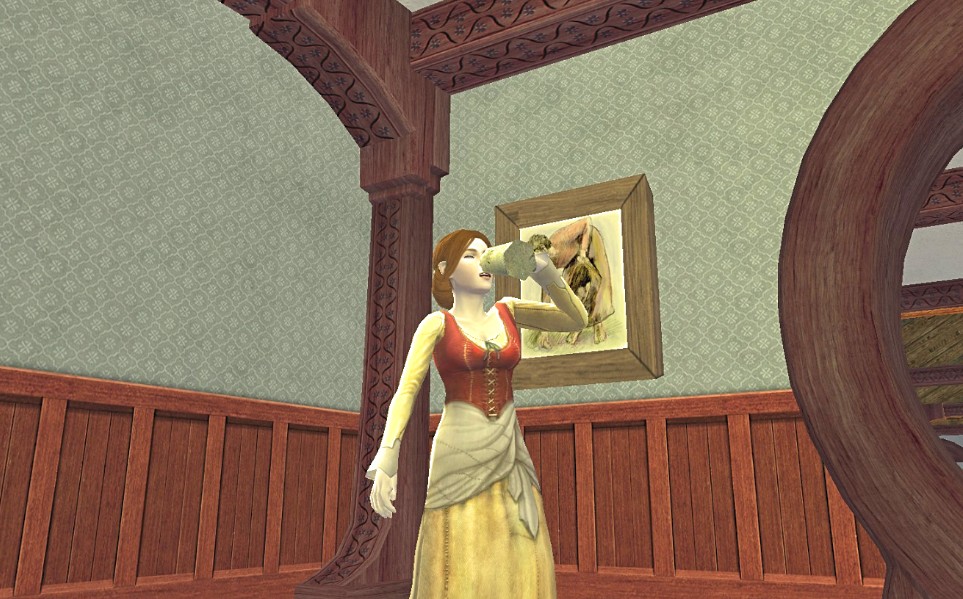
Fikta and the blacksmith exchanged wide-eyed glances. They were astonished by what they'd just seen, and were fearful of what might happen next.
"Have a seat beside us, lass," said the farmer to his daughter. She immediately plopped herself down in an unoccupied chair. She nearly fainted in mere anticipation of what her father might say.
"Ye had best explain it to her, Dwarf," demanded the farmer.
Fikta told the farmer's daughter the same story he'd told to the farmer. How ten years previously he found a wee lass in the back of his cart a few hours after havin' left Lyndelby.
"How dare ye! How could ye keep me daughter from her family for so long? We thought she were DEAD!" The farmer's daughter looked like she might strike poor Fikta.
"Settle down, lass," said the farmer. "What's done is done. Beannaithe bein' returned to us is the best possible news we could ever hope to receive."
The daughter sobbed uncontrollably.
"I am sorry..." began the Dwarf. The farmer held up his hand to stop Fikta from sayin' more. He'd heard all the explanation he cared to hear.
After a moment's silence Fikta asked, "So Beannaithe is her name?"
"Aye," said the farmer.
"I never knew..." explained Fikta.
"Ye mean she still isn't talkin?" asked the daughter between sobs while attemptin' to brush away the tears that were rollin' down her cheeks.
"Nay, lass, she's never uttered an intelligible word to me or, as far as I know, to anyone else," the Dwarf answered. "I...'
"No," the daughter said in anticipation of the Dwarf's question. "Wee Beannaithe had never spoken to us, either."
The blacksmith considered makin' a joke, but thought better of it given the delicateness of the situation.
Another moment of awkward silence passed.
"I have an idea," Fikta said. "If you don't like it, just say so."
"I'm listenin', Dwarf," said the farmer. He were still very angry, only now it were because of his daughter's upset rather than Fikta's rudeness.
"What's best for the lass, I believe, is to make things as normal for her as possible," Fikta said.
"That makes sense," said the farmer. "But what's normal for a lass who's spent most of her life travellin' near and far in a rickety cart driven by an old fool of a Dwarf?"
"You're insulting me, Farmer. Don't think I don't know it!" Fikta replied, tryin' to hold back his own anger. "But given the circumstances I'll let it pass."
The blacksmith patted Fikta on the back in an effort to both calm and comfort him.
"Will ye answer me question?" asked the testy farmer.
"Let the lass..." the Dwarf began, "...Beannaithe..." he looked to the farmer and his daughter for confirmation of the name; they both nodded.
"...Let her begin working with the blacksmith." Before the farmer or his daughter could say anythin' he explained his reasonin'.
"She's very keen on working at the forge..." The blacksmith nodded in hearty agreement.
"...and it would keep her occupied at something familiar while she becomes acquainted with her new home and, more importantly, her new family."
"After all your foolishness, Dwarf," the farmer replied, "ye are finally makin' some sense." His daughter, still in shock from the turn of events, tearfully consented.
"So how's the ale?" asked the blacksmith, tryin' to lighten the mood.
"The best I ever tasted," Fikta answered without hesitation. Given the situation, he thought it the best answer to give whether he actually believed it to be true or not.
"We have a plan," declared the farmer. "The lass will stay with us here on the farm. I think it best ye find other arrangements...Fikta." The farmer didn't think he would ever again be able to utter the word "Dwarf" without at least a tinge of bitterness.
"Fikta can stay with me for the time bein'," said the blacksmith. "I have an old cot tucked away in me basement."
Before Fikta could object the blacksmith explained, "Folk 'round here would feel most uneasy 'bout a Dwarf campin' out in their midst, especially one rumoured to be snatchin' wee ones from their families. I know it isn't true but rumours, once started, can run through the village like wildfire."
"Thank you, Blacksmith, and thank you Farmer for trying to understand my part in this," said Fikta.
"Aye, thank ye for returnin' me granddaughter to her home," said the farmer, "and for takin' such good care of her." Then he added, "I'm glad ye enjoyed me brew."
"I did the best that I could," said the Dwarf before drinkin' what remained of his ale.
"Aye," said the farmer.
Just then Fikta sadly began to realise that he might never see his "Dóttir" again.'
The bedtime story had grown very complicated. Me grandkids would need some time to sort what they'd heard. Many questions were sure to follow. As always, I'd do me best to answer 'em.