The Works of Brablo Boffin, on one page

Back to the chronicle “The Works of Brablo Boffin”

All the adventures of this chronicle, the oldest first. 71 in all

51. The Lost Realm - Chapter Six

Chapter Six


The centuries of its conflict with Angmar left all of Arnor complete is devastation. The great cities, fortresses and towers of the realm were left to ruin. Those structures, standing for thousands of years, began to crumble and disappear. Much of Arthedain’s population had perished in the culmination of the war, with those who survived being scattered and afraid. The Norbury of the Kings, or what remained of that great city, was abandoned. The Witch-king of Angmar may have been defeated, his armies completely annihilated, but in many ways he was victorious. For hundreds of years it had been his dark and unyielding desire to see Arnor destroyed. Whilst he met his end in the process, he had succeeded in doing so.

The Hobbits of the Shire endured the onslaught of Angmar. After the fall of the Witch-king, those who had hid underground surfaced once more. The green and fertile land that they called home, the Shire, lay in blackened ruin. The farms had been burned and livestock slaughtered. Although their country had been desolated by fire and blood, those who survived considered themselves fortunate. Crops could be sown once more and homes could be rebuilt. For a time the hobbits mourned the death of their lost kin, and also for Arvedui the Last King. But they came to realise that this was not the time for grief, for their country was in desperate need of restoration. Between 375 and 379, the survivors worked together to rebuild the Shire. Soon enough, the land was green once more. In time they would come to forget the dark days of Angmar’s tyranny, being mirthful as they were before the war. The only reminder of such times was the towers and fortresses of Arthedain, which still scatter the landscape today.

But the absence of a King in Norbury troubled the Shire. For many centuries they had taken the protection of the King for granted, having been untroubled by the dangers of the outside world for so long. They looked at the days before Angmar’s invasion with nostalgia, for they had always slept soundly with the knowledge that the King, though many miles away, would always keep them safe. This security and comfort was now gone. Although Angmar was defeated, fell creatures still stalked the borders. The wights of the Barrow-downs, found close to the Brandywine River, had survived their master’s downfall. In the aftermath of Angmar’s defeat, as they rebuilt their homeland, the hobbits waited for the royal heralds to arrive with news of the King’s return. The son of King Arvedui, Prince Aranarth, had survived the war. By all rights, the crown of all Arnor should have been his.

But Aranarth looked upon the kingdom of his father with sorrow. The realms of Arnor lay in ruin, with only a number of scattered survivors. A king without a kingdom is no king at all. When the throne was offered to him, he resolved not to claim it. In doing so, the Kingdom of Arthedain was dissolved. The prospect of a reunited Arnor was diminished. Aranarth instead declared himself Chieftain of the Dúnedain, leading the remnants of Arnor’s people as wanderers and protectors of the former kingdom. They dwelled not in great castles or cities, but in the Wild. The surviving regions, which once formed part of Arthedain, were released from their ancient oaths of fealty to Norbury.

In 379, Aranarth the Chieftain came to the Brandywine Bridge. To those who greeted him, he bid that the Shire elect its own leader in place of the King. Although freed from their loyalty to Aranarth, the Shire persisted in considered him their sovereign. Thus, they willingly executed his bidding by creating the office of Thain – the chieftain of the Shire - in the King’s absence. Aranarth had granted the Shire the thainship, but had left it to them to elect its holder. It was considered a royal and sacred gift, from he who they still deemed as their rightful liege, which emulated the ancient principles of kingship. The very first Shire-moot gathered and elected Bucca of the Marish as Thain of the Shire. The thainship was created to keep the Shire in such order that the King of Arthedain had expected from his subjects. Its role was not to rule, but rather to "hold the authority" of the kings of old, until such times were restored. Today, still, the Thain of Tuckborough serves as a permanent reminder of these forgotten times. The true origin of the thainship is grounded in the loss of kingship.

Despite Aranarth’s relinquishment of his crown and dissolution of Arthedain, the old oaths of fealty, first sworn by Marcho and Blanco, and subsequently renewed upon the ascension of each new king, have never been forsaken. This ancient loyalty, although forgotten by most, has endured the centuries. Today it only exists in the oldest scrolls in the oldest libraries. The Lost Realm seems to become all the more lost with each century that passes, but still the Shire waits; for when the King comes back…
52. A Letter to Mr. Dorso Bracegirdle, Tuckborough, the Tookland, Westfarthing

This letter is sent from Barleywick to Tuckborough via the Quick Post. It is addressed to one Dorso Bracegirdle, so may be found (upon arrival) in his possession. The envelope bears a red, unbroken seal upon it. On the other side is written:

MR. DORSO BRACEGIRDLE

TUCKBOROUGH

THE TOOKLAND

WESTFARTHING


The letter reads:

My beloved old friend Dorso,

It is not often enough that I write to you in Tuckborough, for it seems that other matters prevent me from putting ink to paper. But now I am committed!

I trust that you are in good health and spirits, and that you are enjoying your time in the Tookland. Although Took-ery is so often associated with mischief and trouble, I have no doubt that you have found a comfortable home there. Indeed, I envy that the Thain's library is so local to you! A short while ago I spent the afternoon in the library (accompanied by a rather unusual companion), but did not think to visit you. It seems that I often forget such things these days - such is age!

Visiting the Michel Delving Market some time ago, I came across a peddler from up Oatbarton way. Much of what he was selling were odd trinkets, mostly unworthy of being called mathoms. But one of his items was a hidden treasure: a first-edition of Semblo the Silver-song's 'Poetry of the Tenth Century'! There are but four or five known first-editions left today. The peddler was unaware of the value of such a book, and so sold it to me for a few silver pennies. In truth, this is as priceless as the finest gem! For a collector, such as myself, this is truly a remarkable find. But I am certain that a poet like you, who is surely well-read in Semblo the Silver-song's poetry, would like to study such a work. I would, of course, be spirited if you were to visit Boffin's Burrow to view the book yourself. My belief is that there are some poems here that even you have not yet read!

As always, you are always welcome in Barleywick. Our mutual friend, Borcho, has also recently taken up residence in the village. So, if you are willing and able, do visit! I would counsel you to take the Southfarthing Road from Waymeet; for the cross-country path is known to be infested with wolves of late. I hope very much to see you soon!

Your friend,

Brablo Boffin, Barleywick

53. Brablo's Diary - Entry 6

Too many afternoons, sunny afternoons, are spent shut away in my office. For hours and hours, I read over my business accounts. It is a grand thing to receive profit from my investments and other interests, but the paperwork involved is tiring! Yesterday I had hoped to spend the afternoon by the brook, perhaps to do a spot of fishing. No such luck.

My labours were relieved, however, with the arrival of Dorso Bracegirdle. I sent him a letter some time ago, inviting him to Barleywick to stay for a time. There is a book in my collection, a first edition of Semblo the Silver-song's 'Poetry of the Tenth Century'. A poet himself, Dorso ought to find this a valuable read. We spoke for a time in the sitting room, where we caught up on the years since our last meeting. Apparently, the last time he was in Barleywick, Bordo was still in his tweens! He seems not to have changed much, from what I can remember. The fellow has known much sorrow in his life, but he is always so cheerful. Perhaps by brightening the days of others, he brightens himself.

54. Brablo's Diary - Entry 7

How curious. Late last night, just before supper-time, there was a knock at the door. Who in the name of Bullroarer would be visiting so late? It was a young hobbit, with a large rucksack on his back, weary from travel. He courteously named himself as Ottho Hobbs of Staddle, beyond Bree to the far east! What did he want from me, in the Shire, to have travelled so far from home? After making him comfortable in the living room with some tea and supper, he explained that he had been recommended to me by some distant relative of mine - one whose name I barely remember.

Ottho told me that he wished to learn. Learn what, exactly? He seemed to be interested in the history of the Shire, and that of our people beyond the bounds. Rather tactlessly, I recommended that he visit my library to view some of my books on such subjects. Embarrassed, perhaps, he admitted that he did not know his letters. How awful! A young hobbit, so curious and eager to learn, without the means to do so. In the past I have taught tweens their letters. Bordo, Beryl , Biffo and Cynthia were all taught at a younger age. Villagers and some from elsewhere, have come asking for lessons. It is sometimes a difficult task, but it is incredibly rewarding for the student - and myself also. Young Ottho travelled so far for an opportunity to learn - to broaden his own opportunities in life; it is indeed admirable. I had hoped that he might be able to write his own name, but alas it seems that the need never presented itself before. To learn one's own name, in my view, is the perfect place to start. If he continues repeating the words I have set him, then soon enough he will be on his way to literacy.

After the lesson, we spoke of ourselves. Ottho rightly pointed out that if we were to spend such time together, then we ought to know one another better. He spoke of his family roots in Staddle, the home of the Bree-hobbits. It was an interesting tale, indeed. As he is familiar with Staddle, perhaps that will be a prudent place to begin our history lesson. It was, after all, the home of Marcho and Blanco. For the duration of his stay at Barleywick, I have offered him one of the guestrooms at Boffin's Burrow. This is, he says, his first time in the Shire. I trust that he will feel welcome!

55. The Bonfire Glade

The first of Buckland,
Who were Gorhendad's folk,
Could not withstand
The great evil oaks.

East of the Brandywine
Was their new home.
But the Sun did not shine
Where fell trees would roam.

Many were taken
By branch and by root
Never to awaken
Nor even give a hoot.

Up went the hedge
Which they called the High Hay
To protect their border's edge
From making them prey.

But the trees did not cease
From coming too near
Nor would they make peace
With their neighbour the deer.

So now it was war,
The Brandybucks declared,
With the forest they did abhor
And no branch would be spared.

Their axes of steel
Met the old trunks of brown,
And with vengeance and zeal
They cut the trees down.

Into a clear open glade
After the battle so dire
The dead trees were laid
To be consumed by bonfire.

56. A Third Letter to Mr. Reymund Appelby, 1 Harrow Road, Barleywick

This letter is posted, by Brablo himself, to 1 Harrow Road in Barleywick. It is addressed to Reymund Appelby, so may be found (upon arrival) in his possession. The unstamped envelope bears Brablo's seal upon it. On the other side is written:

MR. REYMUND APPELBY

1 HARROW ROAD

BARLEYWICK


The letter reads:

Master Reymund,

It has indeed been a good while since we last met; I must admit that I did begin to worry for you after finding your home empty! Your letter brought me great relief, to know that you are well and returned. I trust that the incident with your relative that you spoke of is not serious, although I understand that it must have been quite the emergency to have you depart in such haste.

I cannot rightly express my gratitude for your completion of the commission. Your ability with deciphering and translation is truly something to behold, worthy of the scholars of Tuckborough. I am also sincerely grateful for the texts that you have brought to the library. Although I assure you that there is no cause for an apology, I graciously accept them into the collection. In return for such a generous gift, I extend an invitation to afternoon tea to you - do come by at your convenience!

Your friend,

Brablo Boffin, Barleywick


57. Remnants of the Northern Kingdom - Chapter One

The Stocktower


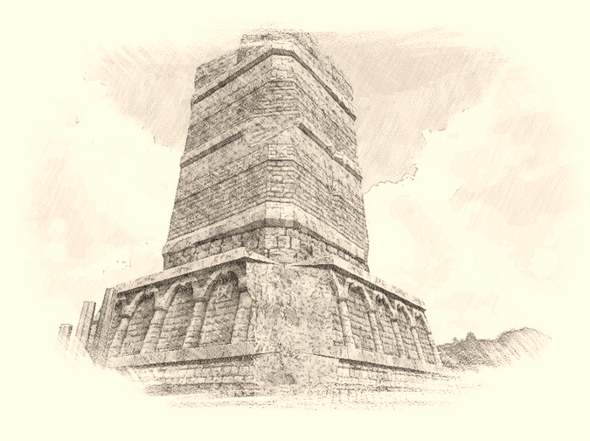
The village of Stock has long stood as the easternmost settlement of the Shire; east of the Eastfarthing. To some it is the first sign of home, and to others it is the last. A short distance from the Brandywine Bridge, otherwise called the Bridge of Stonebows, the village overlooks the Brandywine River, otherwise called the Baranduin. On a clear spring morning, one might be able to spy the Brandy Hall, excavated within the Brandy Hill of Bucklebury in the country of Buckland, founded upon the eastern bank of the river over six hundred years ago.

To the south of the village stands the ancient Stocktower, a name it has acquired in recent centuries. What name it was given by its builders is now as forgotten as they have become over the passage of time. At noon, Stock is often eclipsed by the great shadow cast by the tower. All who look upon the stonework would immediately understand its purpose: a watchtower, built to keep a silent vigil over the Brandywine Bridge and the river that flows beneath.

Although there is no definitive date of its construction, it is likely that it was erected around two thousand years ago. Still it stands; a true testament to Westernesse craftsmanship. At the Brandywine River, the border between the Kingdom of Arthedain and Cardolan was marked. The strife between the sons of Eärendur, the last King of Arnor before its division, did not escalate to the point of civil war. This is not, however, to say that tensions between the three splinter realms did not remain high. Each son, and their descendants, each desired the crown of a united Arnor. The Brandywine Bridge of Stonebows was the only crossing on the river, and was thus considered to be of vital strategic importance. The same bridge that Marcho and Blanco would one day cross could quite as easily accommodate an army. This, Amlaith, first King of Arthedain and eldest son of Eärendur, recognised.

A great watchtower, the Stocktower, was erected in such a position that the sentries posted atop it had a clear view of the Brandywine Bridge and River, as well as the hostile lands beyond its banks. If Cardolan, or any other foe, attempted to march an army across the bridge without leave of the King, a beacon might have been lit atop of the watchtower. The signal would then be relayed north to the Norbury of the Kings, who would answer by sending its own soldiers to meet the invasion. All who looked upon the tower would recognise the strength and pride of the Northern Kingdom. To the south-west of the Brandy Hall today, a ruin can be found standing against the Stocktower across the river. Arthedain may have feared an attack from Cardolan, but the latter realm had defensive needs of its own. Even now, centuries after the fall of both kingdoms, the two ruins continue their vigil of the river.

The Stocktower has endured the passage of time, although parts of it have crumbled away over the centuries. It is thought to have been damaged following the Fall of Norbury, when the armies of Angmar ravaged the landscape of Arthedain following the exile of the Last King. Even so, it remains a stalwart structure even today. Standing at such a height that it can be seen from miles away, it is a firm reminder of the might and majesty of the lost Northern Kingdom. As with all structures of the Westernesse, the Stocktower is adorned with stars – thought to be the symbol of the ancient ship-kings, from whom the Kings of Arnor claimed descent.

58. Remnants of the Northern Kingdom - Chapter Two

The Yale-height


The Yale region of the Eastfarthing has long been associated with the Boffin family. For many centuries, the headship of the family has held its seat in the lowlands between the Bridgefields and the Marish. The region was first cultivated by the Stoors, arriving from the southern hills of Dunland, some thirty years after the arrival of Marcho and Blanco, fourteen hundred years ago. As such, the Yale is regarded (rightly so) as one of the oldest settlements in the Shire.

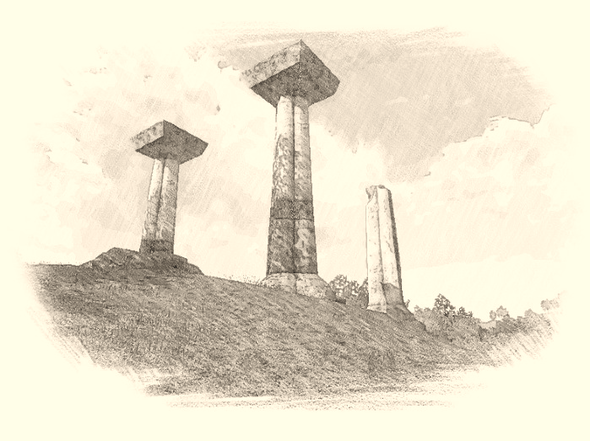
Observation of the region, however, indicates that the area was populated long before the first mention of hobbits in the oldest of records. East of the village of Woodhall and north of Bamfurlong, three ancient columns stand upon a hillside of chalk, overlooking the lowlands of the Yale. The base of a fourth column is found on the northern foot of the hillside, partially buried and broken. They stand at a considerably greater height than the nearby Stocktower, though the pillars themselves are less impressive. In the centuries following the arrival of Marcho and Blanco, these ruins were given many names. The most consistent name, and the one primarily used today, is the Yale-height.

The stonework the columns clearly indicates them as works of the Westernesse, erected at some point during the Arnorian era. Given that this period is thought to have lasted over three thousand years, it is difficult to provide an accurate date of construction. The craftsmanship of the pillars is thought to be considerably less opulant than many of the other ruins found in the Shire. It is therefore likely that the Yale-height was constructed (in its entirety) during the early Arnorian age. A characteristic common among ruins of the Westernesse is the star: a symbol seemingly held sacred by their builders. The three remaining pillars of the Yale-height do not feature such adornments, leading many to question whether they are of truly of Arnorian build. Whatever the case may be, it is known that the Yale-height was a ruin when Marcho and Blanco arrived in the Shire, a time when the three realms of Arnor still endured. Seemingly, the Westernesse had abandoned it long before.

From the days of Marcho and Blanco some fourteen hundred years ago to the present day, the Yale-height has remained something of a mystery. There has been considerable disagreement over the centuries in regards to what the Yale-height actually is. However, a more prudent question to ask is what the Yale-height was. The three pillars that remain today are only part of the original structure, which has long been lost to the elements. The first settlers of the area, ancestors of the Boffins of the Yale today, were afraid of stepping too close to the ruin. Gedengar Bolger wrote that the first settlers in the area, ancestors to the Boffins of the Yale today, held the site in a fearful respect. It was their belief that the pillars had once supported a great temple where the Westernesse worshipped their gods, and to profane this holy place would surely provoke their wroth. As such, they seldom stepped too close to the Yale-height. Gedengar suggests that seven pillars, a number seemingly sacred in ancient Arnor, were erected; of which only three remain standing today. Munco Tunnelly, however, disregards Bolger’s assertion as “codswallop”. Instead, he writes, the Yale-height is the remains of a hunting lodge, frequented by kings and lords of the realm in the centuries before Argeleb the Second’s granting of the land to the Hobbits of Bree. There is no contemporary evidence to support either assertion, and the ruin will likely continue to perplex hobbits for many years to come.

A recent migration of harvest-flies surrounding the Yale-height has made research of the ruins particularly difficult. The fields cultivated close to the hillside have seemingly attracted the pests to make the site their home. Although unconcerned of the fury of Gedengar Bolger’s gods, the Yale-height is seldom visited in recent times due to the blight of the giant flies.


Next Chapter

59. Remnants of the Northern Kingdom - Chapter Three

The Bridgefields Wall


The Water begins at Needlehole in the Westfarthing, flowing through the Shire, parallel to the Great East Road, until it reaches the greater Brandywine River. There are two main crossings of the Water: the Bywater Bridge in Hobbiton and Budgeford,. Budgeford, in the Bridgefields of the Eastfarthing, has been the ancestral home of the Bolger family for many centuries. The Puddifoots are also a notable family in the Bridgefields, cultivating a large acreage of farmland in the country beyond Budgeford, along the banks of the Water as it filters into the Brandywine River.

North of the Puddifoot Fields stands one of the most impressive spectacles that the Shire’s history has to offer. Known colloquially as the Bridgefield Wall, this ruined fortress is considered to be one of the most impressive and intact Arnorian structure that still stands in the Shire today. The original site once encompassed four separate structures, of which only three remain today. The largest of these structures is the wall that once spanned from east to west, looking upon the Water from its south. At the centre, another wall spanned to the north with views of the Brandywine River to the east and the countryside to the west. Although the first level of the walls is built of sold, nine-brick wide walls, the second (and in some places third) levels of the Bridgefields Wall are made of columns, forming a wall of archways across the structure. Intervals of round towers would only strengthen the defences of the fortress. The design concerning the other three structures of the Bridgefields Wall is considered rather unusual. At the end of the wall-span, an open space is left before the wall continues again. The only complete example of this is found on the eastern-side of the ruin. On the north and west side, the passing of time has not been kind to the stonework. The wall that follows after is considerably weaker than the centre structure, which then opens up to arguably the most impressive component of the site.

The large round tower of the easternmost point of the ruin provides a panoramic view of the surrounding landscape, most notably across the Brandywine River and the country beyond. A wide, round structure, the summit of the eastern tower is surrounded by an ornate wall of columns. From this elevated position, the strategically vital Bridge of Stonebows would be in plain sight. Identical towers would have been found on the northern and western side of the fortress, but there is little left of them today. To the south of the Water stands the Stocktower, another Arnorian structure which shares the vigil of the river. Although the great height of the Stocktower could provide a more effective watch, it would be the Bridgefields Wall that would muster an earnest defence of the bridge in the event of an invasion. It is likely that the two structures relayed warnings through fire beacons. Although the land between them today has become overgrown by foliage, in the time of their flourishing there would have been a clear line of sight from the watchtower to the fortress.

The immensity of the structure suggests that it was constructed at a time when the river and its crossing were in vital need of defence. Following the splintering of Arnor following King Eärendur’s death, the Brandywine River marked the eastern border of the Kingdom of Arthedain with the neighbouring Cardolan. Along with the Stocktower, it is likely that the Bridgefields Wall was built shortly after the establishment of Arthedain under King Amlaith. Although the three realms of Arthedain, Cardolan and Rhudaur were not in open war, the rulers of each kingdom coveted the throne of a re-united Arnor. Should an invading force cross the Bridge of Stonebows, then it would be from the Bridgefields Wall that Arthedain would mount is defence. The positioning of the three walls would have allowed the defenders to keep their foes in sight, whilst archers would have rained arrows down upon them from above. The road north to the capital, the Norbury of the Kings, would be made particularly difficult due to the positioning of the three walls. The strategic brilliance of Arthedain is encapsulated in the ingenuity of their architecture.

The Fall of Norbury (and subsequent fall of Arthedain) in 374 heralded the end of the Bridgefield Wall’s capacity as a fortress. It was abandoned by its defenders, left to endure the elements. Of late the ruins have become the abode of wolves, making close research of the fortress extremely difficult. For many years now Farmer Puddifoot of the nearby fields has petitioned for the fortress-ruin to be torn down, so that the wolves that trouble his livestock will move on. Such requests have been rejected time and time again, due in part to the intervention of local historical conversation societies (as well as the author of this book). The historical value found throughout this ruin is considered greater than the peace-of-mind of Farmer Puddifoot. Although he may lose sleep for worry of his pigs, the Bridgefields Wall, stalwart defender of the Brandywine, will likely go on to endure another thousand years.


Next Chapter

60. Remnants of the Northern Kingdom - Chapter Four

The Stones of Scary


The village of Scary is nestled within the hills of the same name, found to the north of the Eastfarthing. For many years the landscape around the village has been quarried to provide the Shire with stone. A network of mines runs deep under the hills, from which the quarried stone is brought to the surface by cart and lift. Many would agree that Scary has earned its name, as the many miners have gone missing in the tunnels – their disappearance is often attributed to the population of giant spiders that have made the older mines their abode.

It is often written that hobbits were taught the skill of mining from the dwarves – the bearded folk who dwell within the mountains, building great stone halls. The Dwarves of Needlehole, in the Westfarthing, agree that this is the case. It is also plausible to believe that the Shire was once quarried long before the settlement of hobbits and dwarves. The Arnorians were great artisans of stonework; even the Dwarves of Needlehole admit their envy at some of the surviving structures left by the Northern Kingdom. The great towers and castles built by the Westernesse would have required tremendous amounts of quarried stone. However, the masons of Scary will tell you that the stone winched up from their mines is not what the many ruins in the Shire are built from. Much like the Dwarves of Needlehole expressing their envy of Arnorian craftsmanship, many of the masons in the Hills of Scary consider their own stonework to be brittle compared to the great Westernesse bricks. It is unknown where the stone used in Arnorian structures was quarried from, but it is likely that it was imported from elsewhere in the kingdom.

Close by to the village and quarries of Scary stand a number of ruins, known collectively as the Stones of Scary. The site has been considered a mystery for many years now, as no one knows exactly what the Stones of Scary are. Although often named and studied together, there are three distinct areas of the site with remaining structures. Each is built upon the eastern side of the road that runs between Budgeford to the south, passing Scary and Brockenborings, before cutting through the Greenfields in the north. Unlike the Great East Road, this path was not paved by the Arnorians.

The northernmost ruin stands to the south of Scary, overlooking the village like five sentries. They are the remnants of a column wall that the Arnorians seemed to favour. Joined at the top, the columns form archways that often mark boundaries. Although not considered particularly effective for defence, they would have certainly provided a decadent wall. Only five columns remain standing, with only two are unbroken or eroded. The presence of these columns has been used by a number of scholars to support the view that Arnorians once quarried the Hills of Scary, just as hobbits do today. Although by a meagre section of the wall remains standing, it is possible that a far-stretching belt of columns once surrounded the land that Scary is now built upon.

The hard surface of the ground surrounding Scary makes it ideal for quarrying, but it also makes the landscape prone to waterlogging. South of the remnants of the column wall, a stagnant pond has submerged more ancient Arnorian stonework. This has caused rapid deterioration in the stonework, the likes of which will likely consume the remains within decades. The portion of wall, similar to the stalwart style found at the Bridgefields Wall, which can be seen to the south-east across the lowlands, is perhaps the most significant of all the Stones of Scary. It appears to be but a fragment of a much greater structure, suggesting that a fortification once stood in the surrounding area. What is curious is that there is nothing else to indicate such a structure, with only a meagre portion of wall remaining. The impressive width of this wall, however, propounds an impressive structure.

The third part of the site is certainly the most peculiar of the Stones of Scary. Although much of the structure has long since crumbled away, it remains as ornate as it is mysterious. The truth is that no one has been able to establish what the ruin is, or indeed was. A number of scholars have argued that it was a fountain, providing drinking water for the local population. Such assertions have, however, been dismissed time and time again. The absence of an aqueduct or piping seems to be sufficient evidence to repudiate such theories. Furthermore, the closest source of fresh water is southwards, downhill to where Budgeford now stands. It is more likely that this ruin was built as an altar by the Westernesse, where offerings would be left to please the gods. Before the façade of the seven sacred stars of the Ship-kings, the devout of Arnor would leave oblations at this altar to ensure good fortune for the realm and its people. In times of war, disease and poor harvest, it would be from this place that Arnor would try to appease the gods. It is likely that many such altars were found throughout the kingdom, but this ruin is the only known one to be found in the Shire.


Next Chapter

61. Remnants of the Northern Kingdom - Chapter Five

Bindbole Watch


North of Hobbiton and the Hill, the Bindbole Wood was once the most densely forested area in the Shire. Older generations will still remember how the trees once covered the landscape, with light seldom finding the forest floor. Woodcutters from the village of Overhill, found on the south-eastern edge of the Bindbole Wood, have felled many of trees in more recent years. Now the forest has become sparser, and is set to be become sparser still. Still considered a natural beauty, many are concerned that the Bindbole Wood will never recover from the axes of Overhill.

Set high above the forest is one of, if not the, most immaculate Arnorian in all the Shire. The name of this structure would depend on who you ask. Traditionally, it was known as the Bindbole Watch in the early centuries of the Shire Reckoning. Others know it as the King’s Ascent, for belief of its association with royalty. More recently, some have taken to call it the Bear Fort, or Bearfort, given that such beasts have made the foot of the hill surrounding the ruin their home. Regardless of its name, this ruin has inspired many tales and legends over the centuries. Some of the more memorable stories concern kings and knights, from which a mythical kingdom was ruled from this very place. Undoubtedly fictional, it is often true that even the most bizarre of legends are seasoned with truth and fact.

Found on the northern edge of the Bindbole Wood, the Bindbole Watch is mounted upon a great mound which offers an awe-inspiring view of the forest and the landscape beyond. Only the tallest of trees of the nearby forest are able to meet its impressive altitude. It has often been remarked that on the clearest of days, one can see each of the four farthings from the summit of the ruin. Clearly visible from many miles away, the Bindbole Watch proves particularly difficult to reach. No pavement or steps remain to ascend the great mound, meaning that any explorer has to weave back and forwards up the slippery slope in order to arrive at the ruin. Almost overhanging the ridge, the Bindbole Watch shares the stalwart and rigid design of many other Arnorian structures. The four-walled base of the Bindbole Watch is sculpted with the traditional façade of the Westernesse: the sacred stars of the ancient Ship-kings. A wide and steep set of steps ascend to the great archway that remains standing today, leading to the summit of the ruin. The archway is perhaps one of the singularly most impressive elements of Arnorian stonework in the Shire, adorned with seven stars. From leagues away, the enormity of this doorway can still be admired. Once the summit of the Bindbole Watch would have been walled by columned archways, of which only a number remain standing today. Although the archway on the eastern side of the ruin is impressively tall, the Bindbole Watch would have been an open-roofed structure. Complemented by the openness of the columned wall, the building and all those inside would have been exposed to the elements.

Unsurprisingly, there has been considerable debate in regards to what the Bindbole Watch is, or indeed was. It was traditionally believed to be the remnants of a great watchtower. The awe-inspiring view provided by the summit would have certainly allowed sentries to keep a close eye on the landscape. The steepness of the ascent that must be overcome to reach the ruin would have, during the centuries of its operation, provided the Bindbole Watch which an effective, natural defence. At such a height, a beacon-fire from this watchtower would have been visible from miles away. It is commonly believed that the Arnorians made use of such a warning system, alerting others in the case of an emergency. In the myths told in the Northfarthing, it is said that the ruin was once the home of the King, which is why the ruin is sometimes called the King’s Ascent. There is, however, no historical evidence to support these legends. The Kings of Arnor traditionally resided in the city of Annúminas, on the shores of Lake Evendim to the north. Their successors, the Kings of Arthedain, relocated to the Norbury of the Kings, otherwise Fornost Erain, after the latter city fell into disrepair. Unfortunately, the idea of kings residing in the Shire is little more than a fairy tale. Others have suggested that the Bindbole Watch was once a holy place, a Westernesse temple, where pilgrims would have to endure the difficult ascent to the ruin in order to prove their faith and devotion.

A recent uncover of fifth century manuscripts in the library of the Great Smials of Tuckborough have provided a new possible explanation of the origin and purpose of the Bindbole Watch. Written in Old Hobbitish, the translation of these papers are almost incomprehensible ramblings. The author, who is thought to have been mad, asserts that the ruin once housed a Seeing-stone, one of seven such magical devices. According to legend, the stone was used to communicate with the holders of the other six, across thousands of miles. The great round pedestal built upon the ruin’s summit, according to these writings, is where the Seeing-stone was placed. In the chronicles of Arvedui, it is said that a stone of a similar description was once kept in the great city of Annúminas, before it was lost when the Last King perished in the northern ice-bays. The content of these manuscripts, however, are generally dismissed among the historical community.

The Bindbole Watch, otherwise the King’s Ascent or the Bear Fort, is one of the best preserved structures of Arnorian craftsmanship that survive today. Although the Bindbole Wood around it has suffered from deforestation in recent years, the ruin is still proudly perched high above the trees. The Bolestones is the name given to the many bear-dens surrounding the site of the ruin, the likes of which make observing the ruin particularly dangerous.

62. Remnants of the Northern Kingdom - Chapter Six

Illustrations


I. The Stocktower: South of the village of Stock, in the Marish region of the Eastfarthing, this tower was built by the first Kings of Arthedain to defend the Baranduin River and Bridge of Stonebows (today known as the Brandywine River and Bridge, respectively).

II. The Yale-height: Standing above the Yale region in the Eastfarthing, these three pillars remain the subject of divisive debate among the historical community.
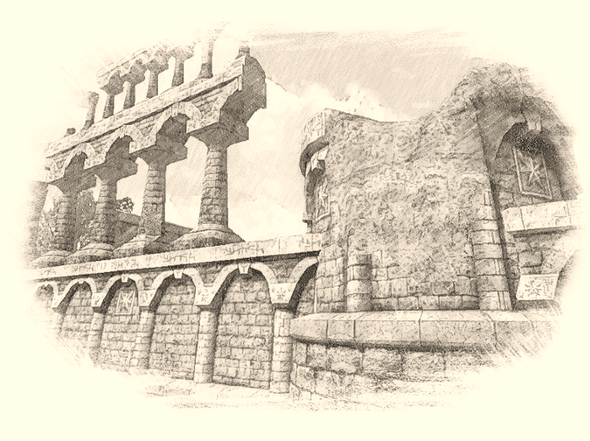
III. The Bridgefields Wall: North-east of Budgeford-on-the-Water, this great Arnorian fortress would have served as the primary defence of the of the Brandywine River, which in later years marked the border between Arthedain and Cardolan.
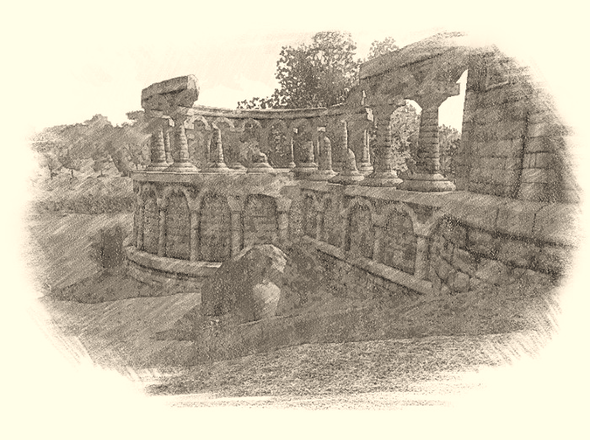
​IV. The eastern tower of the Bridgefields Wall: Three great towers once stood at the western, northern and eastern ends of the Bridgefields Wall, though only the latter remains remains today.
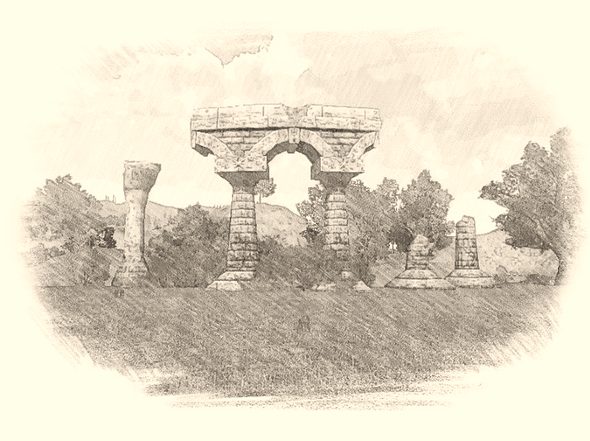
V. The column wall of the Stones of Scary: Overlooking the village of Scary, in the Eastfarthing, the remnants of a columned wall indicate that the Arnorians also quarried the surrounding hills, as hobbits do today.
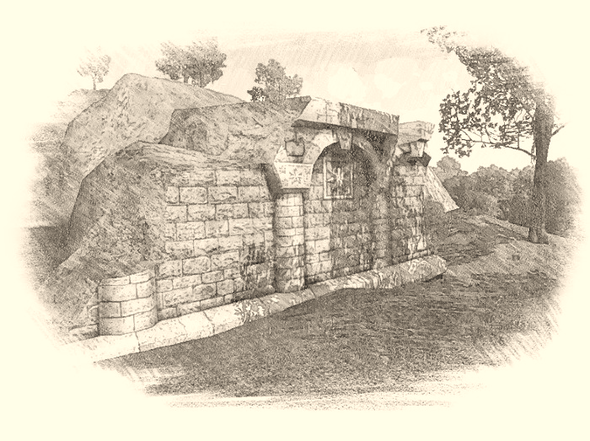
VI. A portion of wall in the Stones of Scary: Soon to find itself submerged in a waterlogged pool south of Scary, this portion of wall suggests that a fortress once stood nearby.
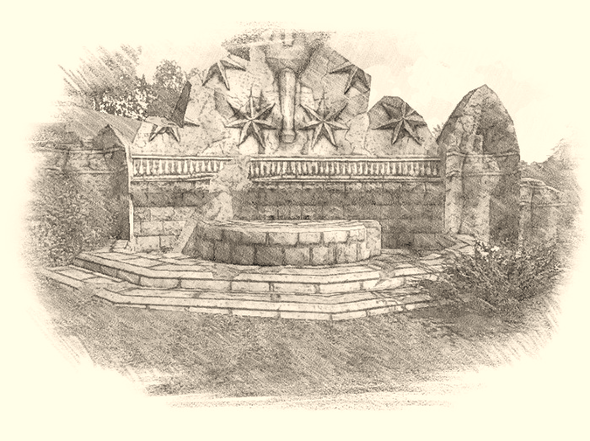
VII. The altar of the Stones of Scary: Found beside the road between Budgeford and Scary, this structure is thought to have been an Arnorian altar, where offerings where left to the gods.
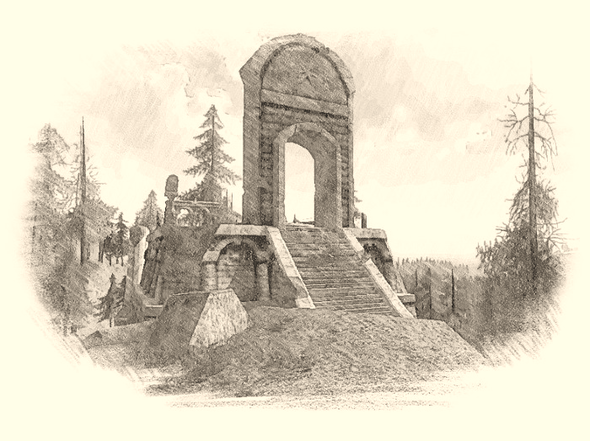
VIII. The Bindbole Watch: North of the Bindbole Wood, overlooking the landscape of all four farthings, some have assert that this tower once held an ancient Seeing-stone. Most, however, dismiss such claims.


63. Brablo's Diary - Entry 8

It it is good to be home, I must say. I missed my hearth, my books, my chair, and of course, my family. Young Bilgo hoped that I might have returned with many exciting tales of mine and Ottho's historical trip. Alas not, I had to admit. On the road between Tuckborough and Stock, I was met by a rather unpleasant stomach complaint, which caused me to return home to Barleywick at once.

I have just returned from afternoon tea with Master Reymund on Harrow Road. Mr. Noakes left the hole in a rather sorry state when he retired to Bywater, but Reymund has decorated it splendidly. His table is dwarf-made from the Blue Mountains, of all places! To my delight, he is also enthusiastic about the relevance of Arnorian history. As I have been meaning to for some time now, I extended Master Reymund an offer to become the librarian (or keeper, if one wishes to call it that) of my collection in the Burrow, which he gratefully accepted. I trust that the library will once again be well-attended to under the care of Master Appelby, who shows much promise as a scholar (more so than I did at his young age, I dare say).

64. Brablo's Diary - Entry 9

The sound of luggage-carts, with their wheels squeaking, as they roll over the bridge and pass by my garden... This can only mean one thing: a new neighbour on Harrow Road! Of course, the talk in the Oak and Bell serves only to confirm this.

For several days now these carts have been coming and going from the village. Nothing unusual there. Oddly, however, these wagons were driven by Dwarves - the stout, bearded folk from the mountains. The old yet roomy smial at Six Harrow Road was their destination, suggesting that my new neighbour is not short of gold.

With a basket of fresh apples from the orchard, I thought it courteous to greet my new neighbour. I was greeted by a Mr. Horgo Harfield (I must look up that name in the records) of the Marish, beside the Brandywine in the Eastfarting. A pleasant fellow, I was rather distracted by his shoes. The bogs of the Marish have known to breed some queer folk, no mistake, but shoes truly take the biscuit... I was pleasantly surprised, however to know that this fellow knew of me - or at least my name and books.

As it happens, this Mr. Horgo seems refreshingly enthusiastic about history - with a particular interest in Dwarves (perhaps that explains the luggage-carts). So much so that he has already put together the makings of a Dwarf-museum at Six Harrow Road, a home of many curiosities that he has purveyed from his bearded friends. It was truly a spectacle, and I was rather lost for words. He speaks of writing on the subject of these people - books and essays. I introduced him to my own library and works, which he seemed rather impressed with. I believe that I have struck up a friendship with this peculiar, booted Marisher.

65. Brablo's Diary - Entry 10

Mr. Horgo is a queer sort, yet, for all his eccentricities, he is not a bad fellow. This Marisher seems to be settling into the Southfarthing well enough, although the folk at the Oak and Bell tell me that he is yet to patron the inn. I do hope he does, for already there is talk around Barleywick about the habits of Mr. Harfield. To see and speak with him, however, seems to dispel such hearsay.

I realise now that Mr. Horgo's uncle was none other than Borgo Harfield - whom I once named Harfungus (a name, I fear, which stuck). His book, 'Mushrooms of the Marish', is one that can be found in almost every home. The definitive dictionary of fungi varieties! Old Harfungus Borgo seems to have done rather well for himself, as he passed on a considerable inheritance to his nephew - Horgo.

Boots I could forgive, perhaps. It is an ancient (and, I believed, lost) custom in the Eastfarthing, particularly in the Marish. But Mr. Horgo spoke of boating on the Brandywine as a hobby. How preposterous! A most queer and dangerous activity - one that I implore he keeps to himself. Even before the incident with Mr. & Mrs. Drogo Baggins, people in these parts have had no involvement in such perversities.

But, in truth, I enjoy his company. Whilst some of his peculiarities are unsettling, Mr. Horgo's knowledge of the Dwarves is simply intriguing. He has joined me for tea already, and I have returned the visit. Whilst ginger beer is not tea, he is a cordial host nonetheless. Tomorrow evening I have invited him to join me in the library.

66. Brablo's Diary - Entry 11

A most interesting few days, indeed. Mrs. Browncloak from the family farm north of Waymeet wrote to me, claiming that her husband's plough had uncovered (and, unfortunately, cracked) a vase-like object beneath his fields. I immediately set out on the Southfarthing Road, accompanied by Mr. Horgo. The deliberated excavation that followed revealed an ancient pitcher - an Arnorian coin hoard! Mr. Horgo was so kind as to bear the broken pitcher back to my library in Barleywick. I was much relieved to have excavated the hoard before the Mathom Society, lest they mislabel these coins as buttons!

In the meantime, a Ferco Banks from Bywater arrived in the village, apparently seeking residence (I hear he means to move into Number 6, next door). He and Mr. Horgo joined me for tea and scones, though I fear that the two are unlikely to become friends. In truth, I felt rather uncomfortable sitting between them! Mr. Horgo seems to be under the impression that Ferco is a spy of the Mathom Society - and was rather rude to him. Why must Marishers be such suspcious folk? I scolded Mr. Horgo's manner (as any host would), prompting some contempt and an abrupt departure.

Putting aside the rather unpleasant business of tea and scones, Mr. Horgo joined me this evening to study the coins. Assiduous cleaning of the coins has revealed much, but has also raised new questions. The centuries have tarnished the bronze, but they are still impressive to behold. On the observe side, a crowned head is stamped (I believe that it is the same King upon all coins in this hoard, but cannot be certain). Around the head is an inscription - written (quite unfortunately) in Elvish. On the reverse is the seven-pointed star of Arnor, accompanied by another inscription. A most queer and confusing chirography!

Tomorrow I will attempt to decipher this script, although it seems rather fanciful that sense can be made of it.

67. A Letter to Mr. Ottho Hobbs, Staddle, Bree-land

This letter is sent from the Shire to Staddle in the Bree-land via Buckland. It is addressed to one Ottho Hobbs, so may be found (upon arrival) in his possession. The envelope of this letter bears a red, unbroken seal upon it. On the other side is written:

MR. OTTHO HOBBS

STADDLE

THE BREE-LAND


The letter reads:

Dearest Ottho,

I must express my deepest apologies to you for the lateness of my reply! Your kind letter arrived quite some time ago, but I fear it became buried beneath a great weight of paperwork, that I am woe to organise, until I uncovered it this very hour. It would seem that my courtesy became buried by other distractions, too. Alas for old age!

It was indeed warming to receive a letter from you; I must say that your calligraphy is coming along a treat since we parted company. Staddle is unfamiliar to me, so I write with concern that this letter might not find its intended recipient. I shall be certain to send this to my cousins in Buckland, with instructions to forward it onto Bree - and beyond there I cannot tell. No doubt there shall be further delay with the posting, which will serve only to augment my discourtesy.
I trust that you have settled well into your new home, and find your new living arrangements agreeable. A hole is only as homely as its hobbit, as my mother used to say. Winter is well and truly set in here now, and I have no doubt of snow in the coming days and weeks. Do keep yourself warm! It is pleasing, beyond good measure, to read about your neighbours' amazement at your newfound literacy. Do not think it a burden; there is much joy to be found in helping others, especially at Yuletide.

It is my hope that these words find you in good health and mirth, and that you might write back at your convenience,

Your friend, wishing you a most merry Yule,

Brablo Boffin

68. Brablo's Diary - Entry 12

My poor diary! Found hidden away on my desk with a coat of dust around it (surely an indication of the cleanliness of the Burrow in my absence!). My last entry was so long ago, it seems, though that is no matter. My error - that being my foolishness - was forgetting to pack it. It was only when I reached Bywater that I realised - by then I was much too far from home to return for it!

My "summer holiday" to Buckland, which I undertake every few years, alas, extended thrughout the autumn. For two months I was rather under the weather, and Master Saradoc - that most courteous of hosts - would not hear of me leaving until I was well again. The silver lining to that cloud, though, was that it gave me ample time to spend in the grand library of the Brandy Hall. Indeed, I return home with a vast collection of notes and copies from my endeavours there! My cousins are all well, though Farandoc seems to have suffered the very same malady as I. The complaints of the old!

Bordo has kept my affairs in good order during my absence, as all at first glance seems to be much the same as I left it. I am quite eager to return to my research on the coin hoard discovered my Mr. Harfield and I. It has been long since I have spoken with him - I shall be sure to invite him for tea!

69. Brablo's Library

Brablo's Library

A list of some of the books found within the library of Brablo Boffin of Boffin's Burrow in Barleywick


Admonitions of the Old Forest by Harnbras Brandybuck

Adventures and Misadventures of the Tooks by Hilbert Took

A Gentlehobbit's Guide to Etiquette by Larso Sackville

A Guide to Mathoms by the Mathom Society

A History of Buckland and the Marish by Harnbras Brandybuck

An Afternoon Down the Brandywine by Perendoc Brookborn

A Short Guide to the Notable Families of the Shire by Brablo Boffin​​

A Reckoning of the Shire by Brablo Boffin

Arnor and Arthedain by Berso Baggins

A Tippler's Travels to all the Taverns by Dirgo Bracegirdle

Bree: Observations and History by Hilbert Took

Boating on the Brandywine by Horgo Harfield

Bullroarer: The Life and Triumph of Bandobras Took by Forno Bunce

Chronicle of the Thains by Hilbert Took

Crossing the Brandywine: A Hobbit's Journey East by Borgo Harfield​

Fallohides, Harfoots and Stoors: The Earliest Hobbits by Mergo Bolger

Farming in the Four Farthings: A History by Garso Proudfoot​

Fishing: A Guide by Longo Chubb

Gerontius Took and His Descendants by Merebras Took

Genealogy of the Southfarthing Families by Bardo Bracegirdle

Heroes Among Hobbits by Brablo Boffin

Migration and Settlement: The Founding and Cultivation of the Shire by Harnbras Brandybuck

On Beards: The Stoors by Borgo Harfield​

​On the Bridges and Paved Roads of the Shire by Brablo Boffin​​

On the Excavation of Smials by Perso Burrows

Outsiders: On the Queer Folk Beyond the Bounds by Sarlo Barrowhole 

Poetry of the Tenth Century by Semblo Silver-song

Place Names and Their Origins by Balso Banks

​Remnants of the Northern Kingdom by Brablo Boffin​​

Ruins and Runes by Munco Tunnelly

​Safe and Less Safe: A Guide to the Variations of Mushroom​ by Borgo Harfield

Shire Oak: A Treatise on Trees by Borgo Harfield

The Adventures of Basso and Briffo Boffin by Brablo Boffin

The Times of Marcho and Blanco by Hilbert Took

​The Boffins of Barleywick by Brablo Boffin

​The Brothers by Brablo Boffin​

The Great Road: From East to West by Balso Banks

​The Lost Realm by Brablo Boffin​​

The Roots of Pipe-weed by Lobard Hornblower

The Shire Before Hobbits by Munco Tunnelly

The Shire Muster and Hobbitry-in-arms: A History by Logras Bolger

The Tuckborough Chronicle: 400-1350 by Hilbert Took

Yale by Gedengar Bolger

70. A Reckoning of the Shire - Chapter One

Chapter One

Migration and Settlement


Those who venture beyond the bounds to the east, should they stay true to the road, shall come to the village of Bree. It is a place of the Big Folk, who build their towering homes from timber and thatch upon both sides of the road. Look closer, however, and within the Bree-hill more familiar dwellings are to be found. For an age have the Bree-hobbits lived alongside the Big Folk (who call themselves Bree-men, who in turn call their hobbit neighbours the Small Folk).  It is apparent that the Big Folk here are in far greater numbers than the Bree-hobbits, although this is not the case in the nearby village of Staddle. This was not always the case (or, at the very least, it was not as obvious as it is today), as once many more hobbits once dwelled here.

Legend and tradition tells us that it was Marcho and Blanco, two Fallohide hobbits brothers from Bree departed their ancestral home (whether this was Bree or Staddle is much debated) and led a following of their kinsmen westwards. What has confounded many through the centuries is why this happened. Why indeed did Marcho and Blanco abandon the dwellings of their ancestors? Perhaps more importantly, how did they convince many others to join them? Hobbits still reside in Bree and its surrounding villages, which indicates that not all in Marcho and Blanco’s time followed them west. The further implication of this is that the reason for the migration was not due to strife in the Bree-land, but rather the promise of something greater that prompted them to leave their comfortable lives and heritage behind.

It is clear that Marcho and Blanco did not wander westwards in search of nowhere or nothing in particular, but instead travelled with clear intent and conviction. It was what lie across the Brandywine which they sought: what we today call the Shire. What, then, was the great appeal of the Shire to the Bree-hobbits? Perhaps for most of Marcho and Blanco’s following, the vast fertility of this land was most attractive. Although Bree does not lack for agriculture, any farmer worth his plough would tell you that the soil there is measly compared that of the Shire. There may also have been a desire among the Bree-hobbits to have a land of their own; although it is unlikely that they suffered by dwelling alongside the Big Folk, one can sympathise with the wish to live independently among your own people, where your own customs might come into their own. But another, darker factor must be considered. The hobbit population of Bree, it is said, was comprised of those who had fled west from the wrath of Angmar some three centuries before the time of Marcho and Blanco. It is therefore plausible to assume that the Bree-hobbits sought to migrate even further west, since that fell kingdom still endured in this time to the east.

The Shire-reckoning began when Marcho and Blanco received permission from the King of Arthedain, Argeleb the Second, to cross the Brandywine River (then called the Baranduin) and settle in the land that is today called the Shire. By tradition, Marcho and Blanco are said to have ventured far to the north to petition the king at his capital, Norbury. In return for this generous grant, hobbits swore fealty to the king. So too were they to keep the bridges and roads in good order, so to speed the king’s messengers through the land. The following of Marcho and Blanco soon went about cultivating the land, and effort concentrated in the east, close to the Brandywine (the reason why many of the Shire’s oldest families hail from the Eastfarthing). In short time word began to spread throughout the lands of this new country – a land for hobbits. From distant places hobbits followed these tidings and came to settle in the Shire. Within thirty years, when the Stoors of Dunland finally arrived from the south, the Shire was fully settled.

71. A Reckoning of the Shire - Chapter Two

Chapter Two

The Fall of Arthedain


It has already been written of how Marcho and Blanco were granted permission to settle in the Shire by the King of Arthedain, Argeleb the Second. The Kingdom of Arthedain was a realm of the Big Folk, extending from the Blue River in the west to the Brandywine River in the east. It is regarded as a successor kingdom, since it constituted but a part of the even more ancient and even mightier Kingdom of Arnor. Long before any reckoning of our people, the Kingdom of Arnor ruled over much of northern Middle-earth – and is therefore often referred to as the North Kingdom. Ten great kings are said to have ruled Arnor, until the younger sons of King Eärendur divided the realm in three: so came Arthedain, Cardolan and Rhudaur. Only in Arthedain did the lineage of Eärendur remain true, for in Cardolan and Rhudaur it was lost in but a few generations.

The great foe of Arnor, and subsequently Arthedain, was Angmar. This was a realm of evil, ruled over by the tyrant known only as the Witch-king – of whom it was said that none could slay. His malicious will was ever set on the destruction of Arnor and the domination of its lands and peoples. Our folk were no exception to this, for the hobbit population of Bree is thought to have been made up by those fleeing from Angmar some three hundred years before the beginning of the Shire-reckoning. Of the kingdoms descending from Arnor, Rhudaur was the first to fall to the tyranny of Angmar. The relentless wrath of the Witch-king was such that, in time, only Arthedain remained free from its fell grasp.

For almost four centuries the Hobbits of the Shire lived peacefully under the King of Arthedain’s protection. The previous chapter explained that, although compelled to pledge their fealty to Norbury, the Shire was by and large as independent as it is today. None forgot, however, their loyalty to their distant liege. Shielded by the Kingdom at large, the Shire flourished. Still at this time, the population of the land was concentrated in today’s Eastfarthing – and at this time the ancestors of the great clans of the present (perhaps most notably the Brandybucks) became prominent. Yet whilst the land prospered, the shadow of Angmar beyond the Brandywine River grew more and more dark. Most folk at the time likely trusted that the King would keep them safe, as he had done for all these years. Their faith, alas, was misplaced.

In the year 374, by reckoning of the Shire, Angmar had amassed enough strength to challenge Arthedain in the open. The growing power of Angmar must be considered alongside the waning strength of Arthedain. Some two hundred years before this time, when the Shire was very much in its youth, the Great Plague struck. It is known to us only in the oldest of songs, but this epidemic is thought to have spread throughout much of Middle-earth; the most terrible of calamities. Many hobbits perished during this pestilence, and the Kingdom at large likely endured the same degree of misery. The aftermath of the Great Plague left Arthedain weakened and depopulated; affording Angmar the opportunity to strike. Indeed, some say that the plague was no natural occurrence, but rather a malicious work of evil intent. For certain, the disasters facing Arthedain at this time seem beyond coincidence.

The collapse of Arthedain was swift and shocking. In 374, the great capital of Arthedain, the Norbury of the Kings, was assaulted by the Witch-king’s army. Little is recorded in these parts about the battle, although certain inferences can be made. Although the city fell swiftly to Angmar, it is apparent that this was no surprise attack. For according to our traditions, five hundred archers of the Shire travelled north to the capital so to defend their king. Assuming the truth of this matter, there must have been something of a muster throughout the kingdom in the prelude to the attack. Assuming further that such a call to arms was widely answered, and that the capital was as well-defended as it could be, this indicates the tremendous size of the Witch-king’s host. For, in a short time, Norbury indeed fell to Angmar, who occupied and ravaged the ancient capital. The King of Arthedain, however, survived this onslaught and fled northwards. He is said to have perished thereafter in the icy waters of Forochel. The hobbit archers who so valiantly fought alongside their king never returned to the Shire, and likely perished in the destruction of the city.

From Norbury, the forces of Angmar soon went about the destruction of the broken Kingdom at large. The Shire was no exception to the Witch-king’s wrath, and the green countryside was burned black, its livestock slaughtered and peoples slain. Most endured this ruin, however. Some are said to have burrowed deep beneath the earth; deeper than any hobbit had ever delved before, or since. Others departed the land entirely, fleeing westwards away from the shadow of Angmar, where by tradition they were sheltered by the Dwarves of the western mountains. The tyranny of Angmar was not to endure for long. A year after the Fall of Norbury, the old allies of Arthedain joined in a great host. Big Folk and Elves together marched on the ruined capital of the Kingdom, and there met the Witch-king in battle for the liberation of the land. Victory was achieved here, with the armies of Angmar being annihilated; the Witch-king either falling in battle or fleeing, never again to trouble these lands.

The defeat of Angmar was barely a victory for Arthedain, alas. The troubles it had faced in the recent centuries, coupled with the destruction of its greatest city and the Last King’s demise, prevented it from standing tall once more. The royal line of kings did not fail, however, though the son of the Last King instead elected exile over kingship. So ended the Kingdom of Arthedain; though its people endured, they were now scattered and weary of war. The Shire has seldom forgotten this early part of its history: for it was by grant of Arthedain that the land came into our possession.

(For a more comprehensive study on this subject, I refer you to my other work ‘The Lost Realm’).

Pages