"Upon the shores of the Gulf of Lhûn the Elves built their havens, and named them Mithlond; and there they held many ships, for the harbourage was good. From the Grey Havens the Eldar ever and anon set sail, fleeing from the darkness of the days of Earth; for by the mercy of the Valar the First-born could still follow the Straight Road and return, if they would, to their kindred in Eressëa and Valinor beyond the encircling seas."
- The Silmarillion, "Of the Rings of Power and the Third Age"
Long had it been since Feveren last beheld the high spires of Mithlond; not since he bade farewell to Faethurin, his friend, upon its stone-wrought quay. That had been in Narbeleth wellnigh thirty years before, and a keen wet wind had been blowing from the East1 as Faethurin kissed his brow at their parting.
'Look for me in Tol Eressëa!' Faethurin had smiled as they embraced, though his cheeks were also wet with tears; and now Feveren stood upon that very wharf with a heavy heart, his thought lost in fond memory. The unfeeling stone was cold and wet beneath his bare feet, and his dark hair streamed out in the easterly wind as he looked to the West, across the grey and restless Sea whither Faethurin had gone forever, and a glistening tear fell down his cheek.
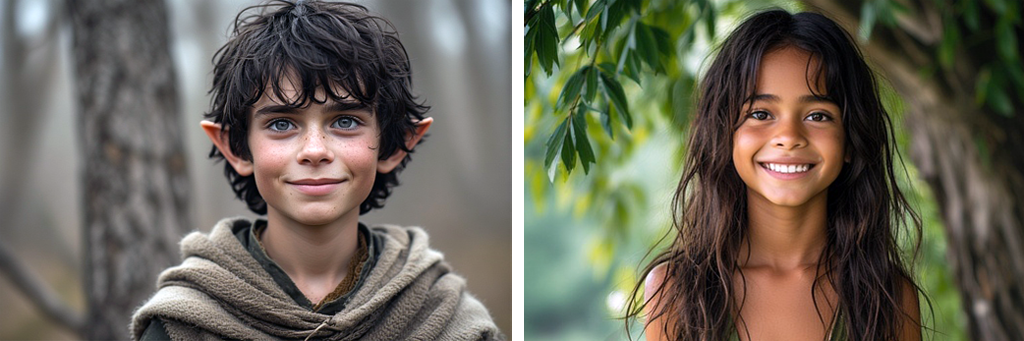
It had long been their shared hope to journey together seeking the Elven realms of old of which the songs told, an adventure for which their hearts had yearned since they were but merry children. But when Dimaethor, father of Faethurin, perished unlooked for whilst hunting, his mother in her grief chose to take ship from the Havens, and depart beyond the circles of the world into the Uttermost West; and though he was no longer in the spring of childhood, Faethurin was yet too young to gainsay her,2 and unwillingly he followed her.
Her name is Aeweneth, and she and her husband were Sindar of Doriath of old, and with their two sons had endured its sacking by the dwarves of Nogrod. But the Sons of Fëanor had brought Menegroth to ruin, and thereafter the family had fled westwards to the hidden refuge at the Mouths of Sirion; yet after a time the the Havens of Sirion were also assailed. Tidings thereof reached the Isle of Balar, therefore Círdan and Gil-galad sailed to their aid; but, alas, they came too late and many were slain, and the valiant sons of Aeweneth and Dimaethor were among them. The survivors were taken thence to the haven of Balar, and thereafter the elf-lords led them to Lindon when fair Beleriand was lost after the tumult of the War of the Powers.
There were many Grey-elves that made their abode in Gil-galad's new elven-realm, but most dwelt in Harlindon, southwards of the great firth of the River Lhûn, where they mingled with the Green-elves who had dwelt therein through years uncounted. And Dimaethor was of old a hunter in the Forest of Region, thus he brought his wife deep into the greenwoods nigh the River Brilthor, which yet spilt down from the heights of Ered Luin and flowed into the Sea.
And there they begot another son whom they named Faethurin Amdirchirn, their "renewed hope". And while she was with child, Aeweneth befriended a Green-elf woman whose own son was but lately begotten; this was Gledhril, mother of Feveren, and Dimaethor was glad of their friendship, for he was ever grateful to the Green-elves for their kindness and welcome when Beleriand was lost, and he well remembered the aid of the Green-elves of Ossiriand in recapturing the Silmaril of Doriath, and thus he esteemed their Lindar cousins.
 The two boys were birthed one after the other, only a day apart, and as they grew they became as brothers and great love was there between them. And though he did not share Faethurin's joy of the hunt,3 Feveren would often join him in the woods, and beneath the leafy boughs of elm and beech they would wander with much mirth, and seldom did the hunter fell any prey.
But they were yet unalike in other ways: the spirit of Feveren shone gaily as the Sun in green Spring, but the spirit of Faethurin was like the gleam of sunlight through drifting clouds in grey winter; and in body Faethurin was taller and less slender than his friend, and stronger in heart and limb while Feveren had the keener wit; and he was pale whereas the Green-elf had skin like honey.
Yet their minds were much akin, and to their delight they found that the uncommon4 skill of speaking mind to mind came to them altogether unlearned5; for such was their closeness in love and friendship that the thought of each could find the open mind of the other with ease.6
Now the name Faethurin name signifies "hidden or secret soul" whereas Feveren means "gay or joyous soul", which each deems a merry jest, for Faethurin was named in Doriathrin, but Feveren called him Fethurin in the manner of the Nandor, his kin; but Feveren is Faemheren in the tongue of Doriath, and thus was the jest returned. But both deemed it strange that each was named for his spirit, for although they were thus named after the friendship of Gledhril and Aeweneth was made, the elf-mothers both claimed that they had not conspired to name their sons alike.
'A harbinger of our doom,' Faethurin had laughed, but he knew not what his words forbode.
Faethurin and Feveren had but reached their twenty-first year when Dimaethor was slain in the forest deeps and Aeweneth thought to forsake Middle-earth, and all hope died in their young hearts. No longer would they one day set forth together beyond the Ered Luin, to explore the far reaches of Middle-earth; nor would they meet the kindreds of Men or Dwarves (who were strangers to their minds, for none had ever dwelt within the lands of Lindon), and the elf-boys had oft imagined such meetings in their minds, and mostly with much merriment.
Suddenly the sun broke through the overcast autumn sky, and all at once a warmth and gladness touched his heart; and Feveren turned aside his forlorn thought, for there was naught to be gained for now by looking inward into his heart and memory. Indeed, his mind was now set upon a new purpose: he had listened secretly7 to the speech of a wandering company of High Elves out of Imladris, who in Spring and Autumn made pilgrimages to the three White Towers on Emyn Beraid, the Tower Hills. These were but twenty leagues east from the Grey Havens, he heard, and the chief and tallest of them, Elositirion, was said to house a Seeing Stone of ancient Númenor.
Now of such a thing Feveren had heard no tale and he was moved to speak with them, and thus he learned that with it Elendil of old would look back along the Straight Road to Tol Eressëa, and hope grew in his mind and his heart was filled with joy. For though he and Faethurin had grown skilled in thought-sending, which was not at all hindered by distance,8 his friend abode now beyond the circles of the world, and was thus beyond the reach of his thought.
Therefore it came into his mind to find a like Wandering Company soon departing Mithlond, and follow them to their journey's end, whence he might himself gaze into the Seeing Stone and descry the faraway land where his heart yet dwells.
And looking westwards at the Sun as she9 sat beaming above the breaking clouds, he smiled and said, 'I will look for you in Tol Eressëa!'
* * *

1. "... there are strong westerly (i.e. coming from the west, towards the east) winds in the coastal southern regions of Middle Earth, in particular in the Bay of Belfalas. Conversely, there are easterly winds in the north of Middle Earth. This may explain why ships sailing to the Undying lands to the West tended to set sail from the Grey Havens, situated in the region of these easterly winds."
- R. Brown, Climate of Middle Earth
2. "Not until the fiftieth year did the Eldar attain the stature and shape in which their lives would afterwards endure, and for some a hundred years would pass before they were full-grown."
- Morgoth's Ring, "The Laws and Customs Among the Eldar"
3. "Now the Nandor, the Green-elves of Ossiriand, were troubled by the coming of Men, and when they heard that a lord of the Eldar from over the Sea was among them they sent messengers to Felagund. 'Lord,' they said, 'if you have power over these new-comers, bid them to return by the ways that they came, or else to go forward. For we desire no strangers in this land to break the peace in which we live. And these folk are hewers of trees and hunters of beasts; therefore we are their unfriends, and if they will not depart we shall afflict them in all ways that we can.' "
- The War of the Jewels, "The Later Quenta Silmarillion"
4. "... tengwesta [language] has also become an impediment. It is in Incarnates clearer and more precise than their direct reception of thought. By it also they can communicate easily with others, when no strength is added to their thought [...] the use of “language” soon becomes habitual, so that the practice of ósanwe (interchange of thought) is neglected and becomes more difficult."
- Ósanwe-kenta: "Enquiry into the Communication of Thought" [Vinyar Tengwar #39 (July 1998)]
5. "The Incarnates have by the nature of sáma [mind] the same faculties [as the Ainur]; but their perception is dimmed by the hröa [body], for their fëa [spirit] is united to their hröa and its normal procedure is through the hröa, which is in itself part of Eä, without thought."
- ibid
6. "Affinity may come simply from love and friendship, which is likeness or affinity of fëa to fëa [which] may strengthen the thought to pass the veils and reach a recipient mind."
- ibid
7. "... so that thereafter they came never forth in open war, but kept themselves by wariness and secrecy; and they were called the Laiquendi, the Green-elves, because of their raiment of the colour of leaves."
- The Silmarillion, "Quenta Silmarillion: Of the Sindar
[i.e. Ever has secrecy been the way of the Laegim!]
8. "For distance in itself offers no impediment whatever to ósanwe."
- ibid
9. "Elves (and Hobbits) always refer to the Sun as She."
- The Lord of the Rings, The Fellowship of the Ring, "At the Sign of the Prancing Pony", footnote
 |
iii |
 |