An Unlikely Champion, Part 1, on one page

Back to the chronicle “An Unlikely Champion, Part 1”

All the adventures of this chronicle, the oldest first. 10 in all

1. An Unlikely Champion, Part 1, Prologue


The Storyteller

Storytelling is vital to teaching language, culture and history in many societies, especially in rural areas where literacy rates are low to non-existent. This is no less true in communities comprised of the Little Folk.


2. An Unlikely Champion, Part 1, Chapter 1

 A Bedtime Story with Daidí Beag

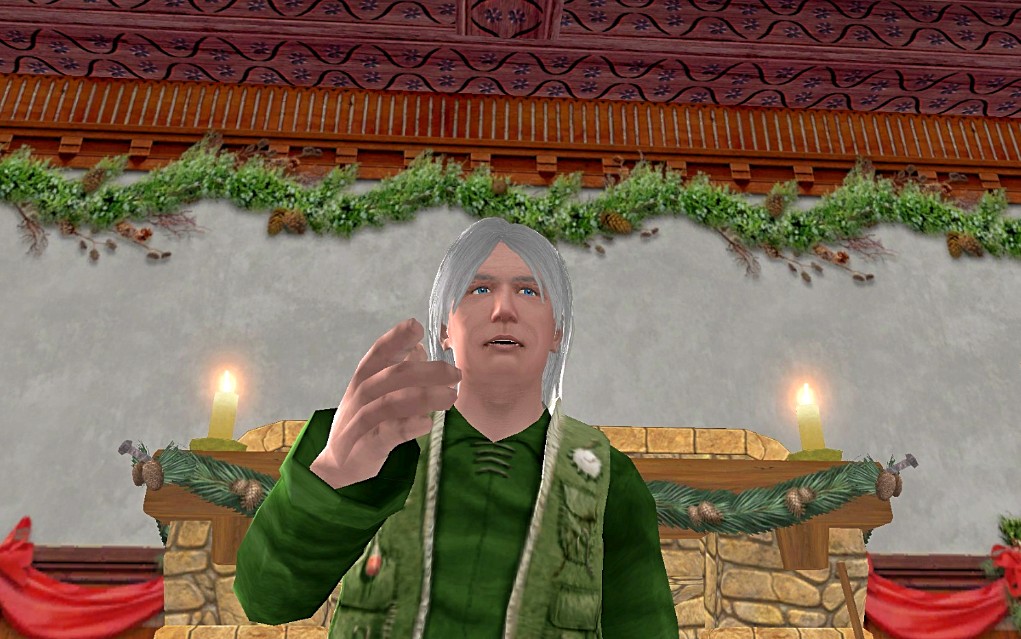
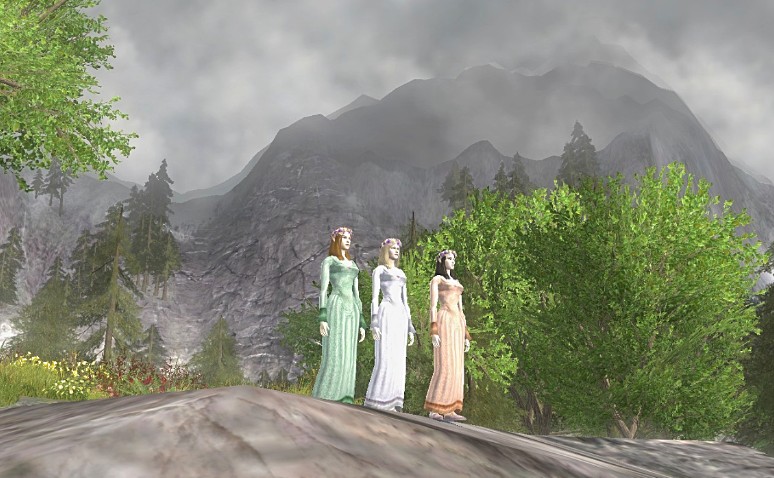
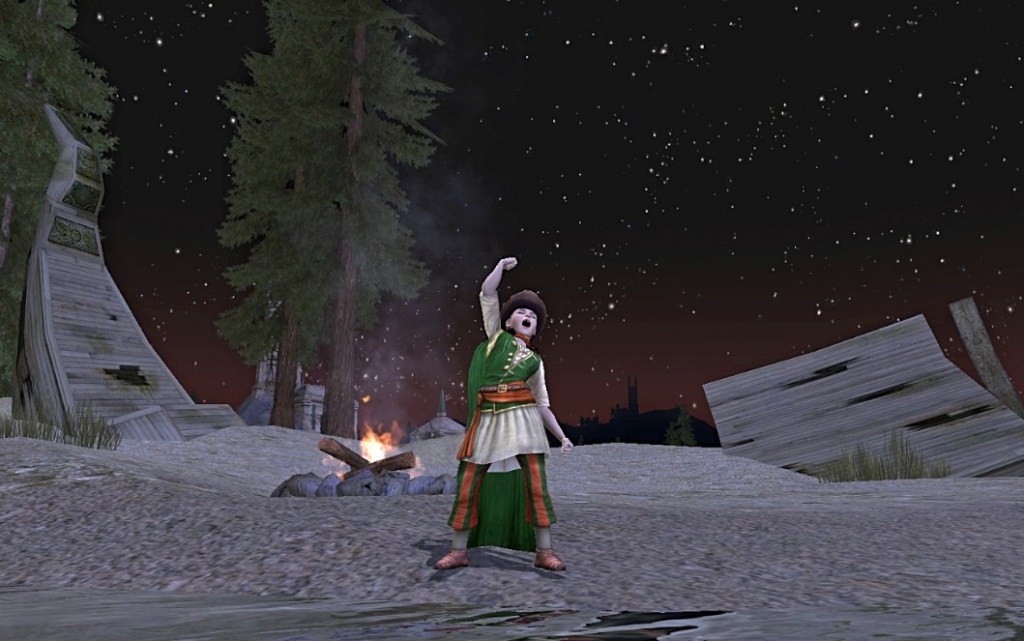
Call me Daidí Beag ("Wee Grandad"). Me family and I live in Lyndelby, a small village of the Hobaid ("Hobbit Folk"), in the mountain vale of Misthallow. There I have a farmhouse. It's not much, but it's enough to support meself and me extended family. Alas, me dear wife is gone, but our three daughters--Ériu, Banba, and Fódla--and their families live with me.

I began tellin' stories to me daughters at bedtime when they were yet wee lasses. Now that they're grown with children of their own, I tells stories to me grandkids. They're an inquisitive lot, me grandkids, always interruptin' me storytellin' with questions about this and that. It can be a bit exhaustin' at times, but I does me best to answer 'em. 

One day in the middle of me stories Dooli, the eldest of me three grandsons, asks, 'Who're the Valar, Granda?

'Where'd you hear that word, lad?' I asked with surprise.

'From an old Dwarf what was peddlin' his wares in the village,' he answers. 

'An old Dwarf tinker, was he? Hmph!' I scoffed. 'What does he know about the gods?' I received no answer from me grandkids nor did I expect one. 'Now where was I?'

'Ye was tellin' us about the Valar, Granda,' reminded Daibhidh. He's Banba's son, and me second oldest grandson. He knows I'm prone to losin' me chain of thought after bein' interrupted.

'Ah, the Valar!' I exclaimed. 'That's just another name for the Tuatha Dé Danann.'

'Who are they?' asks Diolun, Dooli's younger brother.

'Full of questions ye are, me wee darlin's,' I says with a laugh. 'I suppose young minds have much space for learnin'. The head of a white-haired seanduine ("old person") such as meself is so overfull that I start forgettin' things I ought not to.'

Despite me pleadin' me grandchildren resumed askin' about the Tuatha Dé. Finally I relented, tellin' 'em a tale about the first king of the Tuatha Dé Danann, Nuada Airgetlám:

'King Nuada were a wise ruler and a great warrior. He lost a hand in battle against a group of invaders known as the Fir Bolg ("Men of Bags"). According to ancient law and custom the injury meant that Nuada could no longer serve as king. 

However, Dian Cécht the Healer forged a silver hand to replace the one Nuada had lost. It were because of this silver hand that Nuada were given the name Airgetlám. Dian's son Miach turned the silver hand to one of flesh, blood, and bone thus enablin' Nuada to regain the throne.

It's said that in battle King Nuada wielded Claíomh Solais, the Sword of Light. Once the sword had been unsheathed no foe could withstand it's wrath. With this sword Nuada were able to defeat the Fomhóraigh ("Formorians"), horrible monsters full of malice and hate.

The leader of the Fomhóraigh were Balor of the Piercin' Eye...'

Just then me daughters came to take their children to their beds. 

'Da,' Ériu, the eldest of me three daughters, interrupted, 'ye shouldn't be tellin' that sort of story to the children.' 

'Aye,' says Banba, the second eldest, 'especially so close to bedtime.' 

'Do ye want to be givin' 'em nightmares?' added Fódla, the youngest of me three daughters.

'It's time for this lot to lay down for their night's rest,' says Ériu. 

'Aye,' says her sisters in stern voices. 

Me grandchildren protested. 'Ah! Just a wee while longer?' says one of 'em. Their yawns, however, indicated that their mothers were correct.

'That's enough stories for this evenin', me wee darlin's,' I says to them. 'Time for bed.' They resisted for a short spell before finally headin' to their sleepin' chamber.

'Daidí,' me daughter Ériu says to me after layin' the children down to rest, 'ye shouldn't be fillin' their heads with such foolishness. It's bad enough ye did it to me and me sisters.' She was clearly annoyed.

'What harm is there in it?' I says to her. 'Ye all turned out fine, didn't ye?'

'Aye, we did,' she replies, 'but that were despite and not because of your nonsense tales of gods, goddesses, and monsters.'

'Bein' named for a goddess were the source of much teasin' when I were a wee lass,' says Banba in support of her sister. 'Tellin' the grandkids about the Tuatha Dé is sure to invite trouble.'

'Is that so?' says Fódla to Banba with surprise in her voice. 'Bein' named for a goddess made me feel grand.' She smiled with delight.

'See there!' I says with a grin. Ériu and Banba answered with a scowl.

'Hmmm,' I grumbled. Now 'twas me turn to be annoyed.

Me daughters sighed at their old Da, decidin' it were best to let the matter rest.

'Oíche mhaith, Daidí,' says Fódla with a kiss on me cheek. 'Good night, Da,' says the other two.

'Good night, me darlin' daughters,' says I.

3. An Unlikely Champion, Part 1, Interlude 1

The Song of the Sovereignty Goddesses 

We are the sea blast
We are the tidal wave
We are the thunderous surf
We are the stag of the seven tines
We are the cliff hawk
We are the sunlit dewdrop
We are the fairest of flowers
We are the rampaging boar
We are the swift-swimming salmon
We are the placid lake
We are the summit of art
We are the vale echoing voices
We are the battle-hardened spearhead
We are the goddesses who inflame desire
Who give you fire
Who know the secrets of the unhewn dolmen
Who announce the ages of the moon
Who know where the sunset settles


Adapted from Michael R. Burch's English translation of "The Song of Amergin"

4. An Unlikely Champion, Part 1, Chapter 2

Cinnín Óir agus na Trí Bhéar 
("Goldilocks and the Three Bears")
 

Me daughters havin' expressed their feelin's about me tellin' stories about the Tuatha Dé, I thought it best to tell me grandkids stories of a different nature, somethin' their mothers would approve. Me daughters surely would not object to this popular children's story:

'There once were a wee lass named Cinnín Óir ("Goldilocks"). She were fair of complexion with a head full of golden curls. She had a knack for fallin' asleep most anywhere at anytime.'

'Sounds like cousin Beacha,' whispered Diolun to Darowva. She shushed him straight away. 

Ignorin' this interruption, I continued...

'One day she were in the woods gatherin' kindlin' for her granda's fire. She were a helpful lass, always doin' her chores without complainin'.'

'Is the bit about chores supposed to be part of this story?' asked Daibhidh.

'Aye, it is when *I'm* tellin' it,' I says.

Daibhidh didn't like me answer, but, at least for the time bein', he made no further comment.

'Cinnín Óir were havin' a marvelous time in the woods. She listened to the birds singin' and the brook babbblin'. She enjoyed all the sights, sounds, and smells of the woods: the birds, the bees, the flowers, and the trees.'

Daibhidh rolled his eyes at me rhymin' but said nothin'.

'Not long after Cinnín Óir set out on her errand she became mighty peckish. However, when she began to start for home she weren't sure which direction to go. She were lost.'

'Pity she didn't leave breadcrumbs behind her,' Dooli said slyly.

'Wrong story,' whispered Darowva. She's Ériu's daughter, and the eldest of me two granddaughters.

'I know, I was makin' a joke,' explained Dooli, also in a whisper.

'Don't!' Darowva said crossly in loud whisper. Darowva can be a bit bossy.

Dooli grinned and held his hands up in mock surrender.

Ignorin' this exchange I continued...

'Seems luck were with Cinnín Óir. Before long she came upon a stone cottage. When she knocked on the door, however, no one answered. Tryin' the latch she found it were unlocked. She poked her head in the door and, seein' that no one were there, went in.

As soon as Cinnín Óir entered the cottage she became aware of an enticin' aroma comin' from the kitchen table. "Porridge,' she thought, 'that'll be just the thing!"

On the table lie three bowls: a very large bowl, a medium-sized bowl, and a small bowl.'

'She lifted a spoon from the table, scooped a portion of porridge from the large bowl then placed it in her mouth. The porridge nearly burnt her tongue. "That's too hot!" she thought to herself. 

She then sampled the porridge in the medium-sized bowl. "That's too cold," she thought disappointedly. 

Finally she sampled porridge from the small bowl. "That's just right!" she thought. 

She ate all the porridge she could spoon from the small bowl then ran her finger around the rim to ensure she consumed every morsel. "That were just the thing," she thought as she stuck her finger in mouth, savourin' the porridge to the last.'

'Cinnín Óir sure likes her porridge!' remarked Daibhidh.

'Grand!' said Diolun. 'We should invite her the next time we have porridge. She can have all of mine, so long as she leaves me eggs and rashers.'

I silenced the lads with a look.

'Cinnín Óir yawned,' I continued. 'Seems she were knackered from all that walkin' and gatherin' in the woods.

In the next room there were three beds. Cinnín Óir closely examined each of 'em. Closest to her were a large bed, then a medium-sized bed. Furthest away next to the wall were a small bed.

She laid her hand on top of the large bed and gently pressed down upon it. It were very firm. She climbed upon the large bed, then, standin' upon it with both feet, began jumpin' up and down. There were no give at all. "Too hard," she thought.

Next she set her hand on top of the medium-sized bed. When she pressed down the bed near swallowed her arm up to the elbow. "If I dare lay upon this bed I might never escape it!" she thought. She passed it by.

Finally she came to the small bed next to the wall. When she set her hand upon the top of the bed it felt neither too hard nor too soft. Then she laid herself upon the small cosy bed. "This is just right," she thought before fallin' fast asleep.'

'Borin'!' interjected Daibhidh.
 
'Cinnín Óir is not the only one that's yawnin',' said Dooli with a smirk.

'Ye're right,' laughed Daibhidh. 'Beacha is already fast asleep!'
 
'Never mind them, Granda,' Darowva said sweetly, 'it's a lovely story.'

'You're only sayin' that 'cause you're a lass,' said Diolun, the youngest of me grandsons, to his slightly older sister. There's a fierce siblin' rivalry between the two.

'And what's wrong with that!' retorted Darowva.

I intervened before the row could become any worse, 'Now, now, me darlin's. Daidí Beag is tryin' to tell a story your mams would approve.' 

'And that's why it's borin',' claimed Daibhidh. Dooli and Diolun laughed. Darowva did not.

'Why all the fuss?' asked me daughter Ériu, her arms folded sternly across her chest. She and her sisters had hurried from the kitchen when they heard the raised voices.

'What's wrong?' asked Banba, me middle daughter.

'Another bedtime story row?' asked Fódla, me third daughter.

'Aye,' I sighed.

'The story was borin' is all,' explained Daibhidh.

'Ye best listen quietly when Granda tells a story or ye won't be hearin' any stories at all!' threatened Ériu.

'Twas me fault,' I says. 'I'll do better at tellin' stories that the lads as well as the lasses will enjoy.'

'We're sorry, Granda,' says Dooli, the eldest of me five grandkids. 'We shouldn't be interruptin' ye so, even if the story *is* borin'.'

Darowva frowned, Daibhidh and Diolun giggled, while Beacha, who was curled up in a wee ball, continued sleepin' like a newborn kitten.

'All right, off to bed with ye!' I says. 

'Yes, Granda,' they replied.

Darowva stayed behind while her brothers and cousins were bein' led off to bed. 'I hope ye'll finish the story sometime, Granda,' she says with a smile. 

'I'll do so, me darlin', if only for ye,' I replied. She hugged me tight before bein' led away by Ériu her mother.

'He skipped the part where the wolf eats the granny,' I heard Daibhidh say from the next room.

'And the hunter kills the wolf, and out pops the granny!' says Dooli.

'Wrong story--again!' says the exasperated Darowva.

'No more classic bedtime stories for them,' I thought to meself. 'I suppose I'll have to invent me own stories

5. An Unlikely Champion, Part 1, Interlude 2

Little Princess Mee

Little Princess Mee
Lovely was she
As in elven-song is told:
She had pearls in hair
All threaded fair;
Of gossamer shot with gold
Was her kerchief made,
And a silver braid
Of stars about her throat.
Of moth-web light
All moonlit-white
She wore a woven coat,
And round her kirtle
Was bound a girdle
Sewn with diamond dew.

She walked by day
Under mantle grey
And hood of clouded blue;
But she went by night
All glittering bright
Under the starlit sky,
And her slippers frail
Of fishes’ mail
Flashed as she went by
To her dancing-pool,
And on mirror cool
Of windless water played.
As a mist of light
In whirling flight
A glint like glass she made
Wherever her feet
Of silver fleet
Flicked the dancing-floor.

She looked on high
To the roofless sky,
And she looked to the shadowy shore;
Then round she went,
And her eyes she bent
And saw beneath her go
A Princess Shee
As fair as Mee:
They were dancing toe to toe!

Shee was as light
As Mee, and as bright;
But Shee was, strange to tell,
Hanging down
With starry crown
Into a bottomless well!
Her gleaming eyes
In great surprise
Looked up to the eyes of Mee:
A marvellous thing,
Head-down to swing
Above a starry sea!

Only their feet
Could ever meet;
For where the ways might lie
To find a land
Where they do not stand
But hang down in the sky
No one could tell
Nor learn in spell
In all the elven-lore.

So still on her own
An elf alone
Dancing as before
With pearls in hair
And kirtle fair
And slippers frail
Of fishes’ mail went Mee:
Of fishes’ mail
And slippers frail
And kirtle fair
With pearls in hair went Shee!


Source: J.R.R. Tolkien, The Adventures of Tom Bombadil

6. An Unlikely Champion, Part 1, Chapter 3

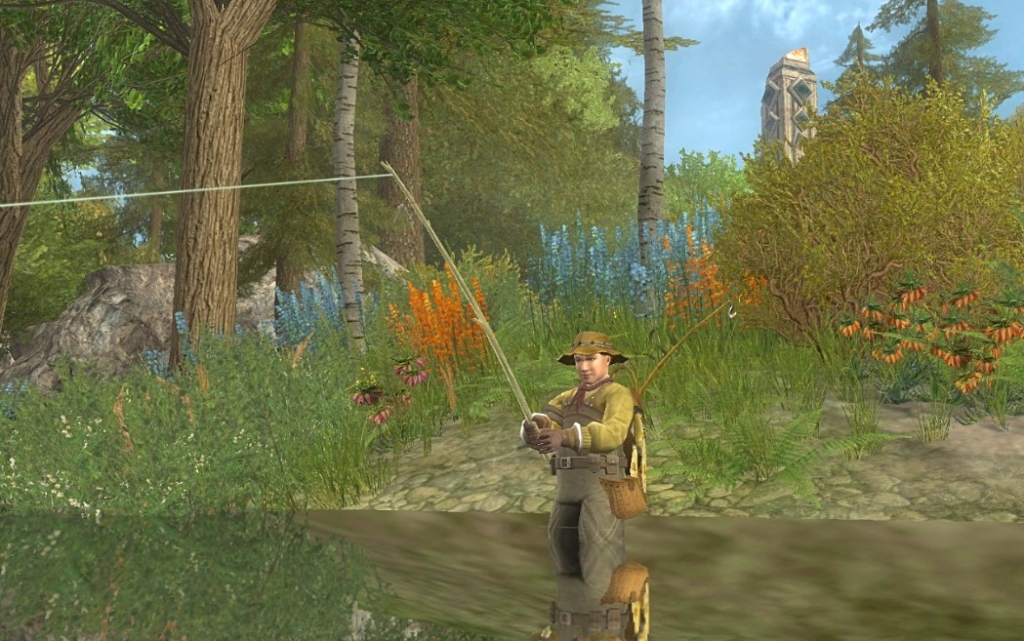
A Fishin' Expedition


One evenin' I finished me stories a bit early. This gave me grandkids the opportunity to start askin' questions.

'Who's Cú Chulainn, Granda?' asked Dooli. 'Some lads in the village were talkin' 'bout him, and...'

'If I hear a single word about Cú Chulainn ye'll live to regret it!' threatened me eldest daughter Ériu who'd overheard her son's question.

'...were he an actual hound?' Dooli further asked. 

Dooli, who'd learnt a wee bit of the Ancient Tongue of our folk, knew that the name Cú Chulainn means "Culann's Hound" in the Common Tongue.

'Did ye not hear your mother?' I asked in a whisper.

'Ah, she weren't serious about that,' Dooli replied dismissively.

'She were me daughter long before she became your mother, lad,' I said to him. 'Trust me, she were serious.'

Dooli looked at me as if I were daft.

Still whispering I answered, 'At this moment all I'll say is that he were a great warrior, and the son of Lugh of the Tuatha Dé Danann. If ye wish to hear more I'll tell ye when ye're a bit older.'

'All right, Granda, but I'll hold ye to your promise!' Dooli told me.

'Aye, I would expect no less from ye,' I said with a smile. 

'And I want to know about Lugh as well,' he said.

'Aye,' replied I. The lad were growin' into his own person more and more each day.

'Come to think of it,' I said thoughtfully, 'we're about due for a fishin' trip.'

'I want to go fishin', too!' said Daibhidh.

'And me!' said Diolun.

'Aye, all three of ye,' said I. 'It will be grand.'

'And what'll we do?' asked Darowva who were holdin' her wee cousin Beacha's hand.

'I'm certain your mams would be pleased to teach ye some wool spinnin' or perhaps even embroidery,' I says.

'Wool spinnin'!' said Darowva. 'That'll be grand will it not, cousin?'

Beacha could not answer for she were already sleepin'.

7. An Unlikely Champion, Part 1, Chapter 4

Daughter of the Fairy King


For the next bedtime I chose to begin tellin' me grandkids a different type of story: an epic adventure. I also thought me stories might be more interestin' if the hero or heroine seemed a more like one of 'em:

'A maid-child were born on a cold and strangely cloudless evenin' in Misthallow to a poor woman of the Hobaid ("Hobbit Folk"). It were the Grianstad an Gheimhridh ("Winter Solstice"), the shortest day of the year.

Her child, she said, had been conceived nine months earlier by her fairy husband on the night of their weddin'. Sadly, he disappeared the mornin' after the nuptials never to be seen again. The woman's neighbors claimed that the maid-child weren't hers at all but a changelin' left by goblins.'

'Goblins!' interjected  Dooli.

'Hush now!' says his younger sister Darowva.

'I'm tryin' to hear!" complained Diolun.

Daibhidh, for a change, said nothing.

Beacha, as usual, were already fast asleep.

I continued...

'The woman named her daughter Beannaithe ("blessed"). Within hours of havin' been born Beannaithe began to sprout insect-like wings. When the neighbors saw Beannaithe they began callin' her Bumbóg ("bumblebee").

Beannaithe were a shy wee lass. The fact that folk stared at her and called her names may have been the cause. Whether it were her shyness or some other defect, Beannaithe never learnt to speak as do other children of the Hobaid.'

'Beannaithe could, however, communicate through facial expressions, gestures and peculiar hummin' sounds. Her mother learnt that Beannaithe hums "mm hm" for yes and "mm mm" for no. The meanin' of her other vocalisations could not yet be determined.'

'Is this story about Beacha?' asked Diolun.

'No, lad,' I answered. 'It isn't about Beacha at all. Beannaithe is a character in a fairy-story.'

'Are ye certain?' Diolun persisted.

'Aye, I'm quite certain,' I said with a laugh. I wasn't certain, however, whether Diolun were convinced. From the looks on their faces, I'm not certain me other grandkids were convinced, either. 

Beacha herself had no reaction for she were, as usual, already asleep.

'Storytime is over,' declared me eldest daughter Ériu who'd just come from the kitchen.
 
'Ah!' the children complained.

Ériu and her sisters Banba and Fódla led the children off to bed with more than the usual amount of resistance. 

'I hope he tells a story about me next!' I heard Diolun exclaim. 

It appears that me grandkids were enjoyin' the story.

8. An Unlikely Champion, Part 1, Chapter 5

Fikta the Tinker

'This evenin', me we darlin's, Daidí Beag has invited a friend to tell a portion of Beannaithe's story. Please show him your utmost courtesy.'

'What's courtesy?' asked Diolun.

'Somethin' ye have none of!' answered Darowva in a whisper. 'Ssshh!'

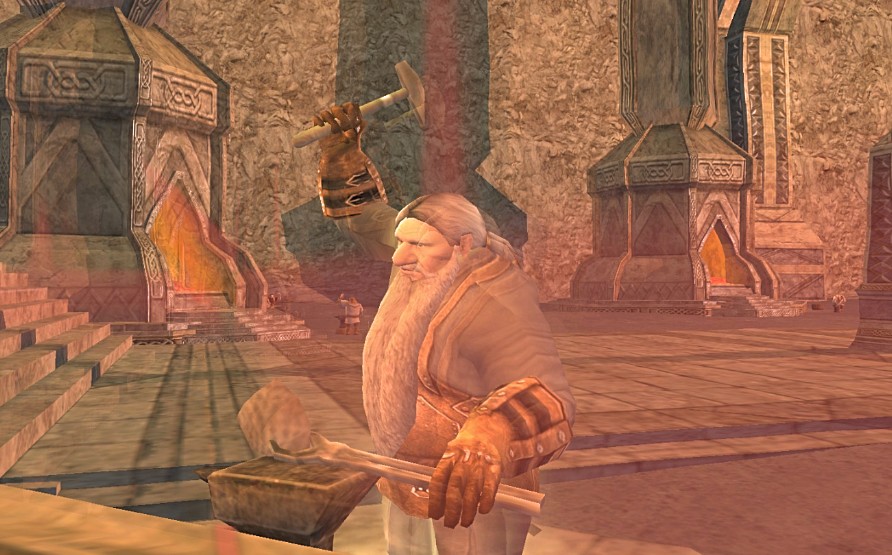
'I am called Fikta,' said the Dwarf. 'I was once a smith of some renown among the Dwarves, but that was many years ago. Old age has dimmed my hearing and sight, and robbed my hammer hand of its strength.' 

'I seldom stay in one place for long. Over the course of a year I travel from my dwelling in the Blue Mountains in the West, over hill and dale, mountain and forest to the Lonely Mountain in the East and then back again, peddling my wares--trinkets, knickknacks, and pretty little baubles--and mending things that need repair.'

'I thought he looked familiar!' whispered Dooli.

'His voice is strange,' observed Daibhidh. 'Do all Dwarf-folk speak like that?'

'Ssshh!' said Darowva.

'I'm a handy fellow to have around,' Fikta continued, 'until I'm not. Then I move on to the next place along my route.

Many older folk scowl when they see me. They mutter unkind words under their breath. Years of hammering may have lessened my hearing, but not so much that I do not hear their oaths and curses, or at least of my ability to read the words upon their sneering lips.

I am most fond of the small children I meet. It warms my old heart to see their bright faces and to hear their infectious laughter. They like to tug my long beard to see if it's real, and to ask about my baubles. They also want to know about the places I've been and the things I've seen. I am happy to oblige them with tales of my adventures.

I also tell the children of the Valar, and Mahal in particular. Mahal created the Dwarves in the depths of time, before Elves or Men walked the earth. He made them to be strong and unyielding, for they would endure great hardship, and taught them the lore and craft of smithing.(1)

I'd made my annual visit to the Little Folk of Lyndelby. It's a place that's difficult to find, even for a seasoned traveller such as myself. If you take the wrong path you could find yourself in very great peril. Trolls, wargs and goblins do not take kindly to Dwarves trodding into their territory. They'd soon as eat you as look at you. Old Fikta may not taste good to them, but they'd gobble me down and gnaw on my bones for good measure. Fortunately, I have a keen nose for danger, and do my best to avoid it.'

'Fikta,' I whispered to the Dwarf, 'best leave out the bloody bits. Their mothers wouldn't approve.'

'Understood,' he replied with a wink.

'I had a fine visit in Lyndelby. Folks are mostly friendly, and the children were particularly curious about me and my wares. Their mums and dads often have to pry them away from my cart. Fortunately, they usually feel obliged to purchase something to compensate me for my time. Good folk, them Little People.

I'd been on the road for several hours towards my next destination when I heard a soft mew like that of a kitten. I thought maybe some beastie had crawled into my cart. Instead I found a small maid-child of about four years of age. She'd bundled herself up in a blanket and fallen asleep. I was too far along the road to turn back, so I found a spot to camp, made a fire, and set the child close by to keep her warm.

When she awoke the next morning the child was ravenously hungry. I gave her some of my breakfast: rashers, fried taters and eggs. She greedily ate anything I set before her. A pretty child she was, golden curls and a pale round face like the moon. I'd always wanted a child, but no Dwarf lass would have me for a husband. Too ugly, I suppose. Perhaps the Valar had intervened and given me this child? I wanted to think so.

As you may have already guessed, the next morning I didn't turn back to Lyndelby but kept moving right on South. I hoped to meet a caravan of Dwarves that would be travelling through the mountain passes into Eriador.'

'This is a fine place to pause the story, Dwarf,' I said. 'The wee darlin's are noddin' somethin' fierce.'

'Aye,' Fikta replied. 'I noticed that myself.'

We two, an old Hobad ("Hobbit") and even older Dwarf, led the children to their beds for their night's rest.


(1) J.R.R. Tolkien, The Silmarillion

9. An Unlikely Champion, Part 1, Interlude 3

The Pirate Queen

Avast, ye scalawags! Have ye heard the tales of the Pirate Queen, Gráinne Ní Mháille, defender of the coastal waters near her home? Nay, I warrant ye haven't, and more's the pity!

10. An Unlikely Champion, Part 1, Chapter 6

Beannaithe the Dwarf Lass


'Good evenin', me wee darlin's. Are ye ready to hear more of Beannaithe's tale?' I asked me grandchildren not long before their bedtime.

'Aye,' said Diolun.

'We are,' said a few of the others.

Darowva, beamin' a smile from ear-to-ear, vigourously nodded her head.

Beacha, as always, had already fallen asleep.

'Where's Fikta?' asked Dooli while glancin' about the room for signs of the Dwarf.

'He's moved on, lad,' answered I. 'That's the nature of his work.'

Me grandkids let out a collective groan of disappointment.

'But before he left he shared the remainder of his part of the story with Daidí Beag, which I am now prepared to share with ye,' I said, hoping to ease their disappointment.

'Yes, please,' said Darowva, polite as always.

'All right,' said a couple of the lads disappointedly.

'Such enthusiasm!' I laughed. 'All right, here it is:'

'Wee Beannaithe was with the Dwarf for a year while he travelled from town to town and village to village. Durin' that time Fikta grew very fond of the lass, so fond in fact that he began callin' her Dóttir. Not knowin' any better, people assumed that Beannaithe *were* his daughter.'

"When will the lass be growin' a beard?" people asked the Dwarf.

"Oh, not for another ten years I reckon," he'd answer. "Dwarf lasses don't grow 'em as soon as the lads." The Dwarf wasn't prepared to tell people that he'd kidnapped a child of the Hobaid ("Hobbit Folk").'

'Dwarf lasses grow beards?' asked Daibhidh. His cousins laughed.

'Aye, of course they grow beards. What'd ye think?' I answered incredulously. Me grandkids laughed again.

'About the time that Fikta normally returned to Lyndelby for his annual visit he did not take the path that led to the vale. He passed Lyndelby the next year and the year that followed, too. Ten years went by without a visit to our village.

'Did the Dwarf not like us anymore?' asked Darowva.

'It weren't that at all,' I replied. 'See, Fikta had grown quite fond of his Dóttir. He knew that returnin' to Lyndelby would mean that he'd be obliged to find her parents. His old Dwarf heart could not bear to be parted from the lass.'

'Beannaithe were always a wee one for her age, but in those ten years she grew in stature, albeit very slowly. Fikta trained her in his former trade of blacksmithin'. She took to it like a fish to water. As her skill increased she grew both in strength and in confidence. She were a shy lass no longer.

Fikta also taught Beannaithe how to defend herself with a dagger. Not content to wield only one, she wanted a dagger in *both* hands. The old Dwarf laughed, but were happy to forge another for her.

The other Dwarves that saw Fikta durin' his travels, mostly in the  Dwarf kingdom of the Lonely Mountain but occasionally elsewhere, were impressed with Beannaithe's skill with both dagger and smithin' hammer. "Precocious" they said she were.'

'What does "precocious" mean?' asked Diolun.

'If I knew I'd tell ye!' I answered with a laugh.

'I think it means that she were skilled beyond her years,' answered Darowva. We all looked at her with surprise.

'Where'd ye learn that word?' I asked.

She shrugged modestly, feignin' either not to know or not to care.  

I laughed. 'What a clever one she is!' I thought.

'There were one way in which Beannaithe were not precocious,' I said, sayin' the last word very carefully while lookin' to Darowva for confirmation that I'd used the word correctly. 

She subtly nodded her head so her brothers and cousins wouldn't notice.

'She weren't much for book learnin',' I continued. 'No matter how much Fikta tried, Beannaithe showed not the slightest interest in studyin' the Angerthas. That's what the Dwarves call their writin' system.'

'Ye mean the runes?' asked Dooli.

'Aye, the Dwarf runes.' I answered.

'Do *ye* know the An-ger-thas?' Daibhidh carefully asked.

'Aye, lad, I do,' answered I.

'Will ye teach us?' asked Darowva.

I carefully measured me reply before answerin'. 'Aye, if your mothers approve it,' I said. The lads weren't so certain they wanted book learnin' but me granddaughter were eager to start. 

'I'll ask me mam first thing,' said Darowva. 'Wait, here she comes now. Mam...'

'We'll talk about it in the mornin', love,' answered Ériu who had just finished cleanin' up after supper with her sisters Banba and Fódla.

'Good night, Granda!' said Darowva. 

'Good night,' said her brothers and cousin.

'Ye know she won't sleep a wink tonight, don't ye?' Ériu very crossly said to me.

'Aye, lass, I am sorry,' I said.

Despite bein' cross Ériu kissed me cheek before she and her sisters lead the grandkids to their beds.


This ends Part One