Overview of Forodwaith
The northern most extremity of Middle Earths lands is known to folk of the southerly climes as The Northern Wastes, which is Forodwaith in the Elven tongue. In the Folklore of the West lands Forodwaith is imagined to be one vast, pathless, ice-covered plain; travellers who actually venture into its expanse soon discover that it is neither flat nor as featureless as tales would have them believe.
Forodwaith is indeed vast, and its lands display considerable variation in climate and geography. Travellers will encounter snow-clad forests, roaring rivers, mirrored lakes, unexpected valleys and seemingly never-ending tundra. The southern marches of Forodwaith border the warmer and more civilised lands of Eriador, and lie scarcely two hundred miles north of Fornost. The further north one travels the colder it becomes. At last, beyond the furthest shores of Eriador, the traveller sets foot upon the Landless Land, an arctic desert of everlasting ice and snow.
A casual observer might assume such a region to be virtually devoid of life and uninhabited, yet nothing could be further from the truth. Plants and animals alike have adapted to this harsh environment and while life is by no means burgeoning it is diverse enough to support a number of different tribes of Mortal Men as well as a few long forgotten refuges of the Elves.
The men of Forodwaith who dwell closest to Eriador are known to the Elves as the Lossoth (Sindarin: snowmen), while those that tread the icy Cape of Forochel they name Helechoth (S: Icemen) and Aerfaroth (S: Sea-hunters). Yet those are not the names that the folk of Forodwaith use of themselves. In their own language they are called Ystavat Talven (Lossoth: Friends of Winter) and each clan among them has other names besides. A remote people the lives of lives of the Ystavat Talven are dominated by the challenge of day to day survival in the harsh and unforgiving wilderness they have chosen to inhabit.
Apart from a few frontiersmen, other Men do not make Forodwaith their home. They have, however, established tenuous outposts in the Cold North. Yet the Ystavat Talven are not the only denizens of Forodwaith, nor are they its most ancient inhabitants for the first feet to tread upon the Northern Wastes were not Mannish but Elven and a Kindred of the legendary folk still remain in that frozen land. Little is known of these Northern Elves but legends whisper of an enchanted city of ice, far out upon the landless land where it guards the mysterious radiance that illuminates the night skies of the northern world.
The Elves of neighbouring lands also sometimes wander Forodwaith. During the brief summer months they occasionally trade with the Lossoth and can often be found encamped beside the Bay of Forochel.
There are also a few groups of Dwarves, drawn to Forochels vast mountain ranges which pierce the Landless Lands and the prospects of finding vast quantities of Ore and Minerals trapped in the frozen rock.
Wind and Weather
The lands and waters of the Forodwaith hold many challengers in store for the traveller, with each locality possessing its own unique wonders and hazards. An intimate knowledge of these (or the boon of a knowledgeable guide) is often essential to survival in the wild. The ancient Numenoreans strove to map the coasts of Forochel in the days of their youth; but few such charts have survived the centuries, and the same cataclysm that drowned Numenor also changed the shape of Forochel’s coastline forever after. Even to its own people the Northern Wastes still retain the mystery of an undiscovered country.
Overall Forodwaith is a land of short summers and long winters, with autumn and spring playing the part of mere formalities. The autumn begins in late Ivanneth and lasts early Hithui; the winds turn northeast and the temperature begins to drop; the average summer temperature ranges from highs of 4°C to lows of -17°C. In winter, winds descending from the Landless Land dominate Forodwaith. The prevailing wind is from the northeast. Usually very dry, it drops the temperature precipitously. Near the coastlines, gales often pick up moisture from the ocean, dropping heavy snows on the slopes of the Blue Mountains and down into the Vale of Lhun. North-westerly winds off Belegaer can bring copious amounts of rain, sleet and snow, but such storms are rare. Occasionally, wild sea storms swing inland and blanket Forochel with a prolonged period of rain and snow.
In summer, weak warm fronts coming up the Lhun valley from the south bring warm moist air that collides with the bitter cold over the Bay of Forochel. This causes violent snow squalls and sudden downpours of sleet and icy rain. Such storms rage throughout the summer months, from late Norui to mid-Ivanneth. South-westerly breezes from Eriador have a warming effect on Forochel in general during the summer months. These warm breezes bring little in the way of precipitation, but do moderate the air temperature and allow warm fronts to move through more easily.
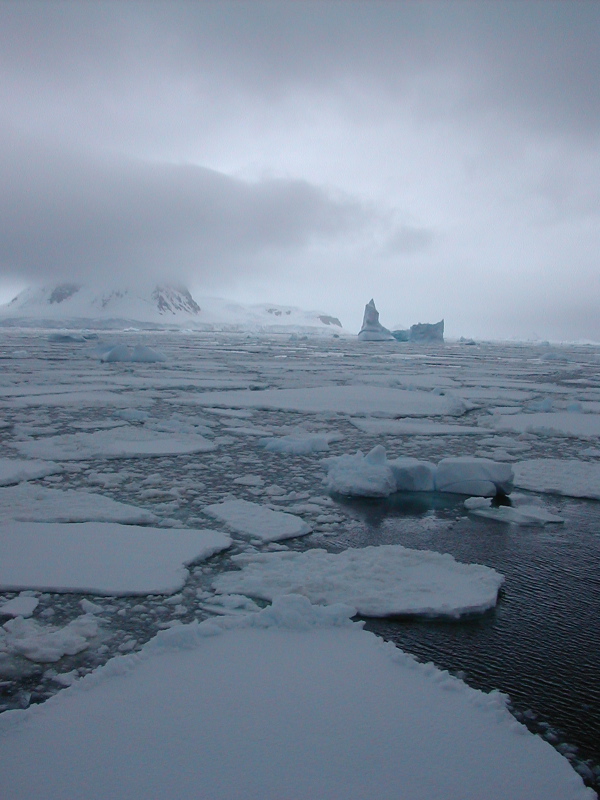
In autumn, pack ice begins forming along the costal regions. It is a dangerous time to be on the ice, as it may break or crack suddenly under the weight of travellers, dropping them into freezing waters. Any ships caught in the forming ice may well remain stuck until the following spring. Through the short autumn the sea continues to freeze, spreading the pack ice southward. By mid-Hithui, the smaller northern bays are frozen over.
While winter lasts, the pack ice remains thick and solid and becomes traversable without the threat of a sudden plunge. The average winter temperature ranges from -24°C to -40°C. The spring thaw occurs in mid to late Norui.
Unique Weather Conditions and effects
Gurrthul (S: Deathwind; Lo: Talven Henki)
Gurthul refers to the gales coming out of the Landless Land. As an Old Numenorean expression makes clear: “If the Elves feel the cold, it should be warning enough to all others”. The Deathwind is most common in winter, but may sometimes blow in late autumn or early spring.
Rather than a roiling mass of storm clouds the Gurthul appears as an approaching fog bank. As the wind nears, the air becomes noticeably colder, with the temperature dropping by as much as 20°C. The wind quickens suddenly until it is in excess of 50mph. The fog bank is in actual fact comprised of snow and ice crystals carried along by the winds. Anyone caught unprotected and exposed to these winds will not last more than an hour in the freezing conditions.
Infirith (S: Fading mind; Lo: Haipyminen Mieli)
The vast fearful stretches of trackless ice have a unique effect to those unused to such conditions and this can have a profound psychological as well as physical effect on travellers.
Common effects include:
-The Victim sees mirage like images of people, cities or even forests in the distance and thus begins heedlessly heading towards them until either exhausted or immobilized by cold of a fall through the ice.
-A feeling of despair over comes the victim, which results in them either turning round and retracing days’ worth of travel or they are overcome by the hopelessness of the apparent situation and give up completely and rest amongst the snow until the cold clams them.
-The constant howling wind drives the victim to madness; they become aggressive, uncooperative and dangerous to others. They may be overcome with a warm comfortable feeling and start to shed their protective clothing leading to a rapid death from exposure.
Lossugened (S: Snow-blindness; Lo: Lumisokeus)
This condition is caused by bright sunlight on large fields of snow. The resultant glare from the light affects the unprotected eyes of those travelling through the region. The symptoms are sore and watering eyes, and the inability to see clearly. The condition can last between 1-10 days depending on the exposure and in extreme circumstances permanent damage can occur. The Ystavat Talven avoids the condition by wearing strips of leather with narrow eye slits cut into them. These block out enough of the glare to prevent damage from occurring.
Olfain (S: White Vision; Lo: Valkosokeus)
Olfain is an optical illusion that occurs when snow covered ground blends into a uniformly white snow filled sky. The effect blots out the horizon, shadows and clouds rendering the foreground virtually indistinguishable from more distant terrain and destroying all depth perception and sense of direction and distance. The Ystavat Talven can predict when these events might occur and generally make camp or stay put rather than risk wandering off course.